Battery Nissan Leaf: The Definitive UK Guide to Not Buying a Dud
Right then, let's cut the crap. The battery in a Nissan Leaf is the single most important—and let's be honest, arse-clenchingly nerve-wracking—part of the car. It dictates everything from your daily commute to how much it's worth, with sizes ranging from an early, rather pathetic 24kWh to the much more capable 62kWh in later models.
The Heart of the Matter: Understanding Your Leaf's Battery
Let's not beat around the bush. When you buy a used Nissan Leaf, you're not just buying a car; you're buying a massive, expensive battery on wheels. It’s the bit that costs a fortune, the bit that degrades over time, and the source of that all-too-familiar twitchy feeling we call 'range anxiety'. Getting your head around the different batteries Nissan has shoved into these things over the years is absolutely vital, because they are far from being created equal.
The Leaf has been a true trailblazer for electric cars here in the UK. By the end of 2020, over 180,000 of them had found homes across Europe, with a huge chunk buzzing around British roads like caffeinated wasps. The Sunderland plant was a proper powerhouse, churning out over 270,000 Leafs before production finally stopped in March 2024, cementing its place in UK automotive history. You can delve into its UK legacy and see the full production history.
From Timid Beginnings to Capable Commuters
To give you a clearer picture, here’s a quick rundown of how the Leaf's battery options have evolved.
Nissan Leaf Battery Generations at a Glance (UK Models)
This table gives you a quick-reference guide to the different battery sizes in UK Nissan Leaf models over the years, showing their official range and what you can realistically expect when new. Spoilers: the official figures are a work of fiction.
| Model Years (Approx.) | Battery Capacity | Official Range (WLTP/NEDC) | Real-World Range (New) |
|---|---|---|---|
| 2011-2016 | 24kWh | 124 miles (NEDC) | 70-85 miles |
| 2016-2017 | 30kWh | 155 miles (NEDC) | 100-115 miles |
| 2018-Present | 40kWh | 168 miles (WLTP) | 130-150 miles |
| 2019-Present | 62kWh | 239 miles (WLTP) | 200-220 miles |
As you can see, the journey has been one of steady improvement. The first-generation models, bless their cotton socks, came with that 24kWh battery. On a good day, with a tailwind and a prayer, this promised a range that was, shall we say, optimistic. Many an early adopter learned the hard way that a chilly Tuesday morning in Stoke could slash that figure dramatically.
Later, Nissan brought in a 30kWh battery, which offered a bit more breathing room. The game really changed when the second-generation Leaf arrived with a much more usable 40kWh pack. This is the sweet spot for many used buyers, offering a realistic range for the average British commute without remortgaging the house. For those needing to venture further afield, the 62kWh 'e+' models finally made motorway journeys a less terrifying prospect.
The core issue with early Leaf batteries wasn't just their size, but their chemistry and criminal lack of active thermal management. They are entirely air-cooled, which is a bit like trying to cool a vindaloo with a handheld fan – it’s just not that effective, especially during rapid charging.
The Infamous 'Lizard' Battery
You might hear whispers of the "Lizard" battery on Leaf forums. This isn't some reptile-powered monstrosity, but Nissan's improved battery chemistry introduced around 2015.
It was specifically designed to be more resistant to heat and degradation, a massive issue in hot climates. While the UK isn't exactly Arizona, this improved chemistry does offer better long-term durability compared to the very earliest packs. Spotting a "Lizard" battery in a used Leaf is a definite plus, and knowing which version your potential purchase has is the first step to avoiding a costly cock-up.
Decoding Your Battery's Health with SOH
Right, let's get into the most important three-letter acronym in the world of used Nissan Leafs: SOH , or State of Health. You can think of it as the battery’s MOT certificate, GP's report, and priest's last rites all rolled into one. Frankly, buying a used Leaf without checking the SOH is like buying a house without bothering with a survey – a huge gamble you’re almost certain to lose.
So, what is it? The SOH is just a percentage that tells you how much of its original capacity the battery can still hold. A brand-new battery, fresh from the factory, has 100% SOH . One that’s been through a few hundred charge cycles and seen a bit of life might be down to 85% SOH . This means it can only store 85% of the energy it could when it was new, which directly torpedoes your real-world driving range.
It's absolutely crucial not to mix this up with the State of Charge (SOC) you see on the dashboard. Your dash will always show a full battery as 100% charged, but if the battery's health is knackered, that ‘100%’ charge represents a much, much smaller bucket of electricity.
The Only Tool You'll Ever Need
So, how do you find out this vital number? You can't just trust the seller or the vague ‘capacity bars’ on the dashboard display, which are about as useful as a chocolate teapot. To get the real, unvarnished truth, you need to do a tiny bit of detective work with some simple and cheap kit.
Here's what you'll need:
- An OBD2 Dongle: This little gadget plugs into the car's diagnostic port, which is usually tucked away under the steering wheel. You can pick up a decent Bluetooth one online for around £20-£30 . Just make sure it’s compatible with your phone (Android or iOS).
- The LeafSpy App: This is the brains of the operation. There’s a free 'Lite' version to get you started, but the Pro version is worth every penny. It talks to the dongle and reveals every grubby secret the battery nissan leaf has been hiding.
Getting this simple setup is the single most powerful thing you can do as a potential Leaf buyer. It transforms you from a hopeful punter into an informed expert, armed with the data that truly matters.
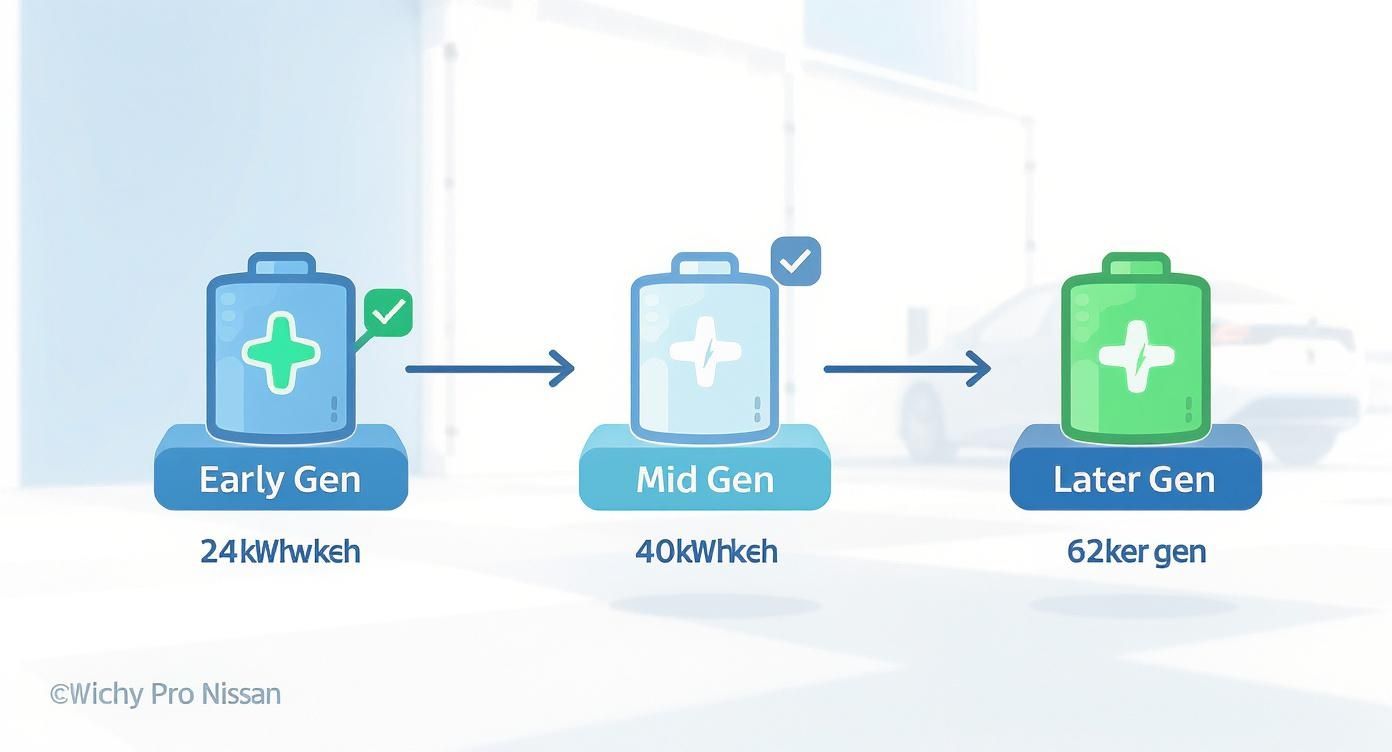
As you can see, the jump from the early 24 kWh packs to the later 62 kWh units completely changed the game, making the Leaf a much more practical daily driver for most people in the UK.
How to Check the SOH, Step-by-Step
Once you've got your dongle and the app, the process is incredibly straightforward. You don’t need to be a mechanic or a tech wizard.
- Find the OBD2 Port: Pop your head under the dashboard and look to the right of the steering column. You're looking for a small, D-shaped port.
- Plug in the Dongle: With the car off, firmly push the dongle into the port until it clicks. A small light should flash to confirm it has power.
- Connect Your Phone: Switch on your phone's Bluetooth and search for new devices. The dongle will usually appear as 'OBDII' or something similar – pair with it.
- Launch LeafSpy: Open the app on your phone. It should automatically find and connect to the dongle. After a few seconds, a screen packed with data will appear.
- Find the SOH: Don't be intimidated by all the numbers! The SOH figure is displayed prominently, usually right on the main screen. That percentage is the golden number.
Armed with this one figure, you can calculate the car's actual maximum range, not the fantasy figure on the dashboard’s ‘Guess-o-Meter’. For anyone buying a used EV, understanding the truth about battery health reports on used EVs is the first step towards a smart purchase. This simple check takes less than five minutes and tells you everything you need to know about the most expensive part of the car. It’s the ultimate Leaf life hack.
The Unavoidable Truth of Battery Degradation
Let's start with a bit of straight talk. Every electric car battery loses its ability to hold a full charge over time. It’s an unavoidable fact of the chemistry inside, and the Nissan Leaf is no exception. Think of it less as a fault and more as a fundamental characteristic, like a favourite pair of jeans that fade with every wash.
This slow, steady decline is called degradation . Over the years, the battery's maximum capacity shrinks, which in turn reduces your maximum driving range. For a prospective Leaf owner in the UK, getting your head around what causes this, and how quickly it happens, is the single most important step in making a smart purchase.
It all boils down to a few key factors: the battery's age, how it’s been treated, and the temperatures it’s been exposed to. Imagine it like a reusable water bottle. Brand new, it holds a full litre. After years of daily use, bumps, and hot washes, it might only hold 900ml. The bottle still works perfectly well, it just doesn’t hold as much as it used to. That's your Leaf's battery in a nutshell.
The Main Culprits Behind Capacity Loss
So, what actually chips away at your battery's health? It’s not one single thing but a combination of factors all working in the background.
- Calendar Ageing: This is the big one. Time is the ultimate enemy. Even if a Leaf sat completely unused in a temperate garage, its battery capacity would still drop year after year. The chemical processes inside are always, slowly, ticking over.
- Cycle Ageing: This is the wear and tear from simply using the car—charging it up and driving it. Every "cycle" causes tiny, irreversible changes. A high-mileage Leaf that's been plugged in every night will naturally show more degradation than a low-mileage weekend car.
- Temperature: Here we have the Leaf's Achilles' heel. Unlike many rivals, its battery is only air-cooled. This isn't a problem for most day-to-day driving, but it's a disaster during repeated rapid charging sessions, which generate a lot of heat. Heat is the enemy of battery longevity, as it dramatically speeds up the chemical reactions that cause permanent damage.
Luckily for us, the famously miserable UK climate is actually a huge advantage. Our batteries don't get baked in the kind of extreme heat you'd find in, say, southern Spain or Arizona. This means that, on the whole, Leafs in Britain tend to hold up pretty well. Even so, a hot summer combined with lots of motorway miles and rapid charges will certainly take its toll.
What to Expect on Britain's Roads
Forget the official figures you see in old brochures. Real-world experience from thousands of UK owners gives us a much clearer picture. As a rough guide, you can expect an average capacity loss of around 2-3% per year, but this really does depend on the specific battery and how the car has been treated.
The early 24kWh packs are the most susceptible to degradation. It's quite common to see a ten-year-old model with a battery State of Health (SOH) below 70% . A car that might have managed 75 miles when new could be struggling to top 50 miles on a cold winter's morning, limiting it to being a purely local runabout.
The 30kWh battery, introduced around 2016, was supposed to be a step up. While it offered more range from the showroom, some owners found it degraded surprisingly quickly. This prompted Nissan to release a software update to "recalibrate" how the car reported its health, a move that wasn't exactly a confidence booster at the time.
The 40kWh batteries in the second-generation Leaf (from 2018 onwards) are a different story entirely. Thanks to improved chemistry, they are far more robust. We regularly see cars that are five years old with 50,000 miles on the clock still reporting an SOH well above 90% . This makes them a much safer bet on the used market. The same goes for the even bigger 62kWh packs.
This is why, when you’re looking at a used Leaf, you can't just focus on the odometer. A five-year-old car with 60,000 miles could easily have a healthier, more capable battery than a seven-year-old one with just 30,000 miles . It’s the battery's age and specific chemistry that really tell the story.
Navigating Warranties and Replacement Costs
So, the time has come. Your trusty Leaf’s battery is showing its age, and the dashboard is displaying fewer capacity bars than a pub with a broken beer pump. The big question looms: are you facing a bill that could buy a small, second-hand hatchback?
Let’s pull back the curtain on the warranty and wade into the often-murky waters of replacement costs.
Every new Nissan Leaf comes with a battery warranty, which sounds wonderfully reassuring on paper. In the UK, this typically covers the battery for 8 years or 100,000 miles —whichever comes first. This warranty covers outright manufacturing defects, but the bit you really care about is the capacity loss guarantee.
And this is where things get a bit cheeky. Nissan’s warranty only kicks in when the battery capacity plummets below nine of the original twelve bars on the dashboard. This represents a loss of more than 25% of its original capacity. If you've dropped to ten bars, which is still a significant hit to your real-world range, you won't get a thing from them. You're on your own, mate.
The Post-Warranty Reality Check
Once that warranty period is over, you’re flying solo. This is the point where a trip to a Nissan main dealer can feel like a form of financial self-harm.
If you ask them for a price on a new battery for an older Leaf, you can expect a quote that’s frankly comical. We’re talking prices from £5,000 for a refurbished 24kWh pack to well north of £15,000 for a brand new, larger battery. In many cases, that’s more than the car itself is worth.
Fortunately, that is not the only path. The UK now has a brilliant and growing community of independent EV specialists who have turned fixing the Nissan Leaf battery into an art form. These workshops are your salvation, offering services that main dealers simply won't touch.
Here are the main options you’ll find out in the real world:
- Cell Replacement: Sometimes, it’s not the whole battery that’s failed, just a few individual cells. A good specialist can diagnose and replace these weak links, which is a far cheaper fix than swapping the entire unit.
- Battery Refurbishment: This involves taking a used battery pack, testing it module by module, replacing any dodgy parts, and certifying it for reuse. It’s a cost-effective way to get a healthy, warrantied battery back in your car.
- Full Pack Swap: Sourcing a good-condition used battery from a salvaged or written-off Leaf and swapping it into your car is an incredibly popular route.
- The Upgrade: Now for the exciting bit. Why replace your tired 24kWh pack with another one when you could drop in a 40kWh pack from a newer model? It’s a game-changer.
Comparing the Costs: Main Dealer vs Independent
Let's put some real figures on this. While prices fluctuate, the difference between going to a main dealer and a trusted specialist is like night and day. It’s the difference between buying a pint in a swanky London hotel and getting one down your local.
| Service | Main Dealer Estimated Cost | Independent Specialist Estimated Cost |
|---|---|---|
| Refurbished 24kWh/30kWh Pack | £5,000 - £7,000+ | £3,000 - £6,000 |
| New 40kWh Pack | £10,000 - £12,000+ | Not typically offered (used packs used) |
| Used 40kWh Pack Swap/Upgrade | Not Offered | £7,000 - £9,000 |
| Individual Cell/Module Repair | Not Offered | £500 - £2,000 |
The independent market isn’t just about saving money; it’s about providing smarter solutions. Main dealers are in the business of selling new cars and fitting new parts. Independent specialists, on the other hand, are masters of repair, refurbishment, and clever upgrades that Nissan themselves would never sanction.
Choosing an independent specialist is a no-brainer. Companies across the UK have built solid reputations for their expertise. They can diagnose your battery's specific faults and offer a tailored solution that fits your budget, rather than just hitting you with a single, eye-watering bill for a new unit.
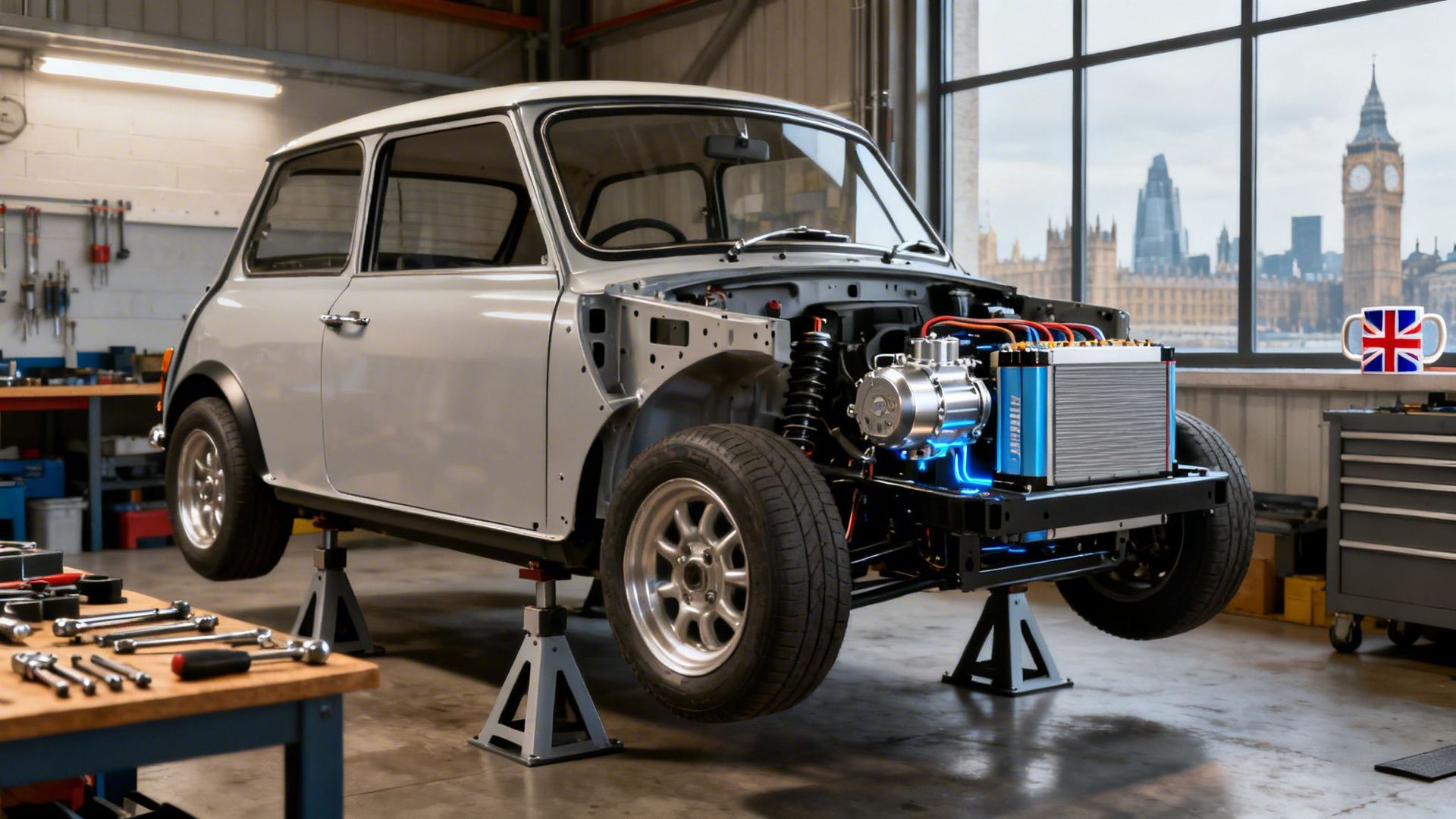
Getting a beefier battery can completely transform an older car; you can find out more about what it's like to put a new battery in an old Leaf for 160 miles of range in our detailed guide.
Ultimately, a degrading battery doesn't have to be the end of the road for your Leaf. While the official warranty might feel a bit restrictive, the thriving independent scene provides a host of sensible, affordable, and often superior alternatives to keep your electric motoring dream alive.
How to Keep Your Leaf's Battery Happy
Right, let’s talk about how not to be a monster to your Leaf’s most expensive and important part. Think of its battery as a high-maintenance but very loyal pet. You don’t need to sing to it, but understanding what it likes and dislikes will prevent it from giving up on you prematurely.
Getting this right isn't about driving at a snail's pace or obsessing over every watt. It’s about building a few simple, smart habits. Do this, and you’ll add years to the battery’s life, keep your range respectable, and protect its resale value. It’s the cheapest performance upgrade you’ll ever make.
Embrace the Golden 80/20 Rule
Here it is, the cardinal rule of EV battery care. The lithium-ion pack in your Leaf is at its happiest when it’s just ticking along in the middle of its charge range. It really doesn't enjoy being held at 100% for long, and it equally hates sitting around completely empty.
Regularly charging to 100% and leaving it plugged in all night puts unnecessary stress on the battery cells. Imagine holding a heavy weight above your head for hours – you could do it, but you'd be exhausted and sore afterwards. It’s the same principle for your battery.
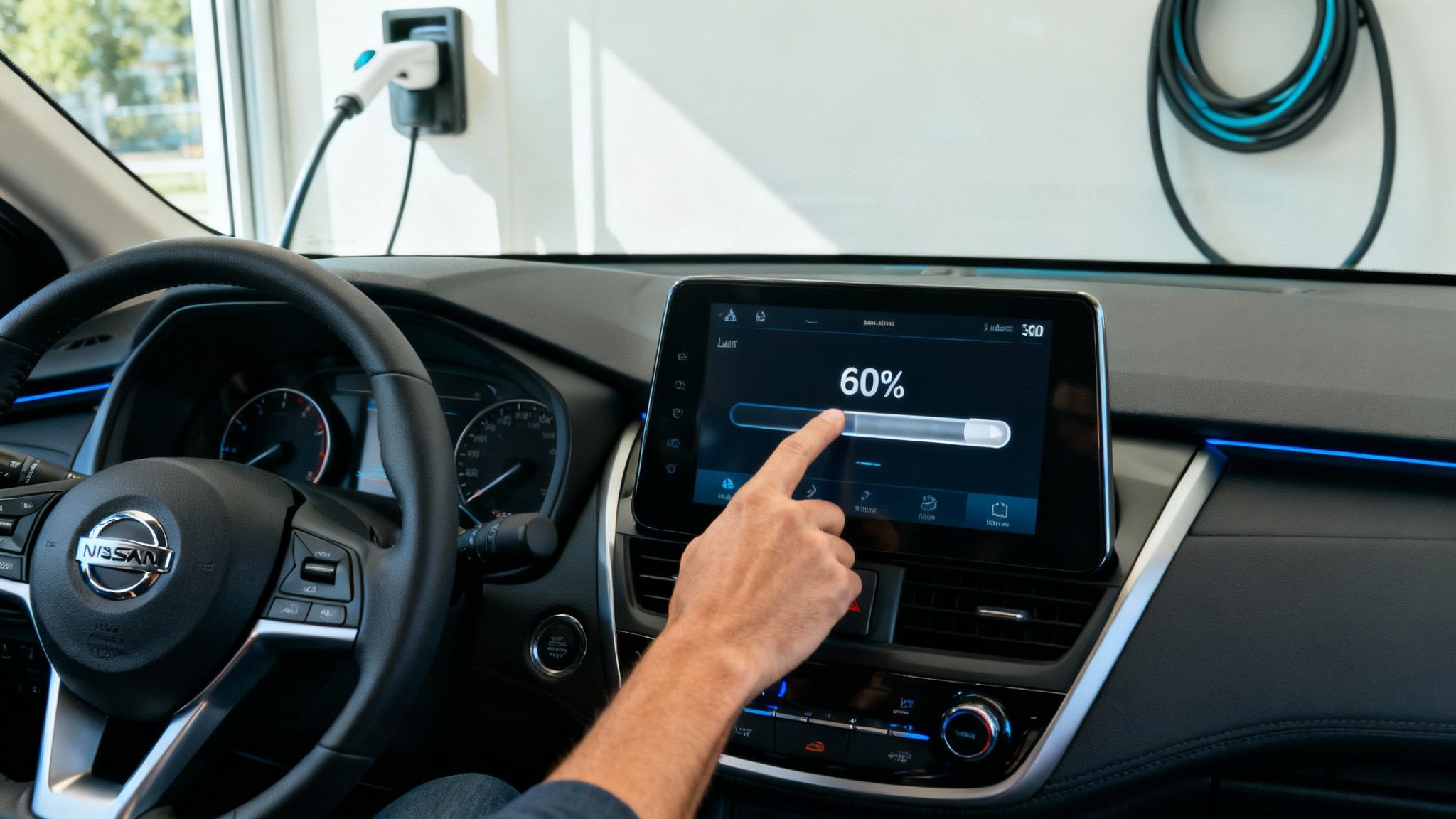
The battery’s sweet spot is between 20% and 80% state of charge. By setting your Leaf's charge timer to stop at 80% for daily driving, you can dramatically slow down the degradation process. Save the full 100% charge for those rare long trips when you genuinely need every last mile.
This one simple change of habit will do more for your battery's long-term health than anything else.
The Rapid Charging Dilemma
Rapid chargers are brilliant, aren't they? A quick pit stop on a long journey and you’re back on the move. But relying on them for your daily top-up is a recipe for accelerated battery wear. The DC rapid charging process generates a lot of heat.
And as we know, heat is the ultimate villain in the story of battery degradation. Since the Leaf’s battery is air-cooled, it has no efficient way to get rid of this intense heat quickly. Using a rapid charger once in a while is perfectly fine—that’s what they’re for. But doing it every day is like living on a diet of takeaways; it’ll catch up with you.
For day-to-day charging, stick to a slower 7kW AC home or workplace charger. It’s much gentler, creates far less heat, and is exactly what your battery prefers. Save the rapid chargers for the motorways. If you are on the road, it's worth reading our guide on the CCS to CHAdeMO adapter and bridging the great divide to understand all your charging options.
Simple Habits for a Healthy Battery
Beyond those two main rules, a few other bits of common sense can make a real difference.
- Avoid the Deep Discharge: Whatever you do, don't leave your Leaf sitting for weeks with a completely flat battery. This is the fastest way to cause permanent, irreversible damage to the cells. If you're going away, leave it with at least 50% charge.
- Park Smart in Summer: On those rare, scorching British summer days, try to park in the shade. Leaving the car to bake in direct sun raises the battery temperature, which, as we’ve covered, isn't ideal.
- Gentle Does It: Smooth acceleration and braking aren't just for a more relaxing drive; they're also much kinder to your battery. Aggressive driving drains the pack faster, which means more frequent charging cycles over the car's lifetime.
By following these straightforward tips, you're not just maintaining a car. You're protecting your investment and making sure your Leaf stays a useful, reliable runabout for many years to come.
Your Burning Battery Questions, Answered
Alright, you've made it through the technical deep dive, the warnings, and the best-practice advice. Now for the quick-fire round. We get asked the same questions about Nissan Leaf batteries day in, day out, so let's cut to the chase and give you the answers you're actually looking for.
Think of this as the pub-quiz section of our guide. No waffle, no complex diagrams—just straight, honest answers to your most common concerns. Let's get into it.
How Much Does a Nissan Leaf Battery Replacement Cost in the UK?
Let’s just rip the plaster off, shall we? If you walk into a Nissan main dealer for a brand-new battery, you’d better be sitting down. You could be looking at a bill anywhere from £5,000 for a refurbished 24kWh unit to well over £15,000 for a new, top-spec pack. Frankly, it’s a ridiculous sum that often costs more than the car is even worth.
This is where independent specialists come to the rescue. These workshops are the real-world, sensible alternative. A good quality refurbished pack or even a targeted cell replacement for an older Leaf will usually land somewhere in the £3,000-£6,000 range. It's still a big chunk of change, but it's a price rooted in reality.
The best part? Many of these indie garages offer upgrades that main dealers wouldn't dream of. Fancy slotting a 40kWh pack into your old 24kWh car? That’s entirely possible, with prices starting from around £7,000-£9,000 . It's a significant investment, but it breathes incredible new life into a perfectly good vehicle. The key takeaway: always get a few quotes from trusted independents before you make a decision.
Can I Upgrade My Old 24kWh Leaf to a 40kWh Battery?
Yes, you absolutely can! It’s arguably the single best thing you can do for an early-generation Leaf. There are several brilliant independent EV specialists across the UK who have completely mastered this operation. It’s a bit like giving your ten-year-old laptop a new solid-state drive and a RAM boost; it totally transforms its performance and usefulness.
Now, this isn't a simple DIY job, mind you. It's a full-on pack swap that involves carefully removing the old unit, fitting the larger one, and making sure all the car's electronic brains can talk to the new battery without throwing a digital tantrum. It’s a job for the pros, but the results are phenomenal.
The upgrade often more than doubles the car's real-world range, turning a city-bound runabout into a car capable of proper A-road journeys. While the cost is significant, it's far, far cheaper than buying a new electric car and is a fantastic way to keep a reliable vehicle on the road for longer.
What Is LeafSpy and Do I Really Need It?
LeafSpy is a brilliant little mobile app that, when paired with a cheap OBD2 dongle, acts as a truth serum for your battery nissan leaf . It bypasses the dashboard’s often optimistic display and tells you what’s really going on inside. It reveals crucial data like the true State of Health (SOH), individual cell voltages, and the battery temperature.
So, do you really need it? If you're buying a used Leaf, the answer is an unequivocal, resounding YES . It is absolutely, non-negotiably essential. It's the only way to know the genuine condition of the most expensive part of the car. Turning up to view a used Leaf without it is like going on a blind date without ever having seen a picture – a truly terrible idea.
For existing owners, it’s an invaluable tool for tracking degradation over time. The small cost of the app and a £20-£30 dongle from Amazon is, without a shadow of a doubt, the best money you will ever spend on your Leaf.
Is It Bad to Rapid Charge My Leaf All the Time?
Think of rapid charging like mainlining espresso. It gives you a massive, fast jolt of energy when you’re flagging on a long journey, but making it a daily habit isn't going to do your long-term health any favours. It’s exactly the same story for your Leaf’s battery.
Rapid charging (DC) generates a lot of heat, and heat is the arch-nemesis of battery longevity. Because the Leaf’s battery is air-cooled, it struggles to get rid of this intense heat efficiently. Relying on rapid chargers for your daily commute will absolutely speed up the degradation process.
The golden rule is beautifully simple: 'AC for daily, DC for distance'.
A quick blast on a rapid charger during a motorway trip is perfectly fine; that’s precisely what they’re there for. But for your regular charging at home or work, a slower 7kW AC charger is infinitely kinder to your battery. It generates far less heat, putting minimal stress on the cells and helping to preserve its health for years to come.
At VoltsMonster , we're dedicated to cutting through the noise and giving you the straight-talking advice you need to navigate the world of EVs. Whether you're a seasoned owner or just starting your electric journey, we've got reviews, guides, and podcasts to help you along the way. Explore our content and join the community at https://www.voltsmonster.com.
VoltsMonster Electric Vehicle Blog