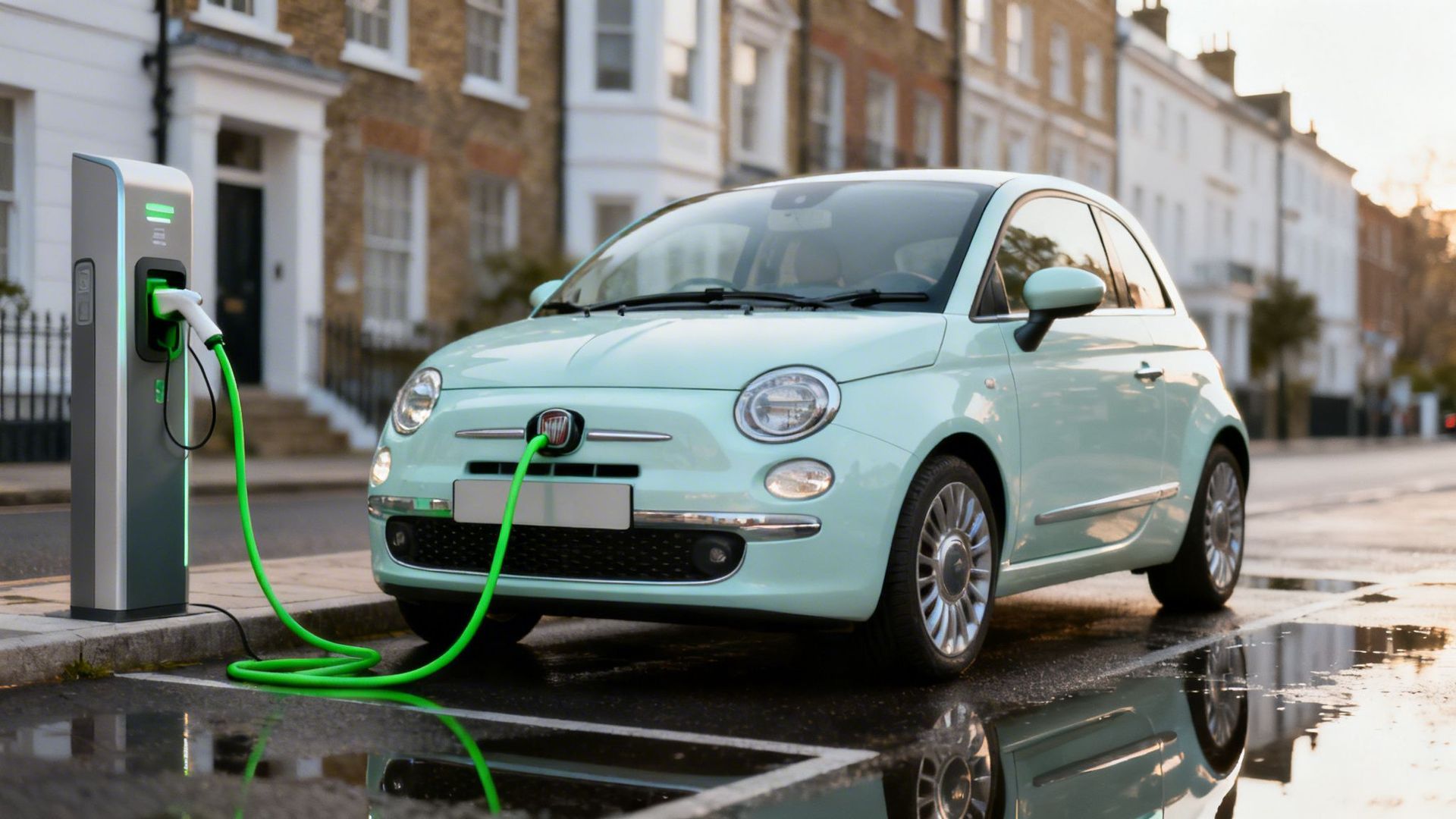
Electric Car Reliability: A Sceptic's Guide to Not Getting Stranded
Right then, let's have a proper chinwag about electric car reliability . In a nutshell, they’re surprisingly dependable. Despite the horror stories you might have been fed down the pub, EVs are mechanically simpler and, according to the data, less likely to leave you stranded than their petrol or diesel cousins.
Are Electric Cars a Breakdown Nightmare on Wheels?
You’ve heard the tales, haven’t you? Some poor sod's £50,000 electric SUV, dead as a dodo on the hard shoulder of the M1, hazard lights blinking pathetically in the drizzle. Tabloid headlines scream about batteries giving up the ghost at the mere suggestion of a cold morning. The narrative is set: buying an EV is like adopting a very expensive, temperamental pet that might refuse to move for no good reason.
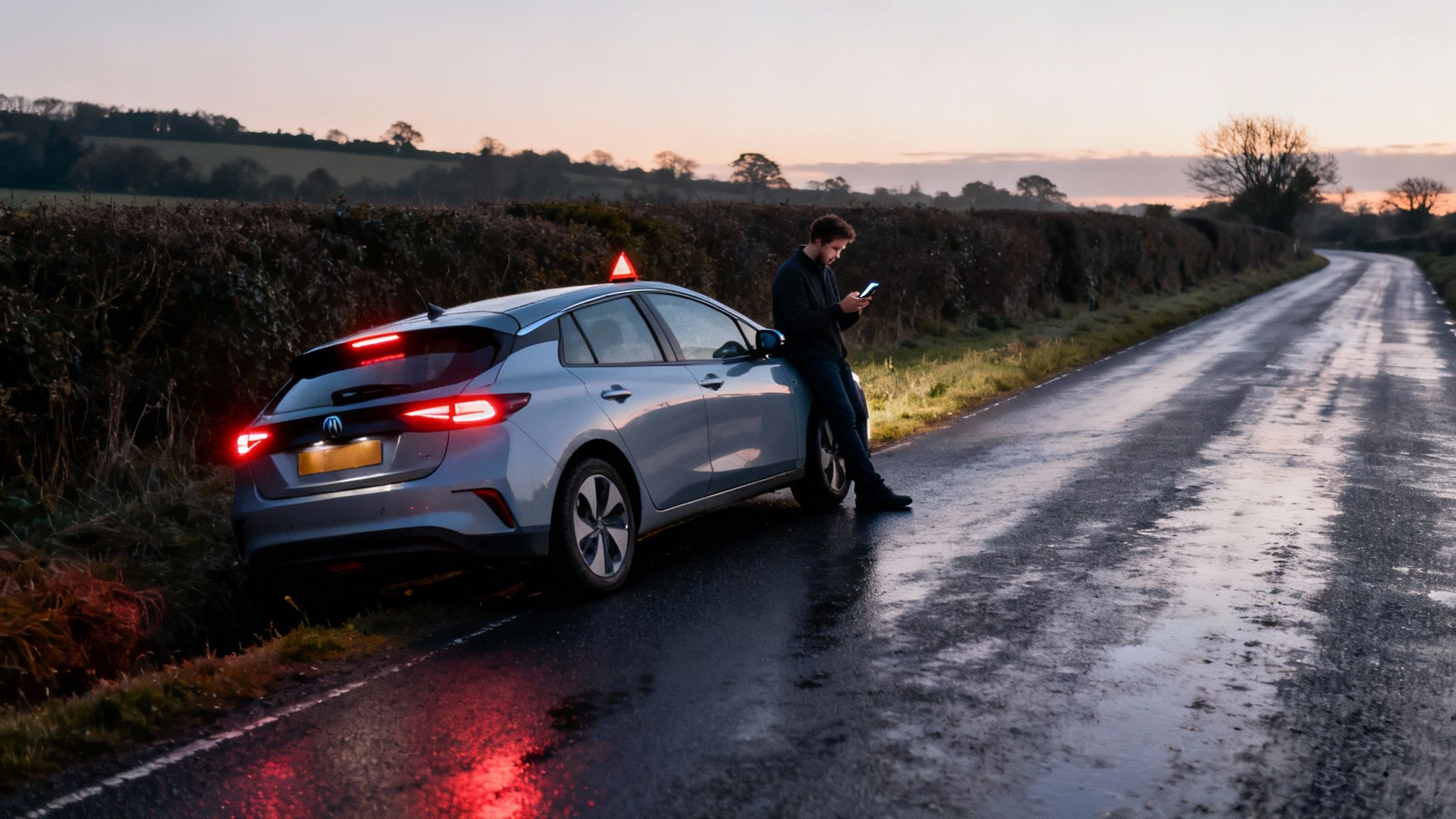
But it's time to cut through the guff and look at what’s actually happening on Britain's roads. The whole idea of electric car reliability has been hijacked by a bit of fear-mongering and a general distrust of anything that doesn’t smell faintly of unleaded.
The truth is far less dramatic and, frankly, a bit boring for the scaremongers.
Fewer Oily Bits to Go Bang
At its core, an electric car is a magnificently simple machine. It’s essentially a massive battery, one or two motors, and a computer telling them how to play nicely together.
Now, compare that to an internal combustion engine – a glorious but ludicrously complex contraption of pistons, valves, injectors, belts, and a thousand other oily components all just waiting for their moment to go expensively wrong.
The fundamental advantage of an EV is mechanical simplicity. With far fewer moving parts, there are simply fewer things that can wear out, snap, or leak. This inherent design advantage is the very foundation of modern electric car reliability.
Of course, this doesn't mean EVs are flawless saints of the automotive world. They have their own unique set of quirks and potential gremlins, which we’ll get into later. But the catastrophic, wallet-emptying failures that can plague modern petrol and diesel cars? They're largely absent. To get a better sense of what this means for running costs, you might want to read our thoughts on whether an EV's maintenance bill is cheaper.
What the Breakdown Data Actually Says
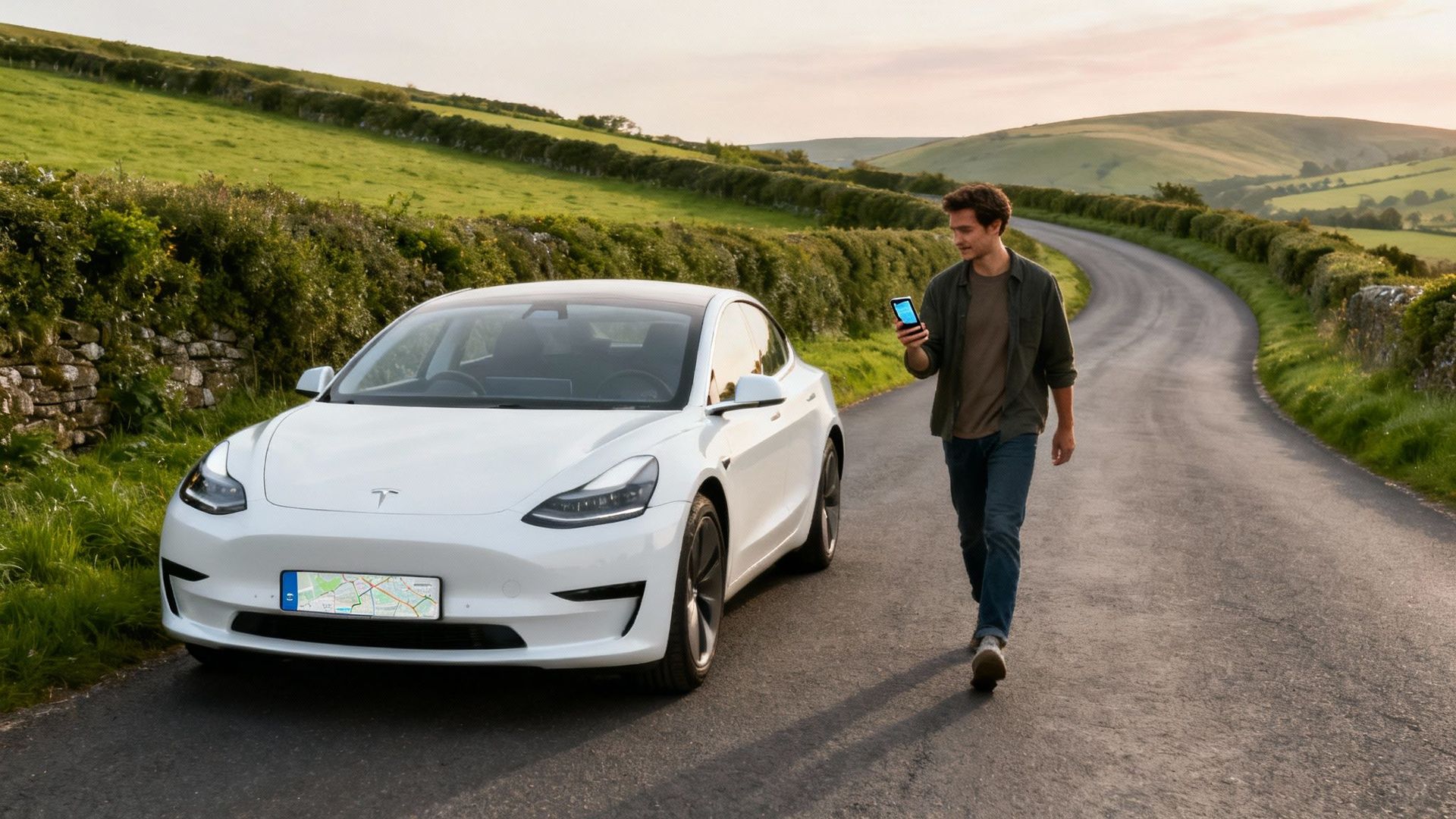
So, what about those dreaded roadside breakdowns? Are you really destined to be stranded on the M25 in your shiny new Tesla?
Well, AA breakdown data from 2015-2023 paints a very different picture. It shows that EVs are breakdown rarities in the UK , accounting for just 2.71% of all call-outs in 2023, despite now making up a growing slice of the cars on our roads. Petrol and diesel vehicles, on the other hand, are responsible for the vast majority of the AA's rescue missions.
And when an EV does falter, there's more good news. In 2023, a significant number of EV breakdowns were fixed at the roadside, often outperforming traditional engines where a tow truck is the only answer.
This guide will serve as your no-nonsense handbook to navigating the real world of EV ownership in Britain, showing you why most reliability fears are just hot air.
Uncovering The Real Gremlins In Your EV
Forget the high drama of a seized engine or a blown head gasket. When an electric car decides to throw a wobbly, the cause is often something surprisingly simple and, dare I say, a bit daft.
The vast majority of EV owners will tell you the high-voltage battery pack is bulletproof. The real villain? The humble 12-volt battery . Yes, that little box, a relic from the petrol age, is responsible for powering your lights, locks, and dashboard. And it’s the number one cause of EV roadside callouts.
It has a nasty habit of going flat if the car is left for a week, leaving you completely stranded despite having a massive, fully-charged drive battery. The car is fine, but the bit that turns it on has given up the ghost. It's the automotive equivalent of losing the telly remote.
Beyond that, you'll encounter digital gremlins that feel more like an IT support ticket than a garage job. The infotainment screen might demand a random reboot, or a software update could decide to start mid-journey.
Then there are the mechanical quirks. Charging port doors can get weirdly stubborn, refusing to open without a bit of gentle persuasion (or a firm word). And sensors? They can be more temperamental than a rock star, flashing phantom warnings for an open door or a brake fault that vanishes the moment you turn the car off and on again.
“The most common EV niggles read more like a comedy of errors than a serious mechanical drama,” quips the VoltsMonster founder.
The good news is that these are almost always cheap and easy fixes compared to the wallet-shredding catastrophes that can plague petrol and diesel cars.
Believe it or not, a staggering 42% of EV breakdowns in the UK are caused by that tiny 12-volt battery. That statistic towers over software glitches and highlights where the real gremlin in the machine lives.
“The main battery tech is straight out of science fiction, but the 12V is like a mischievous little pixie hiding in the works,” laughs our in-house sparky.
Common (But Tiny) EV Faults
Here’s a quick rundown of the usual suspects:
- 12-Volt Battery Failures: A cheap part, but it's absolutely critical for getting the car started and running all the accessories.
- Software Glitches: Most gremlins, like a frozen infotainment screen, can be sorted with a simple system reboot.
- Charging Port Jams: Often, it's just a sticky mechanical hinge that stops you from plugging in.
- Sensor Misreads: You’ll get the odd false alarm that disappears after a quick power cycle.
Each of these issues typically means a quick trip to the dealer for a software patch or a minor part swap, not days of major surgery in a workshop.
EV Gremlins vs Petrol Nightmares: A Reality Check
To put things in perspective, let’s look at how common EV headaches stack up against the horrors of internal combustion engine (ICE) ownership. We’ve all been there, staring at a four-figure repair bill for a part we’d never heard of.
| Issue | Typical Electric Car Fault | Typical Petrol/Diesel Car Fault | Average Repair Cost (UK) | VoltsMonster Verdict |
|---|---|---|---|---|
| Startup Power | Flat 12V battery | Failed starter motor or dead alternator | £60 – £120 (EV) vs £250 - £500 (ICE) | EV Win: A cheap, quick roadside fix. |
| System Crash | Infotainment screen needs a reboot | Engine stalls due to ECU or sensor failure | £0 (EV) vs £300 - £800+ (ICE) | EV Win: A reboot beats a replacement. |
| 'Fuelling' Access | Jammed charging port door | Broken fuel flap actuator | £0 – £80 (EV) vs £100 - £200 (ICE) | EV Win: A manual jiggle often solves it. |
| Warning Lights | Sensor misread (resets on restart) | Worn camshaft or O2 sensor | £0 (EV) vs £150 - £400 (ICE) | EV Win: A temporary glitch beats a knackered part. |
As you can see, while no car is perfect, the nature of EV problems is fundamentally different—and usually a lot cheaper and less invasive to sort out.
For a much deeper dive into the longevity of the main power source, check out our guide on how long do EV batteries last, like, really?.
Why These Little Gremlins Matter
Even though these faults are minor, they can still knock your confidence in the car. But let's be realistic. While a failed timing belt on a petrol car could leave you thousands of pounds poorer and without a car for a week, most EV issues are resolved with minimal fuss.
True reliability isn't about a car never having a single glitch. It’s about having predictable, manageable, and inexpensive problems. It’s the difference between spending ten minutes on the phone with a roadside assistance patrol for a 12V boost and spending ten days waiting for parts to arrive from Germany.
Quick Fixes And Top Tips
You can head off most of these common gremlins before they even start with a bit of simple housekeeping.
- Get your 12V battery’s health checked every year during its service.
- Keep your car’s software up to date . Most manufacturers push updates over-the-air (OTA).
- Give the charging port hinges a quick spray with silicone lubricant once or twice a year.
- If you get a strange warning light, try the classic IT solution: turn it off and on again .
Follow these simple steps, and you’ll turn those potential gremlins into little more than a footnote in your EV ownership story.
Ranking The UK's Most Dependable Electric Cars
Right, let's get down to brass tacks. Not all electric cars are created equal. Some are dependable workhorses that will shrug off a dreary Tuesday in Stoke, while others are temperamental divas that throw a fit if you look at them sideways. It’s time to name names.
Navigating the world of electric car reliability surveys can feel like trying to decipher ancient hieroglyphics. You’ve got outfits like What Car? and Warrantywise throwing percentages and index scores around, but what does it all actually mean for you, the person who just wants a car that starts in the morning?
Think of these surveys as a giant, nationwide gossip session amongst car owners. They report every little niggle, from a squeaky bit of trim to a full-on system failure. A high score doesn't mean the car is flawless; it means fewer owners are complaining, and when they do, the problems are usually minor and cheap to fix.
Who Tops The Reliability Charts?
When you filter out all the noise, a few champions consistently rise to the top, proving their mettle on our uniquely challenging British roads. These are the cars with a proper track record, not just shiny press photos.
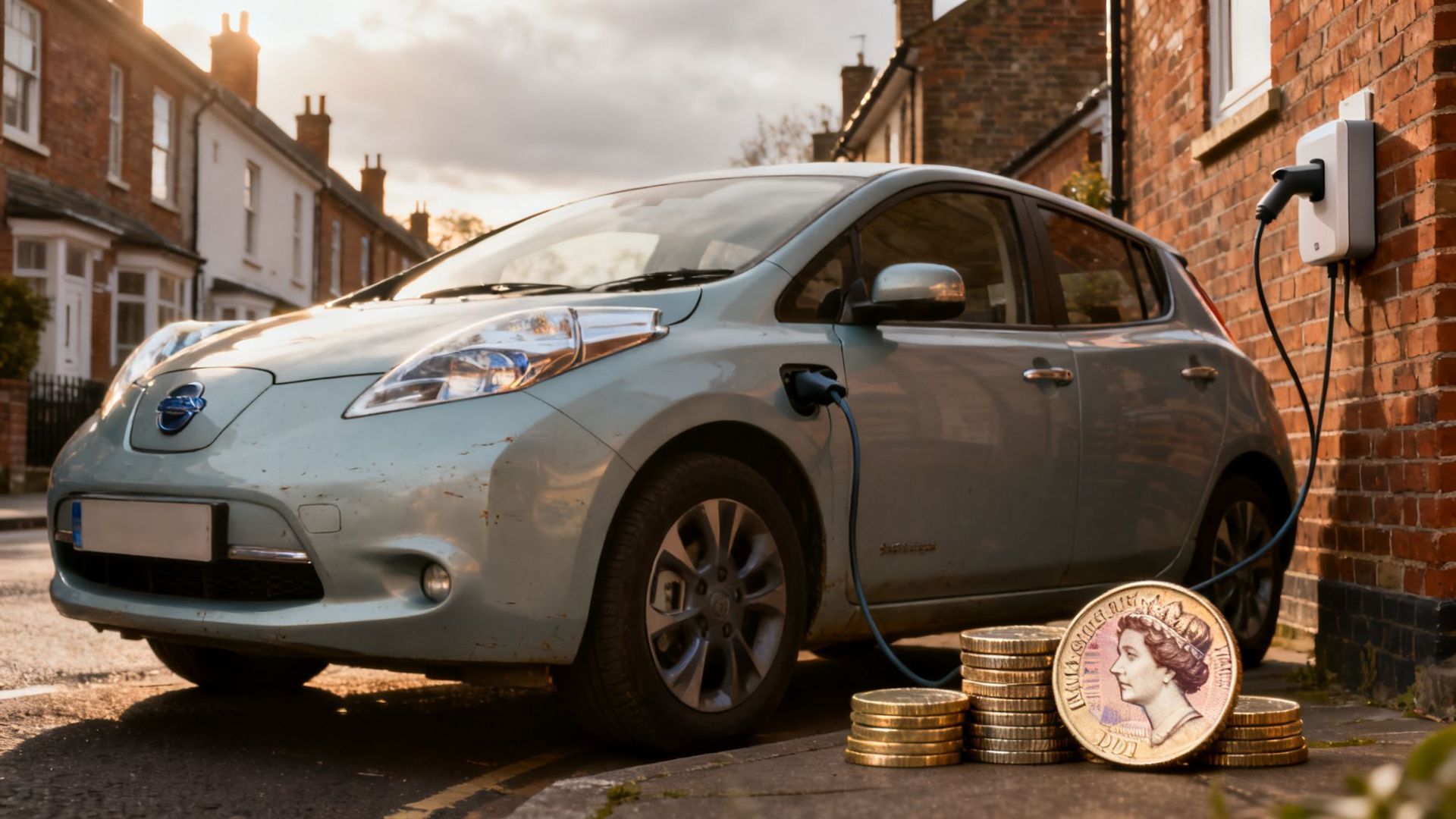
The Nissan Leaf (models from 2011-2024) consistently tops the charts as the most reliable electric vehicle in the UK . According to Warrantywise, it boasts a stellar Reliability Index of 91.3 out of 100 , and What Car? gives it a 95.7% score. With only a 9% fault rate reported by owners, it’s a seriously dependable bit of kit. You can discover more insights about UK used car reliability here.
The following chart breaks down where the most common faults lie for EVs versus their petrol-powered predecessors.
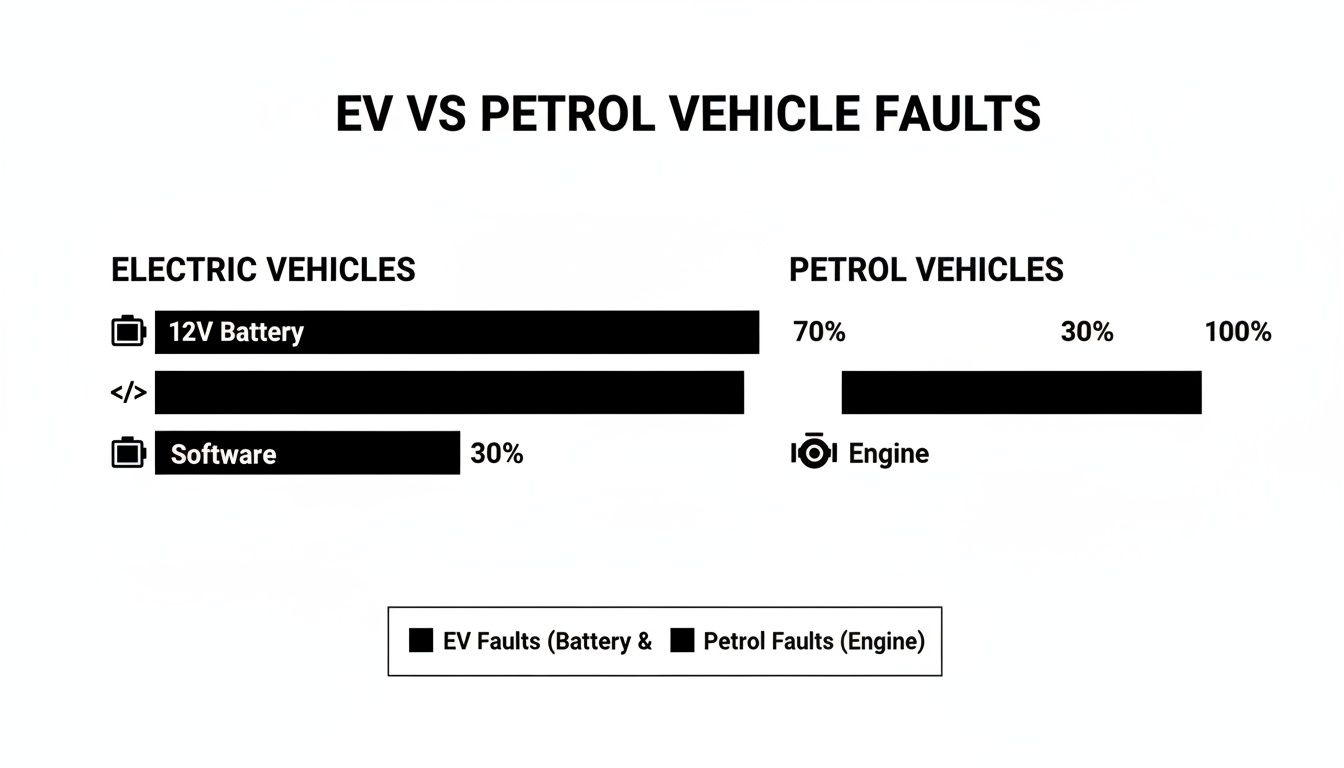
As you can see, EV issues tend to cluster around the 12V battery and software gremlins, while petrol cars are still plagued by problems with the expensive, greasy bits under the bonnet.
Translating Scores Into Real-World Dependability
So, how do you read between the lines? A 95% reliability score sounds great, but the details are what really matter. You need to look at what actually went wrong.
The crucial difference is the nature of the fault. A score might be dragged down by infotainment glitches, which are annoying but won't leave you stranded. A lower score caused by motor or battery issues, however, is a massive red flag.
When you're scanning these reports, ask yourself a few key questions:
- What was the fault category? Was it "non-engine electrics" (likely the 12V battery or a sensor) or something more serious like "drive motor"?
- Was the car still driveable? Most surveys will tell you this. A car that can still limp to the garage is infinitely better than one that needs a recovery truck.
- How much did the repair cost? This is the big one. An average repair bill of under £100 for minor electrical issues is a sign of good health.
Reliable Models For New And Used Buyers
For those trawling the used market, proven reliability is non-negotiable. You want a car that’s already demonstrated it can handle years of British weather and potholed B-roads.
Based on long-term owner data, here are a few models that consistently get the nod of approval for their dependability:
- Nissan Leaf (2011-Present): The original and, according to the data, still one of the best. It’s not flashy, but it’s built like a brick outhouse, and its technology is well and truly proven.
- Kia e-Niro (2019-Present): Often praised for its solid build quality and an industry-leading seven-year warranty that gives used buyers incredible peace of mind.
- Hyundai Kona Electric (2018-Present): Shares much of its excellent hardware with the e-Niro and has developed a reputation for being a tough, no-fuss family EV.
Choosing one of these isn't just buying a car; it's buying a track record. It’s the smart way to go electric without the anxiety.
Our No-Nonsense Reviews Of Reliable EVs
Right, that's enough of the theory and the charts. Let's get down to the actual metal. This is where the rubber meets the road—or, more accurately, where the lithium-ion battery meets the classic British drizzle.
We’re going to pull apart a few popular models you'll see all over UK roads, looking at them with a single, ruthless focus: electric car reliability . We're not interested in the 0-60 times or the size of the touchscreen today. The only question that matters is: will it leave you stranded on the hard shoulder of the M25 on a wet Wednesday?
Here are our rapid-fire, straight-talking verdicts on three EVs you’re probably looking at. We'll dig into their known quirks, what the warranty really covers, and what genuine owners are grumbling about on the forums. This is the VoltsMonster way – connecting the dots between survey data and the real-world experience of owning one.
Kia e-Niro: The Sensible Champion
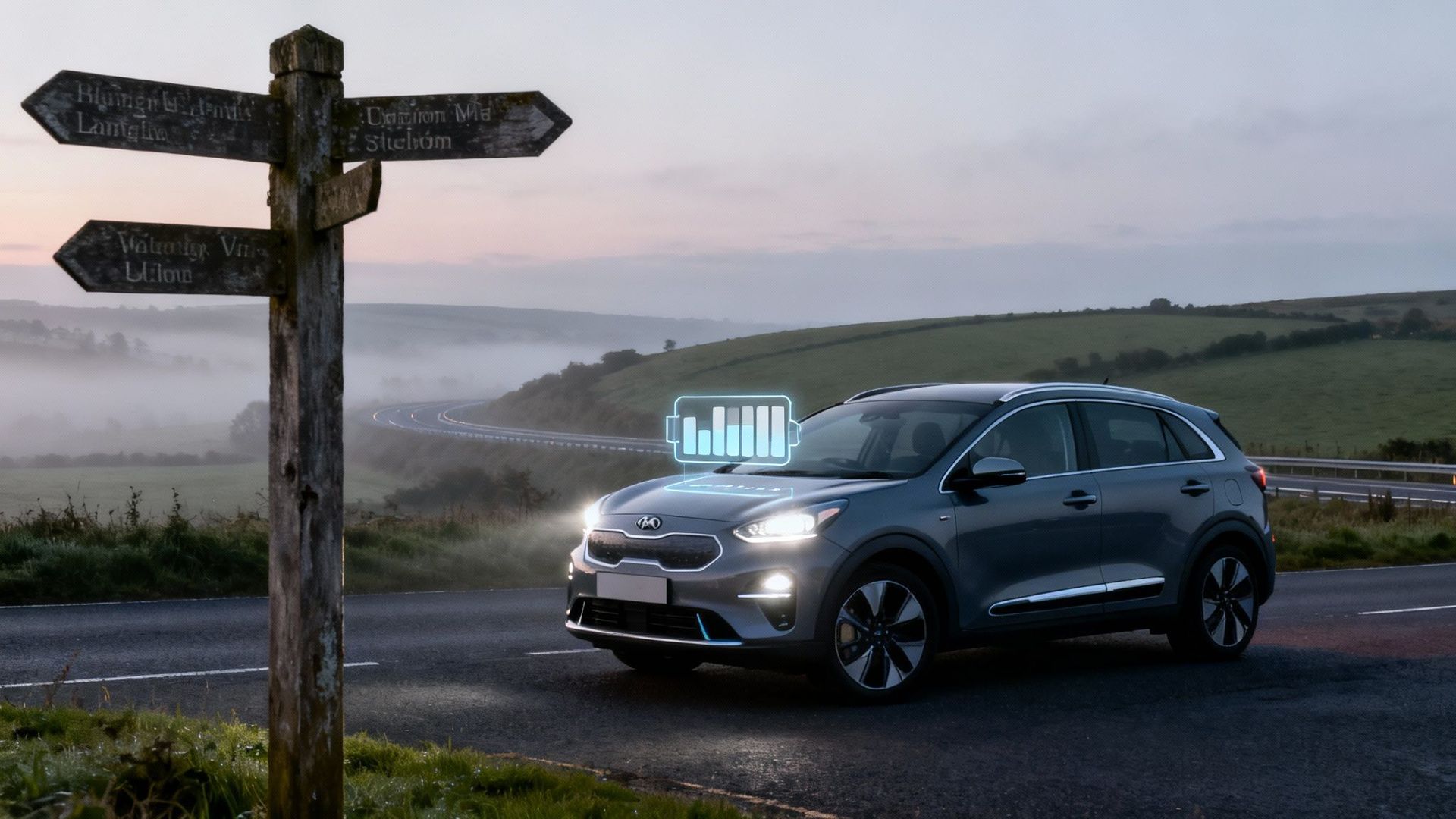
The Kia e-Niro is the automotive equivalent of a well-made pair of Marks & Spencer slippers. It’s not going to set your pulse racing, but my goodness, is it dependable. It's the car you buy when you have far more important things to worry about than whether your transport will start in the morning.
UK owners of the e-Niro are a happy bunch. With a fantastic 93.4% reliability score from What Car? and a solid 88.1/100 rating from Warrantywise for 2019-present models, it’s a true dependability darling. Only 15% of owners reported any kind of fault, most of which were minor niggles with bodywork, non-motor electrics, and – you guessed it – the 12V battery.
The 64kWh version gives you a genuine 250-mile range, perfect for getting from Bristol to Birmingham without a hint of drama. You can read the full reliability survey findings on What Car?.
The e-Niro’s trump card isn’t just its solid build quality. It’s the seven-year, 100,000-mile warranty . This is the gold standard, offering the kind of peace of mind that helps even the most anxious first-time EV buyer sleep soundly.
Known Gremlins:
- 12V Battery Drain: A common theme with many EVs. If left parked for a couple of weeks, you might come back to a flat 12-volt battery.
- Noisy Heat Pump: Some owners report a noticeable hum from the heat pump in colder weather. It's more of a slight annoyance than a proper fault.
- Sticky Charge Port Door: A classic EV niggle that can sometimes require a bit of manual persuasion to open, especially in icy conditions.
Tesla Model 3: The Talented, But Temperamental One
Ah, the Tesla Model 3. The darling of the EV world, the tech icon on wheels. It’s fast, futuristic, and fantastically efficient. But when it comes to old-fashioned reliability, its record is a bit more… complicated. Think of it as the brilliant but moody artist of the EV world.
The core electric drivetrain is famously robust; the motor and battery are practically bulletproof. The problem is, the Model 3’s reliability scores are consistently dragged down by what can only be described as patchy build quality. Owners frequently report panel gaps you could lose a badger in, paint defects, and annoying rattles from interior trim.
Known Gremlins:
- Build Quality Quirks: Misaligned body panels, condensation inside the light clusters, and paint imperfections are well-documented complaints.
- Phantom Braking: Some drivers have reported unsettling instances of the car's driver-assist systems braking suddenly for no apparent reason.
- Service Centre Roulette: Getting issues fixed can be a postcode lottery. Waiting times for service appointments and the quality of the work can vary wildly across the country.
So, while it's highly unlikely to leave you stranded with a dead motor, you might spend more time than you’d like dealing with frustrating cosmetic and electronic glitches.
Volkswagen ID.3: The Solid Family Workhorse
The ID.3 was Volkswagen’s big "we’re finally serious about EVs" moment. For the most part, it’s a cracking family hatchback—spacious, practical, and it drives with that reassuringly solid German feel. Its reliability story, however, had a very shaky start.
Early models were plagued by software bugs that would make a 1990s desktop computer blush. Infotainment screens would freeze, warning lights would pop up for no reason, and basic functions would simply refuse to cooperate. It was a messy launch.
Thankfully, Volkswagen seems to have got a handle on the worst of it through a series of over-the-air software updates. Post-2022 models are proving to be far more dependable, with most of those initial software gremlins ironed out. The mechanical bits—the motor, the battery—were never really the problem; it was the silicon chips that were throwing a tantrum. If you’re looking at a used one, make absolutely sure it has the latest software version installed.
Finding a Dependable Used EV Without Getting Fleeced
Right, you’ve decided to take the plunge into the second-hand electric market. Bravo. Now for the tricky bit: bagging a dependable gem instead of inheriting some other poor sod’s problems. Buying a used EV isn’t quite like buying a used petrol car; you can’t just kick the tyres and listen for a funny noise from the engine.
Your focus needs to be laser-sharp on the single most expensive component: the battery. The rest of the car could be pristine, but if the battery is on its last legs, you've just bought yourself a very expensive and very heavy driveway ornament. Consider this your pre-flight checklist for avoiding that exact fate.
Scrutinise The Battery Health Report
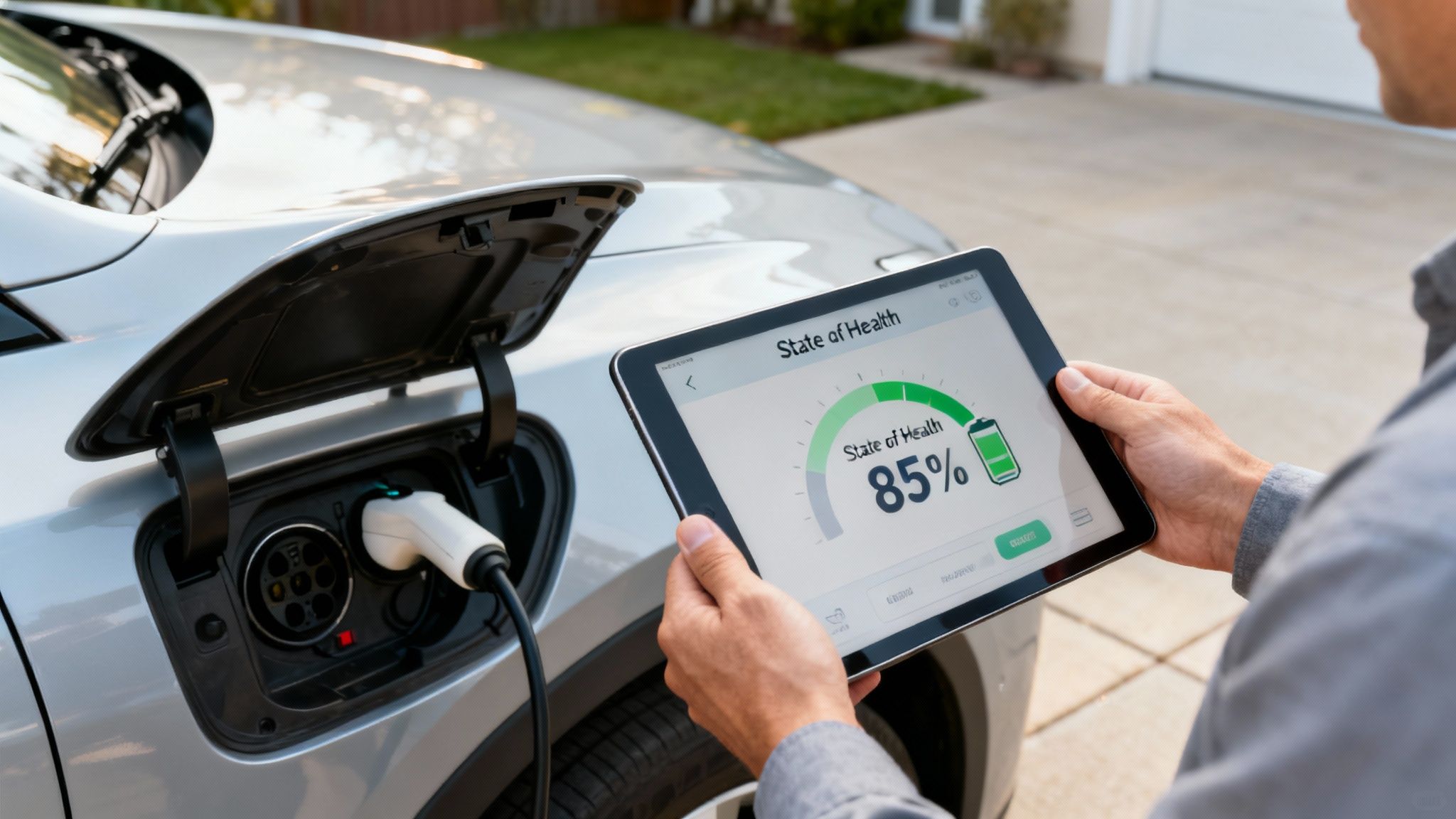
First thing’s first, you need to see the battery’s report card. This is called the State of Health (SoH) report, and any reputable seller should be able to provide one. It gives you a simple percentage showing the battery's current maximum capacity compared to when it was brand new.
Think of it like an old phone battery. When it was new, it lasted all day. A few years on, you're lucky to get to lunchtime. The same principle applies here, but on a much grander (and more expensive) scale.
A good rule of thumb is that a healthy EV battery should only degrade by about 2.3% per year . So, a five-year-old car should ideally have an SoH of around 88% or higher. Anything dropping below 80% should raise a serious eyebrow.
Confirm The All-Important Warranty
Next up is the battery warranty. This is your safety net, your get-out-of-jail-free card. Most manufacturers in the UK offer an eight-year, 100,000-mile warranty on the battery pack, which guarantees it won't drop below a certain SoH—usually 70% .
You must confirm that this warranty is still valid and transferable. Go through the car's service history meticulously. A missed service, even a minor one, can be used by manufacturers as a sneaky excuse to void the warranty, leaving you completely exposed. Don’t just take the seller's word for it; ask to see the paperwork.
Poke, Prod, and Test Everything
Once you're satisfied with the battery's health and warranty, it's time for the fun part. Forget kicking the tyres; you need to start prodding buttons like a hyperactive toddler. The biggest reliability gremlins in modern EVs aren't mechanical; they're electronic.
Here's your essential-but-cheeky checklist:
- The Charging Port Door: Does it open smoothly, or does it stick like it's been glued shut? Test it a few times. This is a surprisingly common and infuriating fault, especially on a cold, rainy night.
- The Infotainment Screen: Tap every single icon. Switch between the sat-nav, the radio, and the climate controls. Is it laggy? Does it freeze or crash? A sluggish screen is a massive red flag for underlying software issues.
- Software Updates: Ask the seller if the car has the latest software installed. Outdated software is often the root cause of many electronic gremlins.
- Plug It In: If possible, test both a slow AC charger and a rapid DC charger. You need to ensure the car accepts a charge properly from both sources without throwing up any error messages.
By methodically checking these key areas, you're not just buying a car; you're conducting a proper investigation. For a more detailed breakdown, check out our guide on the top 5 things to look for when inspecting a used EV. This homework is what separates a savvy buyer from someone who gets thoroughly fleeced.
Your Electric Car Reliability Questions Answered
Still got a few questions buzzing around? Good. When you’re about to spend a serious amount of cash on a new car, a bit of healthy scepticism is your best friend. Blind faith is for fanatics and football supporters.
Here are some straight answers to the most common queries we get about long-term electric car reliability. No flannel, no marketing speak—just the honest truth.
How Much Do EV Batteries Really Degrade?
This is the big one, isn't it? The nagging fear that your shiny new EV will have the range of a milk float in five years' time. Thankfully, the reality is far less dramatic.
Real-world data gathered from thousands of cars shows that the average EV battery loses about 2.3% of its capacity each year. So, after eight years on the road, your car should still hold over 80% of its original range. For most drivers, that’s more than enough for the daily commute and school run. Modern battery management systems are incredibly sophisticated, working behind the scenes to protect the cells from the worst of the wear and tear.
The whole "catastrophic battery failure" narrative is largely a myth. Degradation is a slow, predictable process, not a sudden cliff-edge drop. Most batteries will comfortably outlast the first, and often second, owner of the car.
What Are Out-of-Warranty Repair Costs Like?
Okay, let's say your eight-year battery warranty has run out. What happens if something goes pop? The thought of replacing an entire battery pack is enough to give anyone a cold sweat—we're talking thousands of pounds. But here's the thing: it almost never happens.
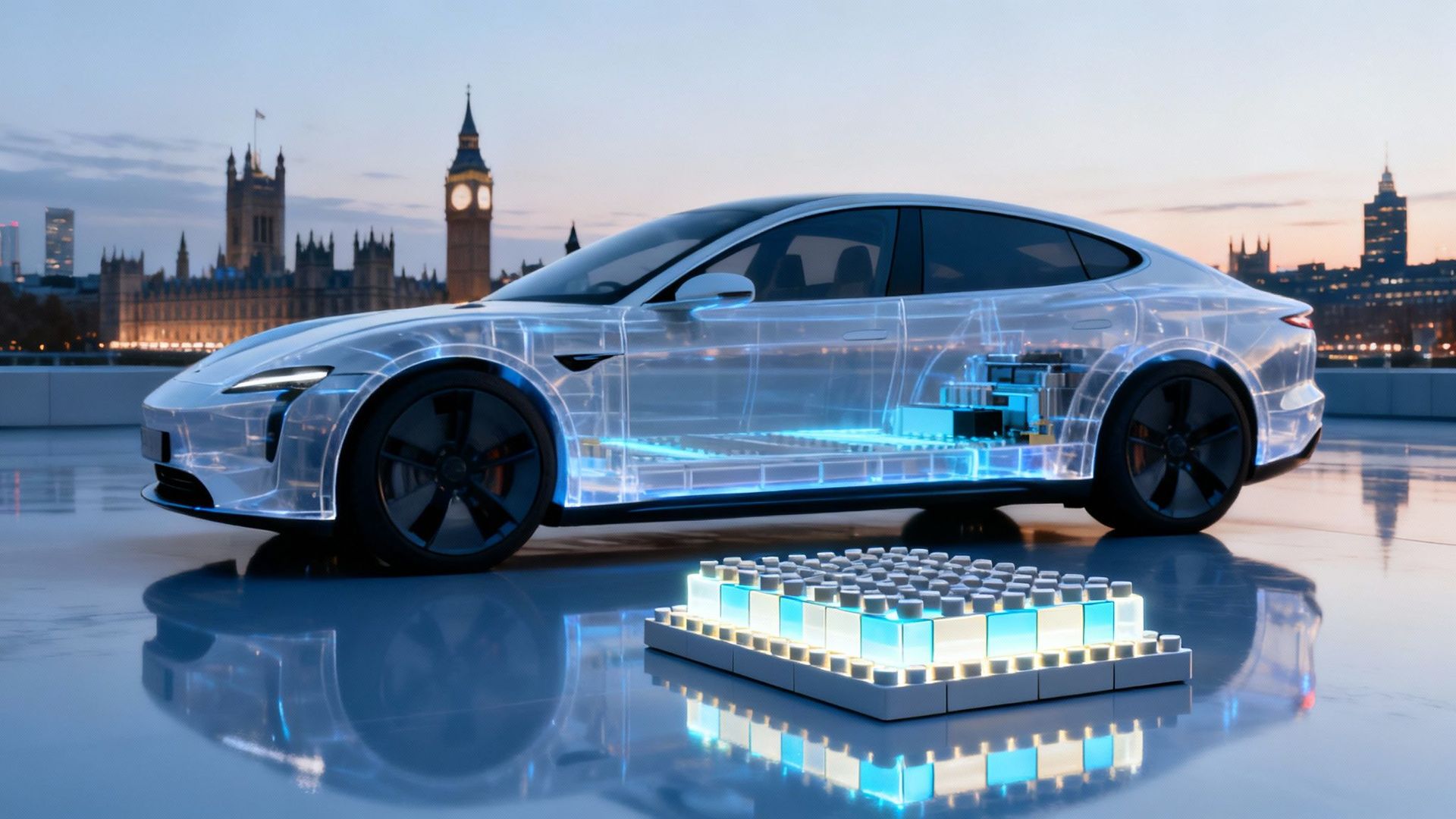
EV batteries are modular, built from many smaller sections. This means a fault can often be traced to a single rogue cell or module. Garages can now diagnose and replace just the faulty part, which leads to a far more palatable repair bill. Think of it as keyhole surgery rather than a full transplant.
Do My Driving Habits Affect Battery Life?
They do, but maybe not in the way you imagine. Constantly launching the car from every traffic light will have an impact over time, but the single biggest factor you can control is how you charge it.
- Go easy on rapid charging: Frequently using ultra-rapid DC chargers (the ones over 100kW) generates a lot of heat and puts stress on the battery. For day-to-day top-ups, a slower AC wallbox at home is much kinder to the cells. Save the rapids for long journeys.
- Avoid the extremes: Try not to leave your car parked for weeks on end with the battery either at 100% or close to empty. For daily driving, charging to 80% is the sweet spot for long-term health.
- Don't overthink it: Modern EVs have clever software with built-in buffers to protect the battery. Using the full 0-100% range when you need it for a big trip isn't going to cause any damage.
At the end of the day, modern electric car reliability is pretty solid. Just treat it with a bit of mechanical sympathy, and it'll serve you well for years.
Ready to explore the world of EVs with a team that tells it like it is? For more honest reviews, guides, and entertaining content, check out VoltsMonster at https://www.voltsmonster.com.
VoltsMonster Electric Vehicle Blog