PHEV vs Hybrid: The Ultimate UK Driver's Smackdown
Right then, let's cut through the marketing guff and get to the nuts and bolts. The real difference is simple: a Plug-in Hybrid (PHEV) has a bigger battery that you must plug in to get any decent electric-only driving, while a regular ‘self-charging’ Hybrid (HEV) relies on a tiny battery that gets its juice from the engine and braking.
Think of it this way: one is basically a part-time electric car, and the other is just a petrol car that's learned a few clever tricks to save fuel. One demands you change your life, the other just asks for your money at the pump.
PHEV vs Hybrid: Decoding The Electrified Dilemma
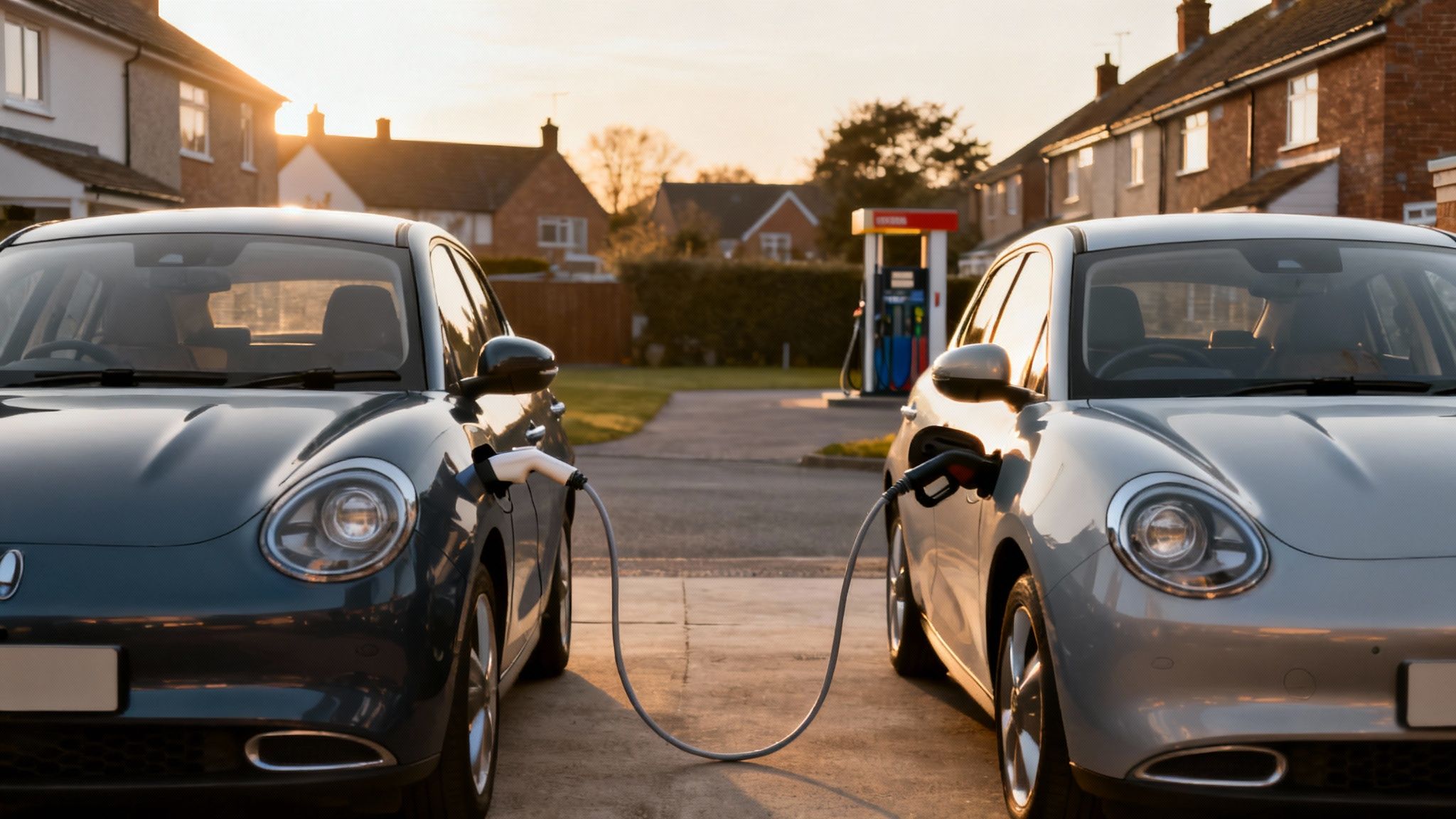
So, you're staring at two acronyms, trying to figure out which one will actually save you a few quid on fuel and which is just a glorified milk float with a petrol engine for backup. It’s a common dilemma, often muddied by dealership waffle and deliberately confusing jargon designed to part you from your cash.
Deciding between a PHEV and a hybrid isn't just about whether you have to plug it in. It's about a fundamental difference in how the car works and, more importantly, how it's going to fit into your life without driving you mad.
A traditional hybrid, often cleverly (and a bit dishonestly) marketed as a 'self-charging' hybrid, constantly juggles power between its petrol engine and a small electric motor. This system is at its best in stop-start city traffic, where it can shut the engine off and glide silently for short distances, sipping fuel like a connoisseur. If you want to dive into the technical wizardry, we've got a great breakdown on how hybrid cars actually work.
Plug-in hybrids, on the other hand, are the darlings of the UK's new car market right now. PHEV registrations have shot up by a massive 34.7% year-on-year, now grabbing 11.1% of the market share. That growth is even outpacing traditional hybrids, which saw a respectable but more modest 7.2% increase. Punters are lapping them up.
Core Differences At A Glance
To cut through the noise, this quick table lays out the crucial distinctions between the two, helping you see at a glance which technology might suit you better, or which is the bigger con.
| Feature | Plug-in Hybrid (PHEV) | Regular Hybrid (HEV) |
|---|---|---|
| Charging Method | Must be plugged into an external power source. | 'Self-charges' via braking and the petrol engine. |
| Electric-Only Range | Typically 25-50 miles , enough for most commutes. | Very limited, maybe a mile or two at low speeds. |
| Primary Power Source | Electric motor (if charged), with petrol backup. | Petrol engine, with electric motor assistance. |
| Best Use Case | Short daily drives with access to home charging. | Mixed driving, especially urban stop-start traffic. |
Ultimately, a PHEV makes the most sense if you can charge it religiously and your daily trips fall within its electric range. A regular hybrid is a simpler, no-fuss option for those who do varied mileage and can't be bothered with all that plugging-in palaver.
Analysing The Total Cost Of Ownership

Right, let’s get down to brass tacks. The sticker price is just the first chapter in the long and often painful story of owning a car. A brand-new PHEV will almost always demand a bigger initial wedge than its self-charging hybrid sibling, but the real question is how the finances stack up over three, four, or five years. Does that higher price pay you back, or is it just a bigger hit of depreciation?
The entire financial case for a PHEV balances on a single, simple action: plugging it in. If you can charge at home on an off-peak electricity tariff, you could be looking at rates as low as 7p per kilowatt-hour . That means filling a 15kWh battery for little more than a quid, giving you a real-world electric range of 30-40 miles. When you set that against the ever-present agony of the petrol pump, the maths starts to look very appealing indeed.
A conventional hybrid, on the other hand, is still fundamentally a petrol car. It's just a very efficient one. Its clever system recoups energy that would otherwise be lost, but at the end of the day, every mile you drive has a direct cost at the forecourt. It’s simply making that expensive litre of unleaded stretch a bit further.
The Taxman Cometh
Here’s where the financial gap between a PHEV and a hybrid widens into a chasm, particularly for company car drivers. HM Revenue & Customs has a soft spot for cars with low CO2 emissions and a decent all-electric range, and it bloody well shows.
Benefit-in-Kind (BiK) tax rates for PHEVs can plummet to as low as 5% . In contrast, a typical self-charging hybrid will likely land you somewhere between 25% and 30% . For a higher-rate taxpayer, this isn't just a small discount; it can mean saving thousands of pounds every single year.
That tax advantage alone is often enough to completely wipe out the higher purchase price of the PHEV within just a couple of years. It’s a very deliberate and powerful incentive to nudge drivers towards cars that can handle the daily commute without firing up the engine.
Crunching The Numbers Beyond Fuel
It doesn't stop with company car tax. Vehicle Excise Duty (VED), or road tax as we all know it, also factors in. Thanks to their lower official emissions, most PHEVs benefit from a reduced first-year rate and are often cheaper in the following years too. A standard hybrid, with its higher CO2 figure, will almost always cost you more to tax.
When you add it all up—the potential fuel savings, the huge BiK discount, and the lower VED—the total cost of ownership for a PHEV starts to look incredibly strong. But it all comes with one massive caveat: your lifestyle and driving habits must allow for regular, convenient charging. Digging into the real cost of owning an EV compared to petrol cars highlights just how deep these savings can run. It’s vital to look beyond the initial outlay and work out the long-term financial reality before you sign on the dotted line.
The Reality of Charging vs Refuelling
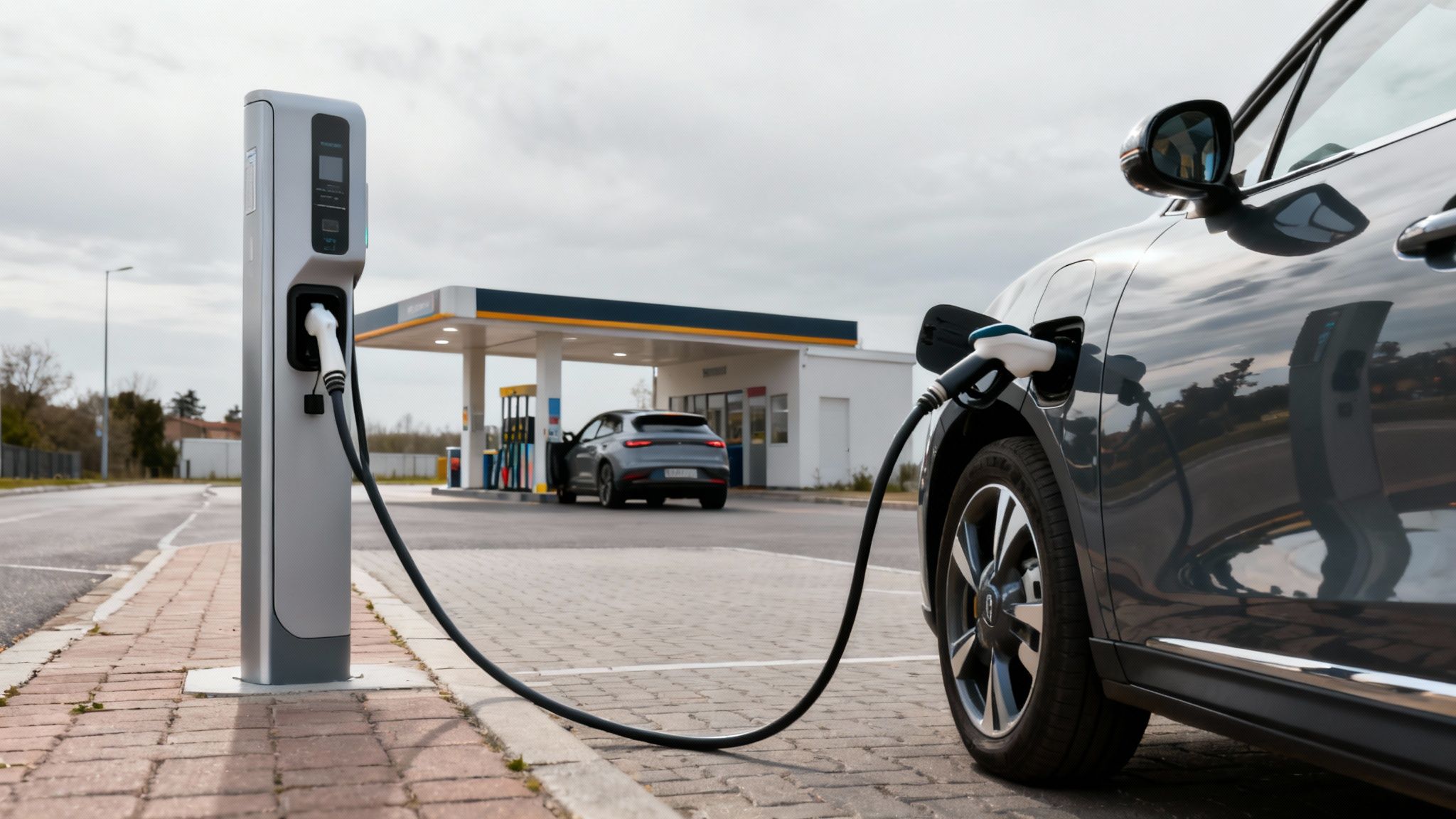
Right, let's get to the heart of the matter. This is where the PHEV vs hybrid debate really comes alive, and it boils down to a fundamental change in your routine. Owning a PHEV means embracing a new daily ritual: plugging it in. Constantly.
For many potential buyers, this is the deal-breaker. A hybrid driver’s life carries on as normal. You pull into a petrol station, have a little moan about the price, fill up, and you’re off. It's a routine as British as a soggy bank holiday.
The PHEV owner, on the other hand, needs to get intimately familiar with cables, sockets, and charging speeds. It’s a whole new world of faff.
Can You Live Without a Home Charger?
Sure, you can trail a cable out of your kitchen window to a standard 3-pin socket , but it’s an exercise in monumental patience. You’re looking at a painfully slow 8-10 hours for a full charge. It’s a bit like trying to fill a bathtub with a thimble.
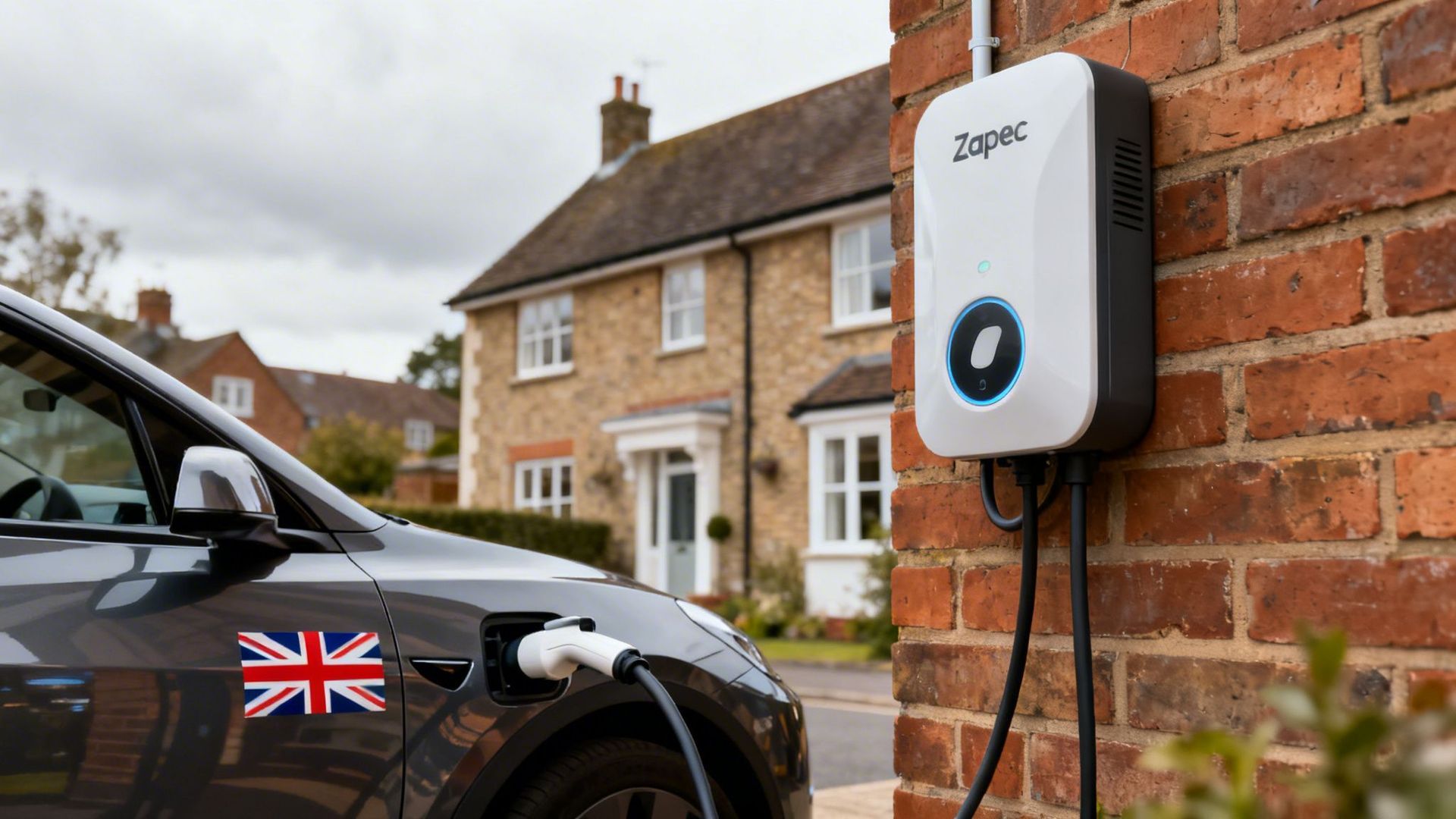
The sensible solution is a proper home wallbox charger. It’s an upfront cost, typically between £800 and £1,200 installed, but it transforms the experience. Charging times plummet to a far more manageable 3-4 hours , making an overnight top-up a simple, plug-in-and-forget task.
Of course, this is where your living arrangements become critical. If you've got a driveway, fantastic. But if you're in a third-floor flat with only on-street parking, you’ve got a real problem. Running an extension lead across the pavement every night is hardly practical, safe, or likely to win you any friends among the neighbours. If you're weighing up your options, our guide can help you decide whether to invest in a home charger or stick with public networks.
Which Hybrid Fits Your Life? A Scenario-Based Comparison
Choosing between a PHEV and a hybrid isn't just about the tech; it's about how that tech fits into your day-to-day life. One person's perfect car is another's daily frustration.
The table below breaks down some common UK driving scenarios to help you see which type of hybrid might be the better match for you.
| Driving Scenario | The Case for a PHEV | The Case for a Hybrid |
|---|---|---|
| The Daily Commuter
(Under 30 miles round trip) |
A clear winner. You could potentially do your entire week's commute on pure electric power, charging cheaply at home overnight. Petrol station visits become a hilarious rarity. | It’s still very efficient in stop-start traffic, but you'll be using the petrol engine every single day. The fuel savings just won't be as glorious. |
| The School Run & Local Errands | Ideal. Short, frequent trips are what PHEVs excel at. You get instant torque from the electric motor and zero emissions while driving around town, making you feel insufferably smug. | Perfectly capable and will return good MPG, but you miss out on the silent, all-electric experience and the potential for near-zero running costs for local journeys. |
| The High-Mileage Motorway Rep | A tough sell. Once the battery is flat, you’re essentially hauling around its dead weight, which can make your fuel economy worse than a standard hybrid's. A total own-goal. | This is where the hybrid shines. It’s designed for efficiency at all speeds and doesn't rely on you having a full battery. It’s the simpler, more consistent choice for long slogs. |
| The Weekend Adventurer
(City flat dweller, no driveway) |
Honestly, it's a nightmare. Relying solely on the public charging network is often expensive and unreliable. You'll likely end up running it on petrol most of the time, defeating the whole point. Don't do it. | The bleedin' obvious choice here. You get great fuel economy for those long weekend drives to the coast or countryside without ever having to worry about finding a working charger. |
Ultimately, a PHEV rewards planning and a consistent routine. A hybrid, on the other hand, offers fuss-free efficiency, no matter what your day throws at you.
Manufacturer Claims vs Grim Reality
And then we have the electric range figures. Manufacturers love to quote impressive numbers—say, 40 miles of pure electric bliss—achieved in perfect lab conditions by a bloke in a white coat.
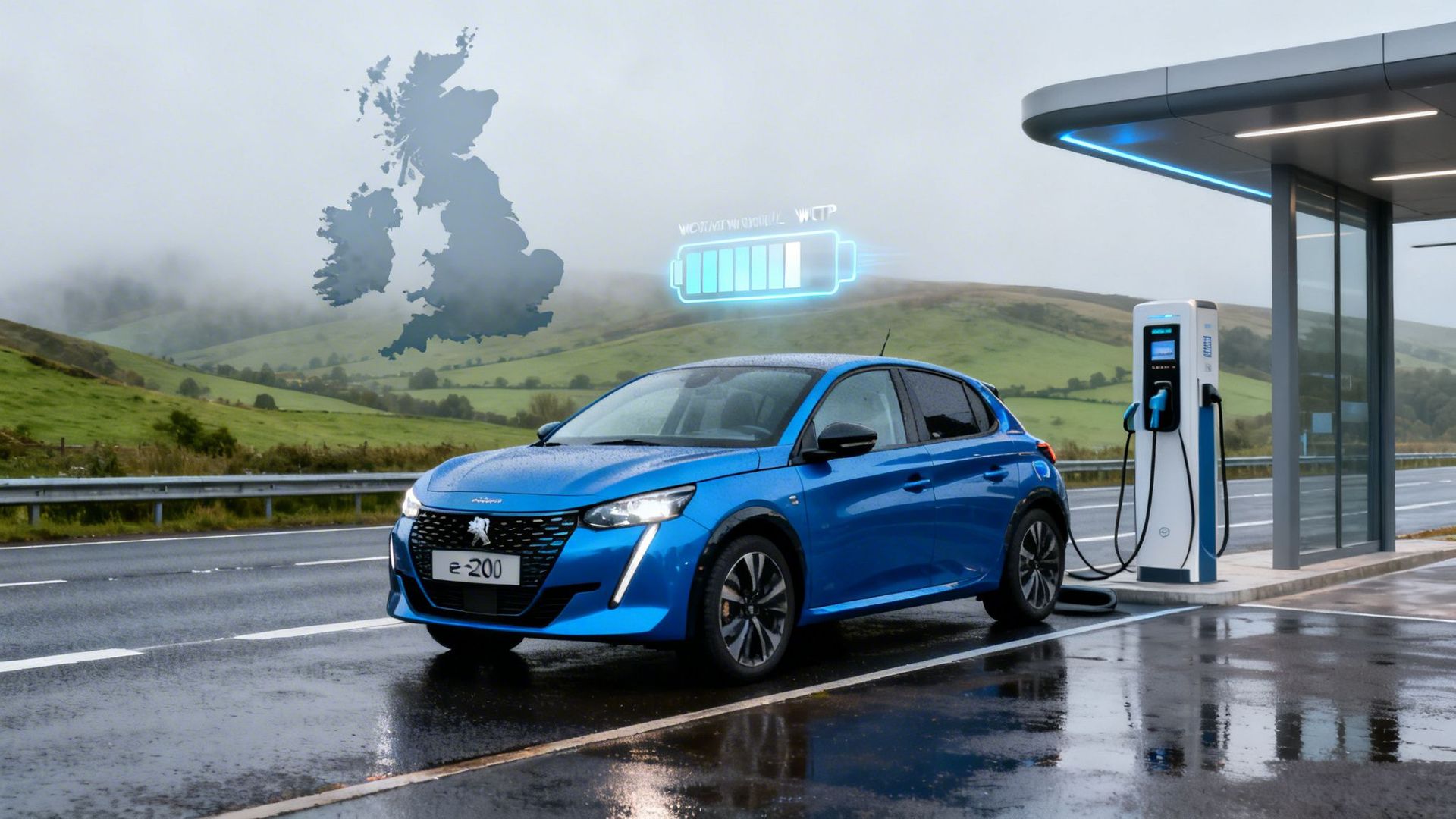
The reality of a cold, wet Tuesday morning commute with the heater blasting and wipers on full is often closer to 25-30 miles . That’s still enough for the average UK commute, but it’s a sharp reminder that you’re battling physics, not just a glossy marketing brochure.
A hybrid owner is entirely unbothered by these trivialities. Their range is dictated by the size of the fuel tank and how much they’re willing to be fleeced at the pump. It's a simpler, if costlier, existence. The PHEV demands a change in lifestyle; the hybrid just demands your wallet. It’s a crucial difference that goes way beyond what’s happening under the bonnet.
How They Actually Feel To Drive
Forget the endless debates about fuel economy and charging cables for a moment. The real heart of the PHEV vs hybrid question is far more fundamental: what are they actually like to drive on Britain's famously varied—and often knackered—roads? These aren't just two slightly different versions of the same car; they represent two completely distinct driving philosophies wrapped in similar-looking metal.
Climbing into a fully charged PHEV and setting off in pure EV mode is a genuinely unique experience. That immediate, silent surge of electric torque is perfect for nipping into tight gaps in city traffic. It’s a smooth, almost serene way to travel, making the daily grind feel a bit less of a, well, grind. There’s no engine vibration, no clunky gear changes, just a seamless shove forward.
A traditional hybrid, on the other hand, feels much more familiar. Think of it as a highly refined petrol car. While the switch between electric assistance and the engine kicking in is usually slick, you’re always aware that an internal combustion engine is part of the equation. It's quiet on a gentle cruise, but ask for a sudden burst of speed, and you'll often be met with the familiar drone of a CVT gearbox holding the engine at high revs, sounding like a distressed sewing machine.
The Weighty Issue
This is where things get really interesting on a classic, twisty B-road. A PHEV is a significantly heavier machine, and it’s all down to that chunky battery pack needed for its electric range. A typical PHEV can easily carry an extra 150-250 kg compared to its regular hybrid stablemate, and you absolutely feel that extra mass in the corners. The car can feel more planted, sure, but it's also less agile, with suspension that has to work much harder to keep all that weight in check, often with all the grace of a hippo on ice skates.
The driving experience isn't about raw 0-60 times. It's about character: a PHEV offers a dual personality—silent city slicker and long-distance cruiser—while a hybrid provides a consistent, predictable, and lighter-feeling drive.
Because it's lighter, a conventional hybrid generally feels more nimble and responsive. The steering often has a sharper, more direct feel, and the whole car seems more eager to change direction. Ride comfort can also be a key differentiator. The stiffer springs needed to manage a PHEV's weight can sometimes make the ride feel a bit firm over potholes and broken tarmac, whereas the lighter hybrid often feels a touch plusher. Ultimately, one is a silent powerhouse, the other a familiar, more agile companion.
The Irreverent Verdict: Which Car Should You Buy?
Right, the time for chin-stroking is over. We’ve waded through the murky depths of charging costs, tax implications, and driving dynamics in the great PHEV vs hybrid debate. It’s time to make a decision.
Let’s be brutally honest: there's no single "best" choice here. There's only the choice that's least likely to make you curse under your breath every time you get in it. This isn’t about brand loyalty; it’s about a cold, hard look at your life.
Are you a city dweller with a driveway and a commute that’s shorter than the average reality TV career? The PHEV is your champion. You’ll glide past petrol stations with a smug grin, running on cheap overnight electricity.
However, if you're a motorway warrior racking up serious mileage, or you live in a third-floor flat where your only charging option involves a very long and legally questionable extension lead draped across the pavement, the PHEV becomes a costly, heavy paperweight. In this case, the traditional hybrid is your saviour. It's the simple, no-fuss option that delivers consistent fuel savings without demanding a complete lifestyle overhaul.
Your Final Checklist
To cut through the noise, just ask yourself these questions. Your answers will point you directly to the right car and save you from an expensive mistake.
- Do you have a driveway or dedicated parking for overnight charging? (Yes = PHEV, No = Hybrid)
- Is your typical daily round trip less than 30 miles? (Yes = PHEV, No = Hybrid)
- Are you a company car driver looking to slash your Benefit-in-Kind tax? (Yes = PHEV, No = Hybrid)
- Do you frequently drive long distances with no desire to plan charging stops? (Yes = Hybrid, No = PHEV)
This decision tree offers a simple visual guide based on your real-world driving habits.
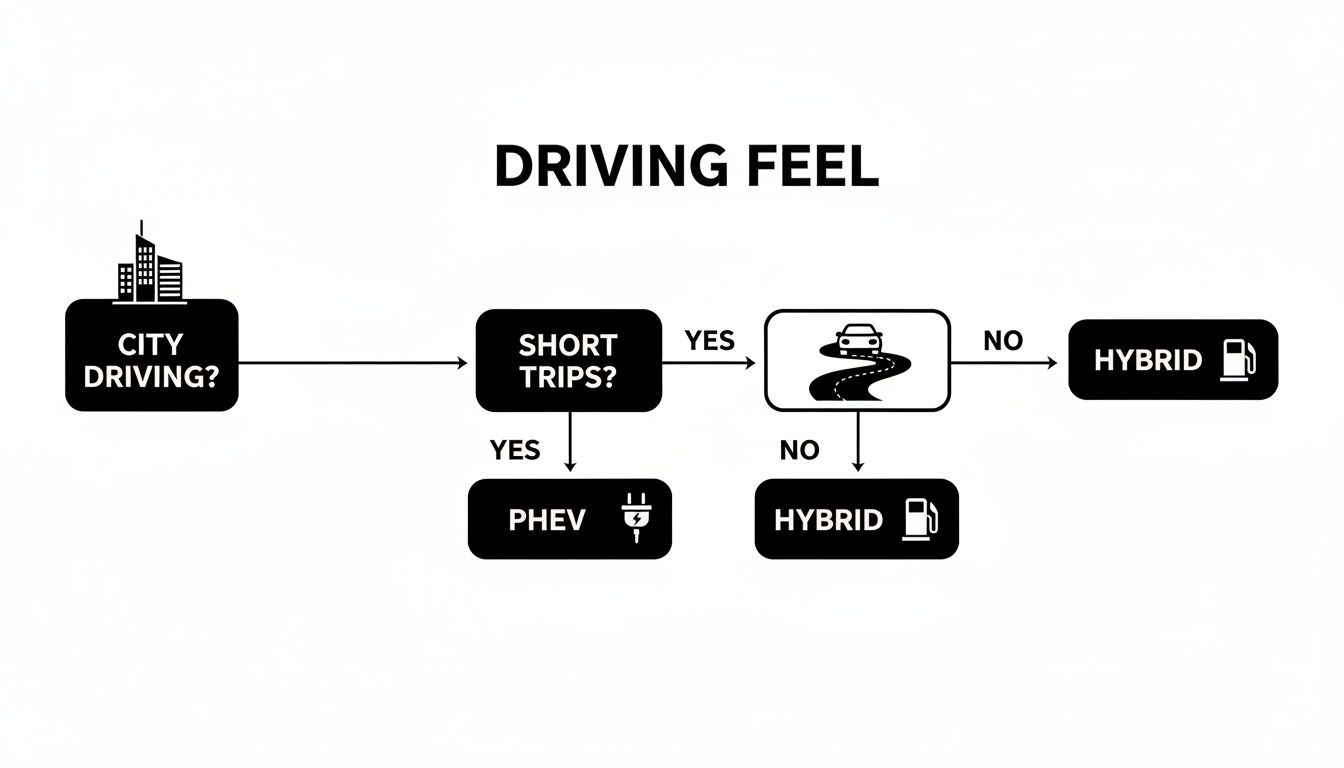
The takeaway is clear: how and where you drive is the single most important factor in this decision.
Ultimately, a PHEV is a tool that’s brilliant if used correctly but utterly pointless otherwise. A hybrid is the reliable Swiss Army knife; it does a good job everywhere without ever being truly spectacular. Choose the one that solves your actual problems, not the one that just looks good on paper.
Got a Few More Questions?
You’ve navigated the technical details and the financial maze. Now, let's tackle those lingering questions that often get glossed over in the showroom. Here are the straightforward answers you need, without the sales patter.
Do PHEVs Use More Fuel Than Hybrids on Long Journeys?
In short, yes, they often do. Once the battery in a plug-in hybrid is drained, you're essentially driving a petrol car that’s lugging around a heavy, depleted battery and an electric motor. This extra weight, typically 150-250 kg more than a standard hybrid, means its fuel economy on a long motorway run will almost always be worse.
A conventional hybrid, however, is constantly optimising its own efficiency. It sips fuel whether you're crawling through city traffic or cruising at 70 mph. If you’re a high-mileage driver who spends a lot of time on the motorway, the self-charging hybrid is often the more sensible, and cheaper, choice.
Is the Battery in a PHEV or Hybrid Expensive to Replace?
It would be, but you’ll probably never need to. The fear of a massive battery replacement bill is a common worry, but it’s largely unfounded scaremongering. Manufacturers are required to warranty their batteries for a long time – usually for eight years or 100,000 miles .
The truth is, modern hybrid and PHEV batteries are designed to last the lifetime of the vehicle. While they do degrade slowly over many years, complete failure is exceptionally rare. You're far more likely to face a costly repair for a conventional part like a gearbox than you are for the battery.
Can I Own a PHEV if I Live in a Flat Without Home Charging?
Technically, yes, but you’d have to be a masochist. Relying entirely on the UK’s public charging network can be a frustrating experience, filled with broken chargers, high prices, and queues.
Without a reliable way to charge at home overnight, a PHEV loses its main advantage. It becomes a more expensive, heavier petrol car. You’d be paying a premium for electric range you can barely use, which makes the simpler, cheaper hybrid the clear winner for anyone living in a flat or without off-street parking.
Which Type of Hybrid Holds its Value Better?
Historically, traditional hybrids like the Toyota Prius have been champions at holding their value. Their bulletproof reputation for reliability and efficiency makes them a consistently safe bet on the second-hand market.
That said, as more people gain access to home charging, the appeal of used PHEVs is definitely on the rise. Their ability to handle the daily commute for just a few pence is a huge selling point. For now, the hybrid still has a slight edge on residual values, but the gap in the PHEV vs hybrid resale debate is certainly getting smaller.
At VoltsMonster , we get straight to the point, giving you the real story on electric and hybrid cars without the flannel. To make sure your next purchase is a smart one, check out our latest reviews and guides at https://www.voltsmonster.com.
VoltsMonster Electric Vehicle Blog