Hyundai Ioniq 6 Review: An Honest UK Verdict
Our deep dive into the Hyundai Ioniq 6 reveals a genuinely brilliant electric car , one that trades a little bit of practicality for a whole lot of head-turning style. It's a proper standout for its mind-bending efficiency and rapid charging , but that bold design and saloon boot won’t be for everyone. This is an EV for the driver who wants to be different.
Is the Ioniq 6 More Than a Slippery Soap Bar on Wheels?
Let's be honest. The electric car market is becoming a sea of sameness. It's awash with high-riding, slightly blobby SUVs that all feel like they were designed by the same committee after a particularly uninspired lunch. They're sensible, they're practical, and they're about as exciting as watching beige paint dry.
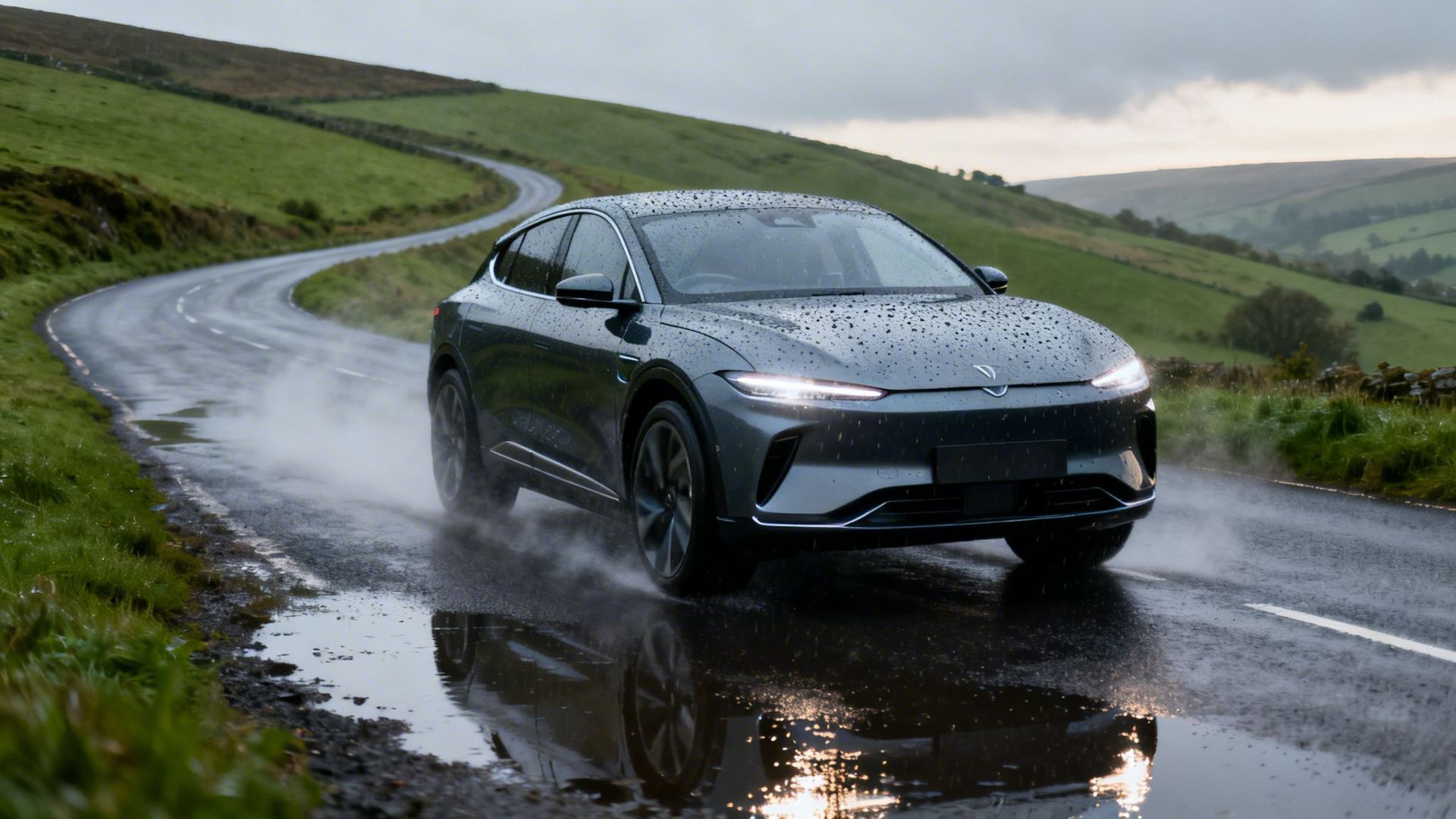
Then, out of nowhere, the Hyundai Ioniq 6 glides into view. It looks less like a car and more like a futuristic, metallic pebble that’s been skimmed across a still lake. Hyundai calls it an 'electrified streamliner', and that's not just marketing fluff—it’s a deliberate, two-fingered salute to convention. With a drag coefficient of just 0.21 , it's one of the most aerodynamic cars you can buy. That slippery shape isn't just for show; it's the secret sauce behind its incredible range.
A Gamble on British Tastes?
Hyundai really has thrown caution to the wind here. That swooping, almost Porsche-esque rear end and the smooth, uncluttered surfaces feel a world away from the sharp, angular creases of its sibling, the Ioniq 5. This brings up a big question: is this a stroke of design genius, or a styling gamble that's just a step too far for the UK market?
It’s a car that gets a reaction, that’s for sure. You'll either fall head over heels for its audacity or dismiss it as a glorified bar of soap. There's very little middle ground, which is refreshingly bold in today’s car world.
Forget another dry spec-sheet rundown. This is our honest take on whether Hyundai's daring electric saloon has the substance to match its undeniable style, and if it can really carve out a space for itself on British roads. We promise a no-holds-barred verdict.
Core Promises Beyond the Curves
Underneath that controversial bodywork lies a platform that promises much more than just a low-drag figure. This review will dig deep into Hyundai's core claims to see how they stack up on rain-soaked British B-roads and motorways. We're putting these promises to the test:
- Mind-Bending Efficiency: Does that super-slippery shape actually translate into real-world miles that genuinely kill range anxiety?
- Genuinely Rapid Charging: The 800V architecture sounds impressive on paper, but what does that really mean when you’re stuck at a temperamental service station on the M1 in the pouring rain?
- A Tech-Forward Cabin: Is the minimalist interior a futuristic sanctuary, or just a frustrating exercise in putting form before function?
This in-depth Hyundai Ioniq 6 review will cut through the hype. We’re here to find out if this electric streamliner has the substance to back up its significant style, or if it’s destined to be a quirky footnote in the story of the EV.
Performance, Range, and Real-World Charging
Right, let’s get down to the brass tacks. Forget the swoopy design for a moment; what truly matters with any electric car is how far it’ll go on a single charge and how long you’ll be stood around a grim service station car park waiting for it to juice up. This is where the Ioniq 6 gets serious.
Hyundai gives UK buyers a couple of flavours to choose from. You’ve got the sensible, single-motor, rear-wheel-drive (RWD) model, which is arguably the sweet spot of the range. Then there’s the punchier, dual-motor, all-wheel-drive (AWD) variant for those who fancy startling hot hatches at the traffic lights.
Let's break down how the different UK trims stack up.
Hyundai Ioniq 6 UK Trims and Performance Specs
The table below lays out the key differences in performance and range you can expect from the main Ioniq 6 models available in the UK.
| Trim Level | Powertrain | Battery (kWh) | Claimed Range (WLTP) | 0-62 mph | Max Charging Speed (kW) |
|---|---|---|---|---|---|
| Premium RWD | Single Motor RWD | 77.4 | 338 miles | 7.4s | 233 |
| Ultimate RWD | Single Motor RWD | 77.4 | 338 miles | 7.4s | 233 |
| Premium AWD | Dual Motor AWD | 77.4 | 322 miles | 5.1s | 233 |
| Ultimate AWD | Dual Motor AWD | 77.4 | 322 miles | 5.1s | 233 |
As you can see, the choice between RWD and AWD is a straight trade-off: you swap about 16 miles of official range for a significant 2.3-second drop in your 0-62 mph time. For most drivers, the RWD's performance is more than enough.
The Truth About Its Range
Officially, the RWD model boasts up to 338 miles of range from its 77.4kWh battery, a figure that sounds wonderfully optimistic. The AWD version, with its extra motor draining that same battery, predictably sees the number drop to a still-respectable 322 miles . But these are WLTP figures, cooked up in a lab under perfect conditions. On a damp, chilly Tuesday on the M25, reality bites.
In the real world, you can expect to knock a good chunk off those headline numbers. Our testing suggests that in typical British weather (read: drizzle and disappointment), the RWD Ioniq 6 will realistically deliver around 270-290 miles . That’s still a very strong showing, mind you, and more than enough for most weekly commutes and the odd long-haul trip.
Winter, as with all EVs, is the great leveller. When the mercury drops and you’re cranking up the heated seats, expect that range to dip closer to 240 miles . Thankfully, all UK models come with a heat pump as standard, which is a massive win for preserving those precious miles when it's freezing outside. We get into the nitty-gritty of this in our full electric car range comparison for the UK and other lies.
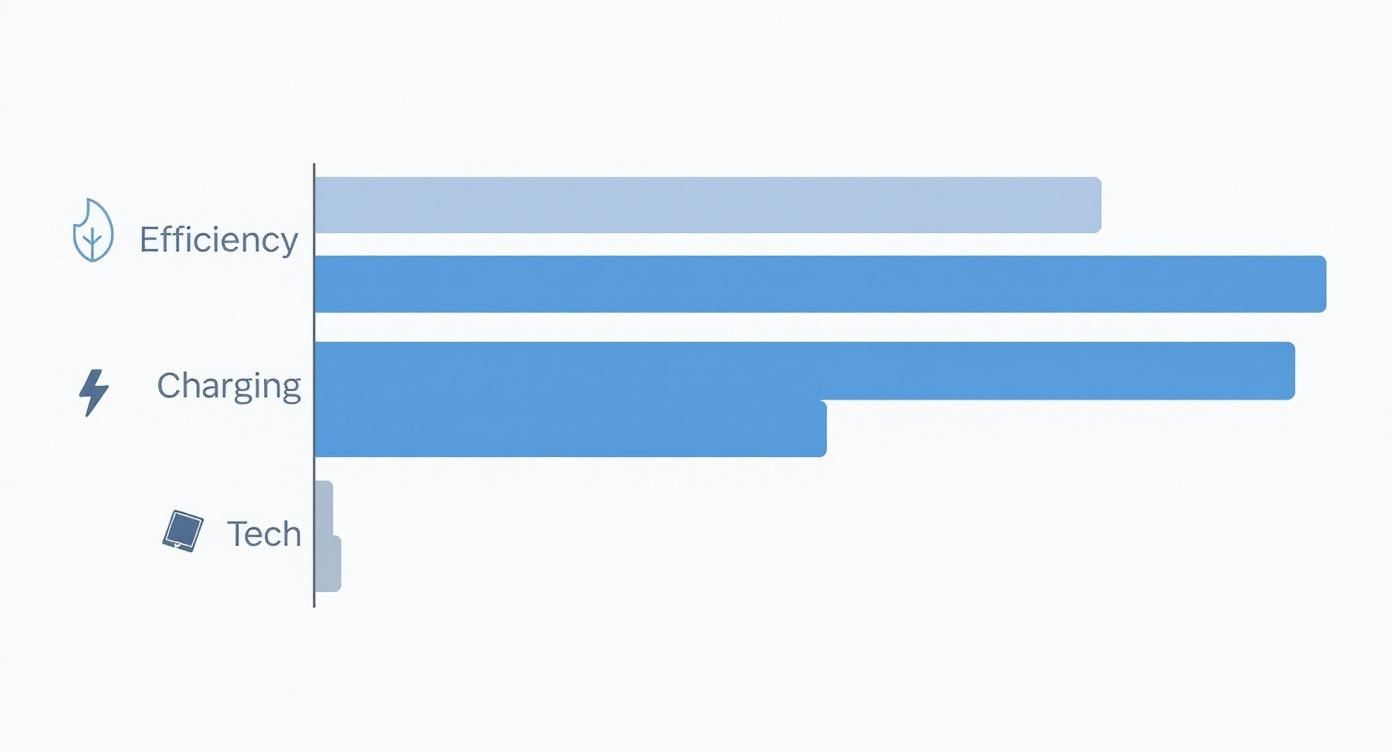
This chart really puts its finger on what makes the Ioniq 6 special. The advanced charging architecture and exceptional efficiency aren't just bullet points on a spec sheet; they’re the core of its appeal.
Charging Speeds: The 800V Ace Card
And this is where the Ioniq 6 plays its trump card. Like its Ioniq 5 sibling, it’s built on Hyundai’s whizz-bang 800-volt electrical architecture . In plain English, this means it can handle some seriously rapid charging, provided you can find a charger that can keep up.
Hyundai claims a 10-80% top-up in just 18 minutes . This isn't a fantasy. If you roll up to a working 350kW ultra-rapid charger with a warm battery, you will genuinely see charging speeds that leave most rivals in the dust. The car can theoretically peak at around 233kW , which is blisteringly quick.
The question isn't whether the Ioniq 6 can charge quickly. It absolutely can. The real question is whether the UK's charging network—a notoriously temperamental beast at the best of times—can consistently deliver the power the car is crying out for.
Finding a fully operational 350kW charger on the M1 that isn't already occupied can feel like a quest for the Holy Grail. More often, you’ll be plugged into a more common 150kW unit, which will still get you from 10-80% in about 25-30 minutes . Still impressively fast, and just enough time to grab a stale sandwich and question your life choices.
Ultimately, the combination of a very usable real-world range with that genuinely rapid 18-minute charging capability is a powerful one-two punch. It’s a compelling argument against range anxiety for UK buyers still nervous about making the electric switch, putting it in a neck-and-neck fight with big names like the Tesla Model 3.
Inside the Ioniq 6: A Minimalist Lounge or Digital Overload?

Step inside the Ioniq 6, and you’re met with what Hyundai rather poetically calls a "cocoon-shaped interior". It feels less like a car and more like a minimalist breakout room from a trendy tech start-up, complete with customisable mood lighting and more screens than a branch of Currys.
The first thing that strikes you is the sheer sense of space. Because it's a dedicated EV, the floor is completely flat, giving the cabin a wonderfully airy and uncluttered feel. It’s a clean, modern design that genuinely feels a bit special, at least at first glance.
But then, the quirks start to reveal themselves. The window switches, for instance, aren’t on the doors where decades of muscle memory tell you they should be. Instead, they’re clustered together on the centre console. Hyundai says this was to create slimmer, speaker-filled door cards, but it will have you pawing at an empty door panel like a confused cat for the first few weeks.
Living With the Screens
Dominating the dashboard is a vast slab of glass housing two 12.3-inch screens —one for the driver’s instruments and the other for all your infotainment needs. They look the business, crisp and bright, but this is where the minimalist dream starts to fray at the edges.
Almost everything is controlled through the central touchscreen. Want to turn on the heated seats? That’s a prod and a swipe. Need to tweak the climate control? More screen-tapping. While Hyundai has mercifully included a thin row of physical shortcut buttons for key functions like media and nav, trying to adjust the fan speed on a cold, bumpy B-road becomes a distracting game of digital whack-a-mole.
The system itself is reasonably quick, but it's packed with so many menus and sub-menus that finding a specific setting can feel like a proper faff. It's a classic case of engineers showing off what they can do, rather than focusing on what a driver actually needs to do easily. Nothing says "premium" like frantically jabbing at a screen just to demist the windscreen.
The Ioniq 6 interior is a fascinating paradox. It’s a beautifully spacious and calming environment that is simultaneously trying its best to overwhelm you with digital information and slightly baffling ergonomic choices.
This screen-first approach extends to the optional digital side mirrors. These swap out traditional glass for cameras, beaming an image onto small screens tacked onto either end of the dashboard. While they do technically reduce drag a tiny bit, they take a serious amount of getting used to. Your brain and eyes will spend weeks recalibrating, and for what? A fractional gain in efficiency. My advice? Stick to the traditional glass mirrors.
Passenger and Boot Space
Thanks to that flat floor and long wheelbase, passenger space is generally excellent. Up front, there’s loads of room to stretch out, and the rear seats offer frankly ludicrous amounts of legroom. You could easily fit a couple of lanky teenagers back there without a single complaint about their knees hitting the front seats.
However, that gorgeous, swooping roofline does come at a price: headroom. Anyone tipping over six feet tall will find their hair becoming intimately acquainted with the headliner. It’s not claustrophobic by any means, but rivals like the Polestar 2 are definitely more generous here.
Then we come to the boot. At 401 litres , it’s a decent size on paper, but its saloon-style opening is a real pain. It's a narrow postbox slot that makes loading bulky items—think prams, flat-pack furniture, or the spoils of an overzealous trip to the garden centre—a frustrating game of automotive Tetris. A proper hatchback boot would have been infinitely more practical.
Ultimately, the cabin of the Ioniq 6 is a mix of genuine brilliance and mild irritation. It’s a comfortable, spacious, and futuristic place to spend time, but you can’t help feeling that with a few more physical buttons and a hatchback rear, it could have been truly exceptional.
Calculating the True Cost of Ioniq 6 Ownership
Right, you’ve been won over by the swoopy looks and the promise of near-silent motoring. But let's get down to the brass tacks: the cold, hard cash. Buying a car is one thing; running the blasted thing is quite another. So, is the Ioniq 6 a shrewd financial move that will have you smugly counting your saved pennies, or is it a Trojan horse for hidden expenses?
The most obvious saving is, of course, fuel. Swapping grubby petrol station forecourts for charging up at home is a massive win. The cost of electricity, especially if you can get on a cheap overnight tariff, will make your old petrol receipts look utterly ridiculous. We break down the full, gory details in our guide on the real cost of owning an EV compared to petrol cars .
Of course, electricity isn't free. Public charging costs can vary wildly, from reasonably cheap to eye-wateringly expensive, often depending on how desperate you are. Think of it like motorway service station sandwiches – you’re paying a massive premium for convenience and instant regret.
The Company Car Tax Dodge
This is where the Ioniq 6 transforms from a very cool car into a financial weapon, especially for company car drivers. Thanks to the UK's tax system, running an EV as a company car is almost laughably cheap. The Benefit-in-Kind (BiK) tax rate for electric vehicles is a paltry 2% .
For a higher-rate taxpayer, this is a game-changer. While your colleague in their diesel saloon is forking over a huge slice of their salary to HMRC each month, you’ll be paying a tiny fraction of that for the privilege of driving a silent, spaceship-like streamliner. It's a tax loophole so good you’ll feel like you should be wearing a pinstripe suit and laughing maniacally.
This juicy tax advantage is a huge part of Hyundai's strategy. Their focus on fleet sales has driven substantial growth in the 'True Fleet' sector (that’s company cars, to you and me), with a notable 33.8% increase that completely dwarfs the general market's fleet growth. The Ioniq 6 is clearly a key player in this push.
Insurance and Servicing Surprises
Now for the less thrilling bits. Insurance for electric cars can still be a bit punchy. The Ioniq 6 falls into insurance groups ranging from 34 to 40 , depending on the model. This isn’t outrageous by any means, but it’s definitely worth getting a few quotes before you commit. Some insurers are still a bit nervous about the potential cost of repairing these high-tech machines.
Owning an Ioniq 6 means embracing a new financial reality. You're trading predictable petrol costs for the variable world of electricity tariffs, and swapping hefty road tax for potentially spicier insurance premiums. It's a different kind of budgeting, but for most, the numbers work out handsomely in your favour.
Servicing, on the other hand, should be refreshingly cheap. With far fewer moving parts than a combustion engine car—no oil changes, no spark plugs, no exhaust systems to rust away—maintenance is much simpler. Hyundai recommends a service every year or 10,000 miles , which mostly consists of checks and software updates.
The Warranty Safety Net
Finally, there’s the warranty, which has long been Hyundai’s ace in the hole. You get a five-year, unlimited mileage warranty on the car itself, which is one of the best in the business.
Even more importantly, the hugely expensive battery is covered for eight years or 100,000 miles . This provides a massive safety net and a huge dose of peace of mind, protecting you from what is easily the single biggest potential cost of EV ownership. It's a reassuringly comprehensive package that takes a lot of the financial fear out of the equation.
How The Ioniq 6 Stacks Up Against Its Rivals
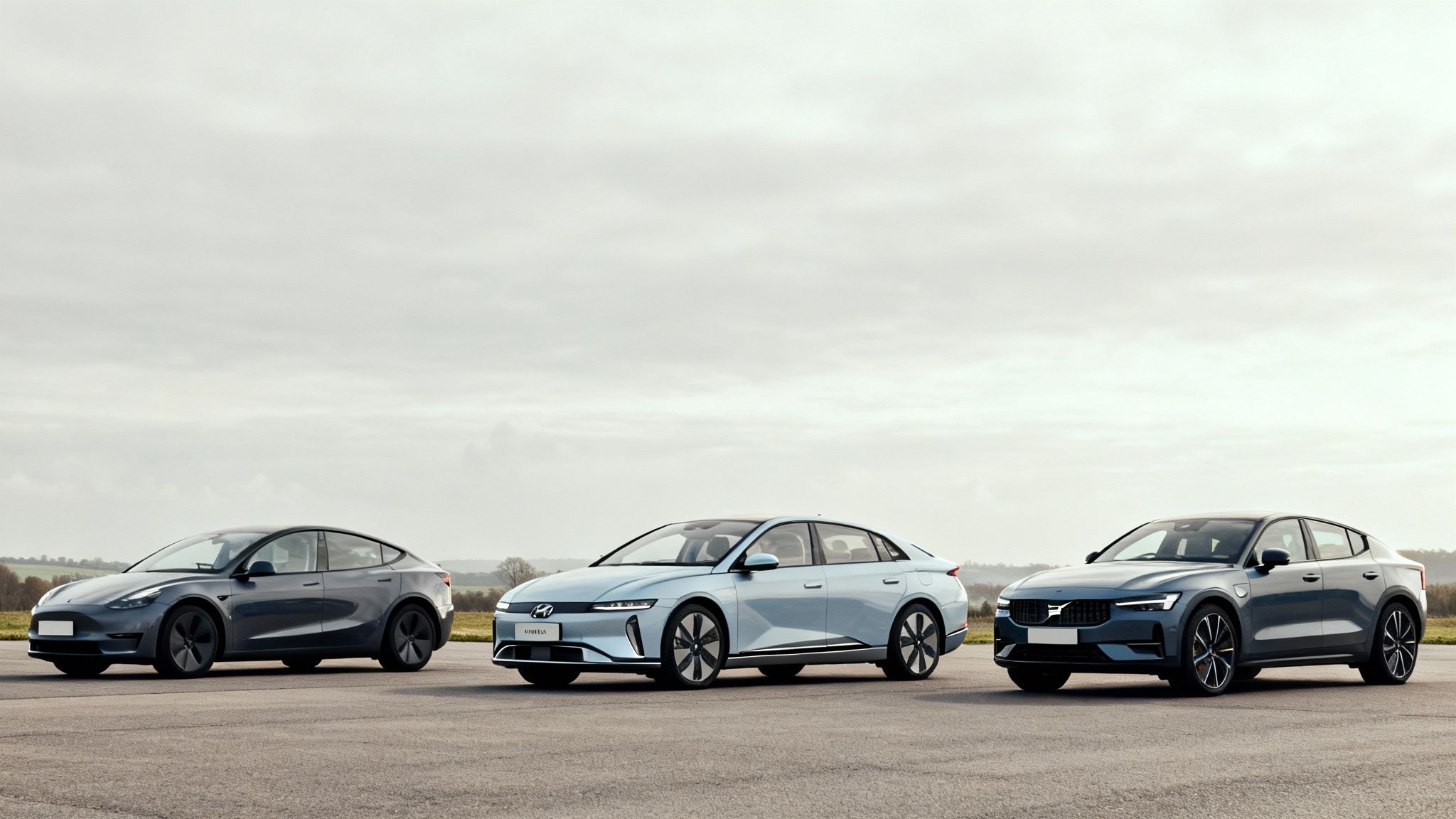
No car, especially one that looks like a pebble from the future, exists in a vacuum. The Ioniq 6 has waltzed right into one of the most competitive corners of the electric car market, and it’s facing some seriously talented competition. This isn't just about a spreadsheet showdown; it's a clash of design philosophies, driving feel, and day-to-day usability.
Let’s be honest: if you’re looking at an Ioniq 6, you’re almost certainly cross-shopping it with a handful of the usual suspects. So, let's line them up and see how Hyundai’s streamliner fares.
The Inevitable Tesla Model 3 Showdown
You can't discuss electric saloons without acknowledging the elephant in the room: the Tesla Model 3. For years, it’s been the default choice, the benchmark everyone else is measured against. Putting the Ioniq 6 up against it is the headline fight, and it’s a fascinatingly close one.
On paper, their range figures are pretty much neck and neck. The Ioniq 6 RWD claims an official 338 miles (WLTP) , while the refreshed Model 3 Long Range pushes that to an impressive 390 miles . In the real world, both will give you excellent, usable range, but the Tesla probably has a slight edge on a long motorway run.
Where the Ioniq 6 lands a massive counter-punch is at the plug. Its 800V architecture means it can drink electricity far faster than the Model 3 when hooked up to a compatible ultra-rapid charger. But Tesla hits back with its Supercharger network—it’s simply bigger, more reliable, and so seamlessly integrated it just works. That’s a huge plus.
Inside, the two cars couldn't be more different. The Tesla is the definition of minimalism, with almost every function buried in that huge central screen. The Ioniq 6, while still screen-heavy, feels more like a conventional car, and for many drivers, that familiar layout will feel far more intuitive.
Scandinavian Stoicism: The Polestar 2
Next up is the Polestar 2, the stoic, chiselled Swede. Where the Ioniq 6 is all about swooping curves and aero efficiency, the Polestar is a handsome, almost brutalist piece of minimalist design. It's less of a saloon and more of a high-riding hatchback, which gives it a huge practicality advantage thanks to that enormous boot opening.
The Polestar 2 is also a cracking car to drive, with a taut, engaging chassis that feels more like a hot hatch. The Ioniq 6 is much softer, clearly prioritising comfort and refinement over B-road thrills. Inside, the Polestar’s cabin feels exceptionally well-built, and its Google-powered infotainment is a genuine joy to use.
The choice here really comes down to character. The Polestar 2 is the sharp-suited, athletic rival with a sensible boot. The Ioniq 6 is the flamboyant, comfortable cruiser that sacrifices a bit of practicality for its head-turning looks and superior efficiency.
Sibling Rivalry And German Muscle
You also can't ignore the competition from within Hyundai’s own family: the Kia EV6. Built on the same brilliant E-GMP platform, it shares the Ioniq 6’s 800V charging tech and powertrain options. The EV6, however, is a more practical crossover-hatchback with a bigger boot and more conventional styling. It’s the sensible sibling who became an accountant while the Ioniq 6 went to art school.
And then there's the BMW i4, the German contender. It brings the premium badge and sublime driving dynamics you’d expect from a BMW. It feels more traditional inside and out, which will certainly appeal to buyers not quite ready for Hyundai’s futuristic vision. The i4 is a superb EV, no doubt, but it can’t match the Ioniq 6’s outright charging speed or its wonderfully spacious, flat-floor interior.
Choosing between these brilliant cars is genuinely tough, and the 'best' one often boils down to personal taste. If you need a more detailed breakdown, we cover all the main players in our complete guide to the UK’s best electric car reviews . Ultimately, the Ioniq 6 carves out its own unique space by being the most efficient and audaciously styled of the bunch.
Our Final Verdict on the Hyundai Ioniq 6
So, where does that leave us with the Hyundai Ioniq 6? After spending a good chunk of time behind the wheel, plugging it in, and living with it day-to-day, a clear picture emerges. It’s a car that absolutely nails some things and makes you scratch your head about others.
There's no denying it's a triumph of engineering and design bravery. Hyundai could have played it safe, but they didn’t. The Ioniq 6 slices through the air with a quiet confidence, delivering a real-world range that genuinely puts your mind at ease on British roads. That headline charging speed – a 10-80% top-up in just 18 minutes – isn't just a number on a spec sheet. It fundamentally changes how you approach long-distance EV driving, turning a potential chore into a quick coffee break.
But it’s not without its compromises. That gorgeous, swooping roofline looks fantastic but it comes at a price, and that price is paid by anyone over five-foot-ten sitting in the back. The saloon-style boot is also a bit of a niggle; it's a decent size, but the small opening can make loading bulky items a faff. This is a car that puts form before function, and that's a choice you'll have to make peace with.
So Should You Buy One?
If you can live with those quirks, then absolutely. The Ioniq 6 is a brilliantly capable, deeply comfortable, and wonderfully refreshing take on the electric car. It stands out. In a world rapidly filling up with cookie-cutter electric SUVs, this car has personality and for that, Hyundai deserves a lot of credit. It’s built for the driver who prizes efficiency and wants to drive something that looks like it’s just rolled off a motor show stand.
The Ioniq 6 is a fantastic electric car wrapped in a slightly impractical, yet utterly gorgeous, package. It proves Hyundai isn't afraid to take risks, delivering a car with more character and clever tech than almost anything else in its class.
For our money, the Premium Rear-Wheel Drive model is the one to go for. It’s the sweet spot of the entire line-up, giving you the longest possible range, more than enough poke for UK roads, and a spec list that’s generous to a fault. It’s the purest version of what the Ioniq 6 sets out to be, and it’s where we’d be putting our own cash.
Your Ioniq 6 Questions Answered
Still mulling over a few things about this electric streamliner? Don't worry, you're not alone. We get asked about the Ioniq 6 all the time, so here are the straight-up answers to the most common queries.
What’s the Real-World Winter Range of the Hyundai Ioniq 6 in the UK?
Official WLTP figures are one thing, but a frosty Tuesday morning on the M25 is quite another. Let’s get realistic. For the 77.4kWh rear-wheel-drive model, you can expect a real-world winter range of around 240-270 miles from a full battery.
Of course, this can swing a bit depending on how heavy your right foot is and whether you've got the heating cranked up to a tropical level. The all-wheel-drive version will give you a little less, but its efficiency is still genuinely impressive when the temperature plummets.
Is the Hyundai Ioniq 6 a Practical Family Car?
It can be, but you need to know about a couple of compromises first. That stunning, swooping roofline is a double-edged sword; it looks fantastic, but it definitely eats into rear headroom. If you're ferrying around lanky teenagers, expect some grumbling.
The other thing to watch is the boot. It’s a decent size, but it has a saloon-style opening, not a wide hatchback. This can make loading bulky items like a pram feel a bit like a game of Tetris. For families with younger kids, though, the absolutely huge rear legroom makes it a very comfortable and stylish choice.
And yes, to answer another common one – all UK models of the Hyundai Ioniq 6 come with a battery heat pump as standard. This is a massive win for us Brits, as it helps to preserve range in cold weather by warming the car up much more efficiently. It’s a key bit of tech that makes the Ioniq 6 a genuinely usable year-round EV.
Ready to explore a car that looks like it’s driven straight out of tomorrow? VoltsMonster brings you the most honest, no-nonsense EV reviews and news in the UK. Find your next electric ride with us at https://www.voltsmonster.com.
VoltsMonster Electric Vehicle Blog