Don't Get Zapped: A UK Guide to the Best Used EV
Thinking of joining the electric revolution but don't fancy shelling out for a brand-spanking-new model? Smart move. Nabbing the best used EV isn't just about saving a few quid; it's about getting all the perks of silent, zero-emission motoring while letting some other poor sod take the massive financial hit from depreciation. Luckily, the market is now brimming with cracking, proven options, from the ever-reliable Nissan Leaf to the surprisingly capable Renault Zoe.
Why Buy a Used EV Without Getting Fleeced
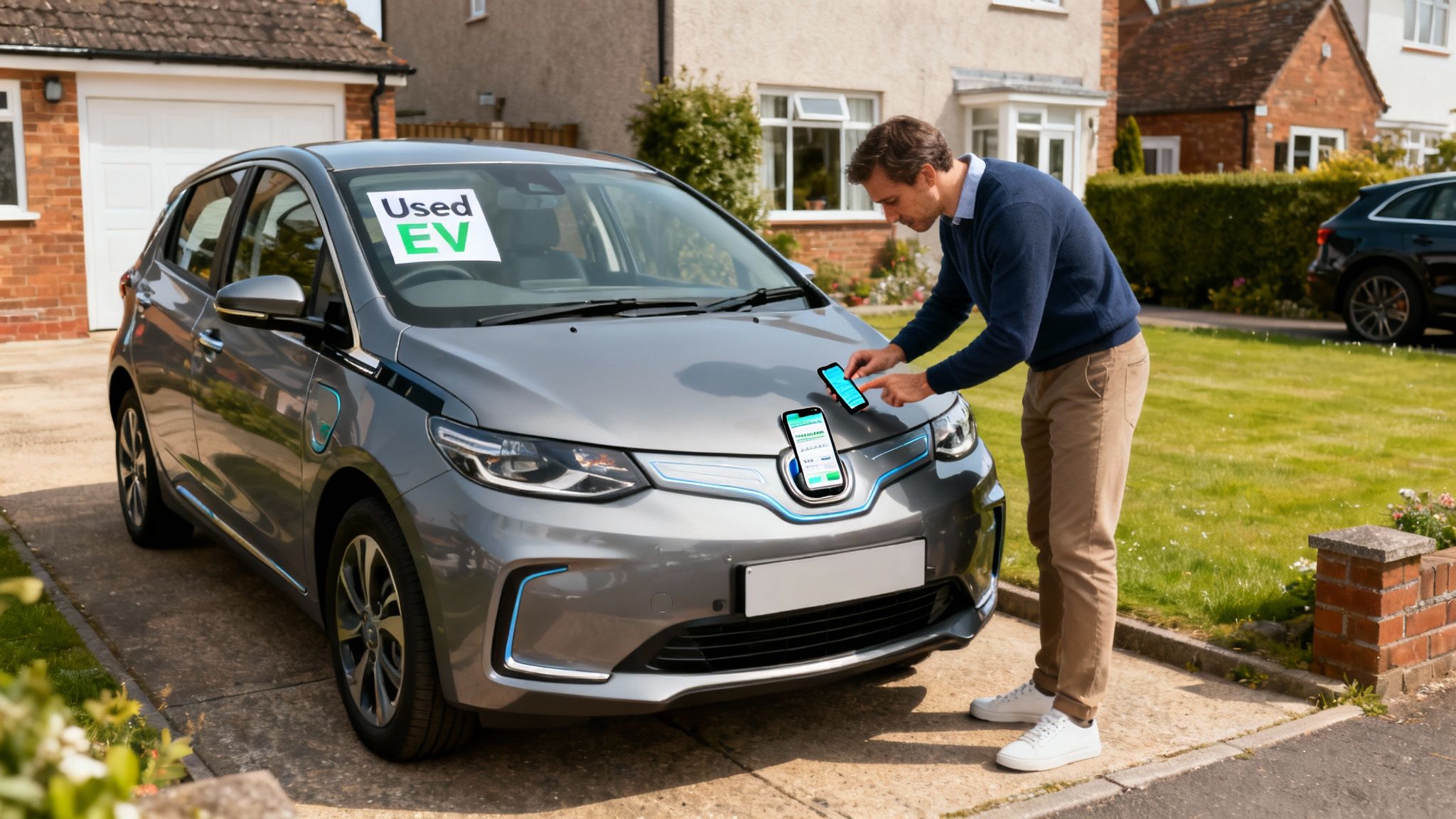
Let's be frank. For a long time, buying a used electric car felt like a bit of a gamble. Early models had a real-world range that wouldn't get you to the next village and took an eternity to charge. You had to be a proper enthusiast, or possibly just a bit mad, to take the plunge.
But the game has changed completely. The used EV market has exploded, going from a niche interest to a bustling marketplace full of bargains. The key to this transformation is one simple, brutal word: depreciation. New EV buyers have absorbed a colossal financial blow, watching thousands of pounds vanish from their car's value in the first few years.
This is where you come in. Their loss is your gain, allowing you to snag a genuinely sophisticated and capable electric car for the price of a mundane petrol supermini. This isn’t just about dodging petrol station prices; it's about swerving the single biggest cost of car ownership altogether.
The New Rules of the Game
Forget everything you think you know about checking under the bonnet or listening for a dodgy engine noise. Buying the best used EV means adopting a whole new approach. You're not just inspecting a car; you're assessing a very complex, very expensive battery that happens to have wheels attached. Its condition is paramount.
Think of these as the new essentials for your used car checklist:
- Battery Health Over Mileage: A well-cared-for EV with 60,000 miles that has been charged slowly and steadily can have a healthier battery than a 20,000 -mile car that's been relentlessly hammered on public rapid chargers.
- Real-World Range is King: Pay absolutely no attention to the official, often wildly optimistic, range figures quoted by manufacturers. What you need to know is how far that car will actually travel on a wet, windy Wednesday in February.
- Charging Compatibility Matters: Check that the car has the right charging ports for your needs (like a CCS port for rapid charging). Make sure all the necessary cables are included, too – a missing one can easily set you back a few hundred quid.
Buying a used EV is one of the smartest financial decisions you can make in motoring today. You let the first owner take the depreciation hit, and you get a cheaper, greener, and quieter way to travel. It’s like letting someone else wear in your new pair of shoes for you.
This guide is designed to be your straight-talking companion. We'll cut through the jargon and give you the practical knowledge you need to navigate this exciting new landscape. Our goal is to help you find a brilliant car, not a pricey paperweight with a knackered battery. Right, let's dive in.
The Great British Used EV Market Frenzy
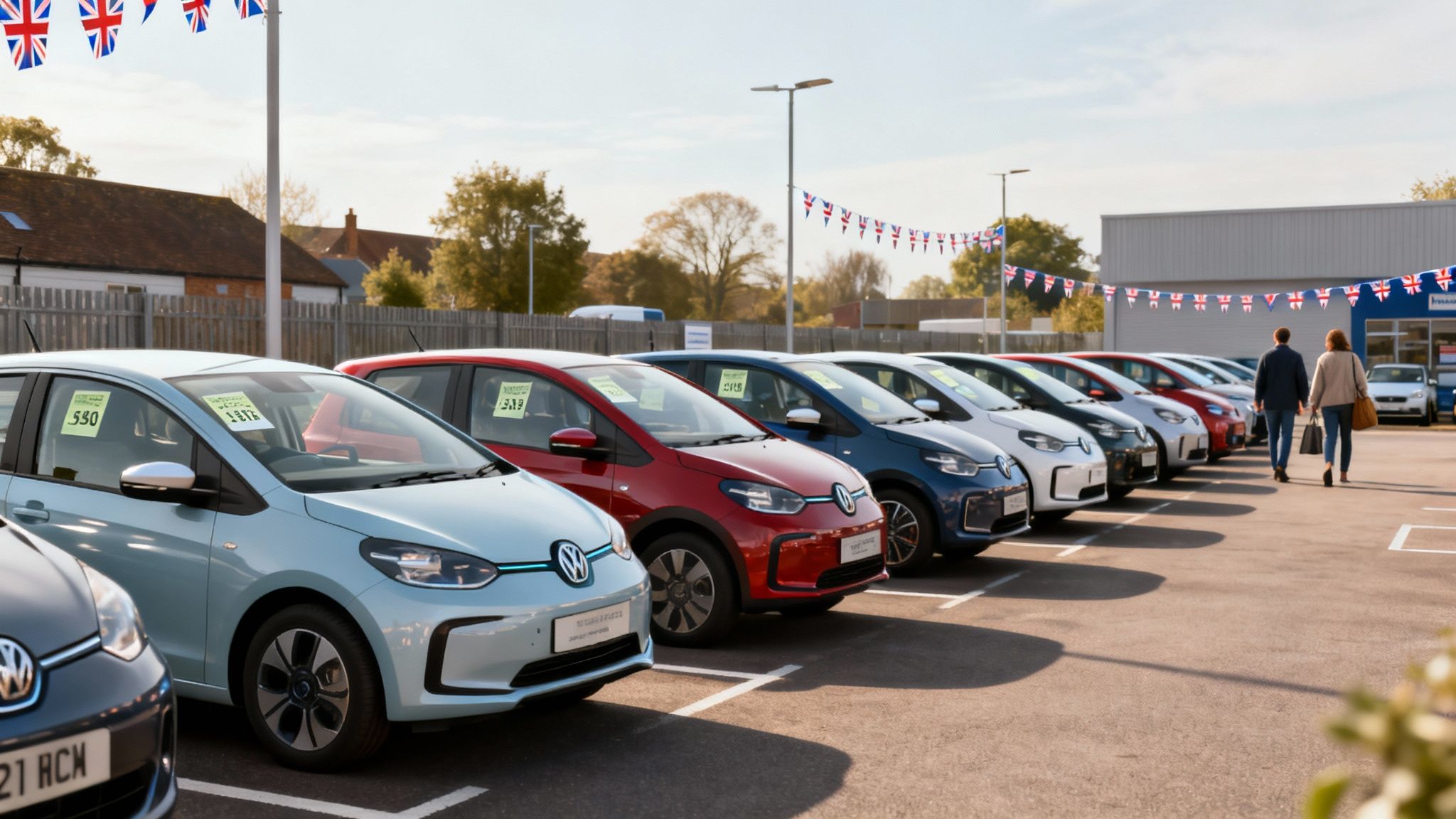
Let's get straight to it. The UK's used electric car market isn't just quietly ticking over; it's practically buzzing with energy. What felt like a niche choice just a few years ago is now becoming a proper, mainstream option on dealership forecourts up and down the country.
This isn't just a happy accident. We're in the middle of a perfect storm for buyers, driven largely by the end of the three-year lease cycle. Think about it: thousands of company cars and salary sacrifice EVs, all registered around the same time, are now being returned. This has created a huge wave of high-quality, well-maintained stock flooding the second-hand market.
Suddenly, dealers who once might have shied away from EVs are actively competing to get them. This glut of supply is fantastic news for you, the buyer, because it puts downward pressure on prices and gives you real bargaining power.
So, What's Fuelling This Boom?
It’s not just about the sheer number of cars becoming available. There's been a real shift in mindset among British drivers. The old anxieties about range, reliability, and batteries giving up the ghost have mostly faded away, replaced by the very real satisfaction of sailing past a petrol station without a second glance.
This newfound confidence has sparked a surge in demand, creating a genuinely vibrant marketplace. The numbers really tell the story. During the third quarter of 2025, sales of used battery electric vehicles (BEVs) skyrocketed by a massive 44.4% compared to the previous year, capturing a 4.0% share of the entire used car market. This wasn't a gentle nudge; it was the fastest growth seen in any fuel type, leaving petrol and hybrid models trailing behind.
This isn't just a passing trend. It's a fundamental change in how we think about and buy cars. The era of EVs as a quirky, expensive experiment is well and truly over. They're now a logical, cost-effective choice for a huge number of people.
This momentum means that your search for the best used EV is no longer like looking for a needle in a haystack. You now have a genuine choice of models, trim levels, and colours from a wide array of sellers.
What This Means For You
More choice is brilliant, but it also means you need to be on your game. With so many EVs out there, the line between a genuine bargain and a potential money pit can be incredibly fine. That tempting low price tag could be masking a degraded battery or software that’s hopelessly out of date.
Here’s a quick summary of the current scene:
- High Supply: A constant flow of ex-lease and ex-fleet vehicles keeps the market well-stocked with fresh options.
- Growing Demand: More and more drivers are actively seeking out a used EV, which helps keep the market competitive and dynamic.
- Sensible Prices: The sheer volume of cars has helped bring prices down to their most affordable levels yet.
Getting your head around these market forces is the first step to finding a great deal. You’re entering a fast-moving environment where a little bit of knowledge can make all the difference. We’ve previously explored why 2025 is primed to be the breakout year for second-hand EVs , and this current frenzy is living proof.
Now, let's dive into the models that should be on your radar.
Right then, let's get to the main event. You’ve waded through the market waffle, and now it’s time to talk about the actual metal. Forget the glossy manufacturer brochures filled with impossibly attractive people laughing into their organic salads. This is the unvarnished, brutally honest breakdown of the best used EV contenders you can actually buy in the UK without needing to remortgage your house.
We've split our top picks into three distinct categories because let's face it, the best EV for a city-dweller is a terrible choice for a family of five. Whether you’re a parent drowning in car seats and crumbs, a commuter dodging potholes, or a motorway mile-muncher, we’ve got you covered.
The City Slicker: For Urban Warriors
For nipping around town, you don’t need a battery the size of a small country. You need something small, agile, and cheap to run. Enter the undisputed king of the urban jungle: the Renault Zoe . It’s been around for ages, which means early models are now astonishingly cheap.
Don’t let its friendly, almost cartoonish looks fool you; the Zoe is a properly capable little car. Later models with the 52kWh battery can manage a very respectable 190-200 miles in the real world, more than enough for a week of school runs and supermarket trips. They're an absolute doddle to park and surprisingly nippy away from the lights.
The main thing to watch for is the dreaded battery lease. Many early Zoes were sold with the battery leased separately from the car, meaning you'd have to pay a monthly fee to Renault. While most have had the lease bought out by now, always double-check the paperwork. A "battery-owned" or "i" version is what you want.
The Renault Zoe is the quintessential smart city buy. It offers a genuine EV experience, decent range, and running costs so low they’re practically subterranean. Just make sure you're not accidentally signing up for a monthly battery bill.
Another fantastic option is the original BMW i3 . It still looks like it’s driven straight off a sci-fi film set, and its quirky interior and carbon-fibre construction make it feel genuinely special. The skinny tyres and rear-wheel-drive layout make it incredibly fun to pilot through congested streets. Early models had a small battery, so look for the later 94Ah or 120Ah versions for a more usable range of around 120-150 miles .
The Family Hauler: For The School Run Brigade
Need space for kids, dogs, and all the associated clutter of family life? You need a family hauler. For years, the default choice here has been the venerable Nissan Leaf . It’s the Ford Escort of the electric world: dependable, ubiquitous, and utterly unexciting. But that’s precisely its strength.
A second-generation Leaf (from 2018 onwards) with the 40kWh battery is the sweet spot. You’ll get a real-world range of about 130-150 miles , a decent-sized boot, and enough room in the back for two lanky teenagers. The tech is straightforward, and reliability is generally excellent. The only real gripe is its use of the CHAdeMO rapid charging plug, which is slowly being phased out in favour of the more common CCS standard. It’s not a deal-breaker yet, but it’s something to be aware of.
If you need a bit more space and badge prestige, consider a Kia e-Niro or its cousin, the Hyundai Kona Electric . These Korean powerhouses blew the market wide open with their massive 64kWh batteries, offering a genuine 250+ miles of real-world range. They effectively killed range anxiety for an entire generation of EV drivers. They’re practical, packed with kit, and come with a reassuringly long seven-year warranty from new, much of which may still be left on a used example.
The Long-Distance Champion: For Motorway Munchers
If your life involves regular schleps up and down the M1, you need a car with serious range and access to the best charging network. There’s really only one name that dominates this space: Tesla . A used Model 3 Standard Range Plus has now dropped into a seriously tempting price bracket.
Yes, you have to put up with the minimalist interior and the CEO’s online antics, but the car itself is brilliant. The driving experience is superb, the technology is light-years ahead of most rivals, and you get access to the Supercharger network. This is the single biggest reason to buy a used Tesla. It’s fast, reliable, and makes long-distance EV travel completely painless. Expect a real-world range of around 220-240 miles from an early model.
Check for inconsistent panel gaps and listen for rattles on the test drive, but mechanically, they are proving to be robust. The Model 3 is, without a doubt, the best used EV for anyone who needs to cover serious distances with zero fuss.
To help you compare these options side-by-side, we've put together a quick-glance table. Think of it as the cheat sheet for your used EV shopping trip.
Used EV Contenders At a Glance
| EV Model | Typical Price Range (£) | Real-World Range (Miles) | Key Strengths | Common Watchouts |
|---|---|---|---|---|
| Renault Zoe (52kWh) | £9,000 - £15,000 | 190 - 200 | Great value, easy to drive, ideal for city life. | Check for battery lease on older models. |
| BMW i3 (94/120Ah) | £11,000 - £18,000 | 120 - 150 | Premium feel, fun to drive, unique design. | Smaller range, quirky 'suicide' rear doors. |
| Nissan Leaf (40kWh) | £10,000 - £16,000 | 130 - 150 | Reliable, practical, spacious for its size. | Slower charging, older CHAdeMO plug. |
| Kia e-Niro (64kWh) | £15,000 - £22,000 | 250+ | Huge range, practical SUV body, long warranty. | Can feel a bit plain to drive. |
| Tesla Model 3 SR+ | £18,000 - £25,000 | 220 - 240 | Supercharger network, great tech, fun to drive. | Build quality can be inconsistent, spartan interior. |
Each of these cars offers something different, but they all represent fantastic value on the second-hand market. The key is to match the car's strengths to your own daily needs.
Your Essential Used EV Inspection Checklist
Right, you’ve found a car online that looks the business. Now for the most important part: seeing it in the metal. When you’re looking at a used EV, you have to ditch the old petrol-head habits. Kicking the tyres and listening for a rattling exhaust won’t cut it here. The real heart of an electric car is its battery, and its health is absolutely everything.
Forget the mileage on the clock for a second. The single most important figure you need to know is the battery’s State of Health (SoH) . It’s a simple percentage that tells you how much of its original juice the battery can still hold. Think of it like your phone battery after a couple of years – it just doesn't last as long as it used to. The same thing happens with EV batteries, just on a much, much slower scale.
For example, a car with 50,000 miles that’s been gently trickle-charged at home might still have an SoH of 95% . In contrast, a 20,000 -mile ex-taxi that’s been hammered on rapid chargers every day could be down to 88% . That first car is a far smarter buy. The SoH is the true measure of an EV's future life and value.
Getting Your Hands Dirty: The Physical Inspection
Before you even think about driving it, it's time to play detective. This is your opportunity to spot the little clues that tell you whether the previous owner cherished it or thrashed it. A proper once-over now can save you a world of headaches down the road.
Your pre-flight checklist should look something like this:
- Charging Ports, Plural: Don't just glance at them. Open the flap and inspect both the AC (for slower charging) and DC (for rapid charging) ports. You’re looking for any signs of physical damage, arcing (which looks like little black burn marks), or moisture. If you can, plug it in to make sure it connects properly and starts charging.
- Cable Check: Are all the charging cables present and correct? You should usually get a 3-pin ‘granny’ charger for a standard wall socket and a Type 2 cable for public charge points. A missing cable can set you back a couple of hundred quid, so check they're both in the boot.
- Tyre Scrutiny: EVs are heavy, and that weight, combined with instant torque, can be brutal on tyres. Check the tread for even wear. If the inside or outside edges are worn down, it could point to alignment issues – a common problem with heavy electric cars.
Think of the inspection as a first date. You're looking for red flags. Does it have all its bits and pieces? Does it look like it's been cared for, or has it had a hard life? First impressions count for a lot.
This visual check is your first line of defence. To really go in prepared, have a read of the top things to look for when inspecting a used EV so you know exactly what to focus on.
The All-Important Test Drive
The test drive is where you separate the good from the knackered. It’s not just about that silent, instant acceleration; it’s about listening and feeling for things that are unique to an electric car.
First, turn everything on – the radio, air-con, heated seats, the lot. Watch the predicted range display. Does it plummet? During the drive, listen intently. With no engine noise, you'll hear everything else. Listen for any strange whines from the electric motor, clunks from the suspension as you go over bumps, or any high-pitched humming that might suggest an electronics issue.
Crucially, you need to test the regenerative braking . Most EVs let you adjust how strong it is. Cycle through the different settings. You should feel a really obvious braking effect when you lift off the accelerator, especially in the strongest mode. If the regen feels weak or doesn't seem to work at all, that's a massive red flag.
Finally, get your hands on the paperwork. Check the service history and, most importantly, confirm the battery warranty status. Most manufacturers offer an 8-year/100,000-mile warranty on the battery. This is your ultimate safety net if its health suddenly drops off a cliff. Make sure you know exactly how much of that cover is left. This simple process can be the difference between bagging a bargain and buying a very expensive driveway ornament.
Getting to Grips with Depreciation and How to Haggle
Let's talk about the elephant in the room: depreciation. For a good while, the value of a new electric car dropped faster than a politician's promise. This financial bloodbath, while tear-inducing for the first owner, is absolutely fantastic news for you, the savvy second-hand buyer.
The market has been a proper rollercoaster. A flood of ex-lease vehicles hitting the forecourts, coupled with big leaps in battery tech, meant older models lost their value at a dizzying rate. This has created a bargain hunter's paradise where you can pick up a nearly new, high-tech machine for a fraction of what it cost just a few years ago.
This is precisely why your search for a used EV can be so rewarding. You're essentially cashing in on the market's early volatility. While the steepest drops are starting to level out now, the savings are still immense.
The Depreciation Curve: Your Secret Weapon
Understanding the depreciation curve is the key to bagging a bargain. Most new EVs lose a huge chunk of their value—often 40-50% —in the first three years. After this initial cliff-edge, the rate of loss slows right down, meaning the car you buy will hold its value far better from that point on.
This makes the three-year-old mark the absolute sweet spot for buying a used EV. You're getting a car that's still modern, with plenty of life left in its battery, but you've let someone else take the biggest financial hit. The market has certainly woken up to this; used EV sales in the UK reached record levels in the summer of 2023, with over 40,000 changing hands in Q3 alone. For a deeper dive, you can explore the truth about electric car depreciation in our detailed guide.
Think of it like this: the first owner paid the full admission price for the theme park, and you're nipping in for the last few hours on a discounted ticket to enjoy all the best rides. You avoid the queues and the eye-watering cost.
Getting your head around this dynamic is crucial. It helps you recognise what a fair price looks like and gives you the confidence to know you’re buying at the right time in the car's financial life.
Mastering the Art of the Haggle
Right, you’ve found the perfect car, you know its market value, now it’s time to put on your best poker face. It’s time to haggle. This isn’t about being rude or aggressive; it’s a classic British pastime and all part of the car-buying ritual.
Your real power here comes from knowledge. Use the checklist from the previous section to your advantage. Every little scuff on an alloy wheel, a missing charging cable, or a few months less on the battery warranty—that's a negotiation point.
Here are a few pointers to sharpen your skills:
- Do Your Homework: Know the going rate for that exact model, age, and mileage. Don't be afraid to quote prices of similar cars you've seen at other dealers.
- Point Out Flaws Calmly: Mention any imperfections you found during your inspection. A simple, "I noticed the tyres are about half-worn, so that's a cost I'll have to factor in soon," works wonders.
- Be Prepared to Walk Away: This is your strongest move. If the dealer won't budge to a price you're happy with, thank them for their time and start walking. More often than not, your phone will ring before you’ve even left the car park.
Negotiating the price is the final step to securing a brilliant deal. Go in armed with facts, stay polite but firm, and you’ll drive away with a cracking car at an even better price.
Your Burning Questions Answered
Alright, we’ve covered a lot of ground. From navigating the market madness to haggling like a pro, you’re almost there. But I’ll bet there are a few nagging questions still rattling around in your head. This is where we tackle those common queries—the ‘what ifs’ and the final doubts that might be holding you back.
Think of this as the final briefing before you head out onto the forecourts. We’re serving up straight, no-nonsense answers to the questions we hear time and time again.
How Long Does a Used EV Battery Actually Last?
This is the big one, isn't it? The question that keeps would-be EV owners up at night. The good news is that modern EV batteries are proving to be far more resilient than the early scaremongers ever predicted. They don't just suddenly die like the one in your old laptop.
Most manufacturers back their batteries with a specific warranty, typically for 8 years or 100,000 miles . This is a guarantee that the battery will hold onto a certain percentage of its original capacity, usually around 70% . In the real world, most batteries perform much better, degrading very slowly. The crucial figure, as we've said, is the State of Health (SoH) . A well-looked-after battery might only lose 1-2% of its capacity per year.
The battery warranty is your ultimate safety net. It’s the manufacturer's promise that you won't be left with a giant, expensive paperweight. Always, always confirm how much of this warranty is left on any car you're looking at.
Is Charging a Used EV at Home a Massive Hassle?
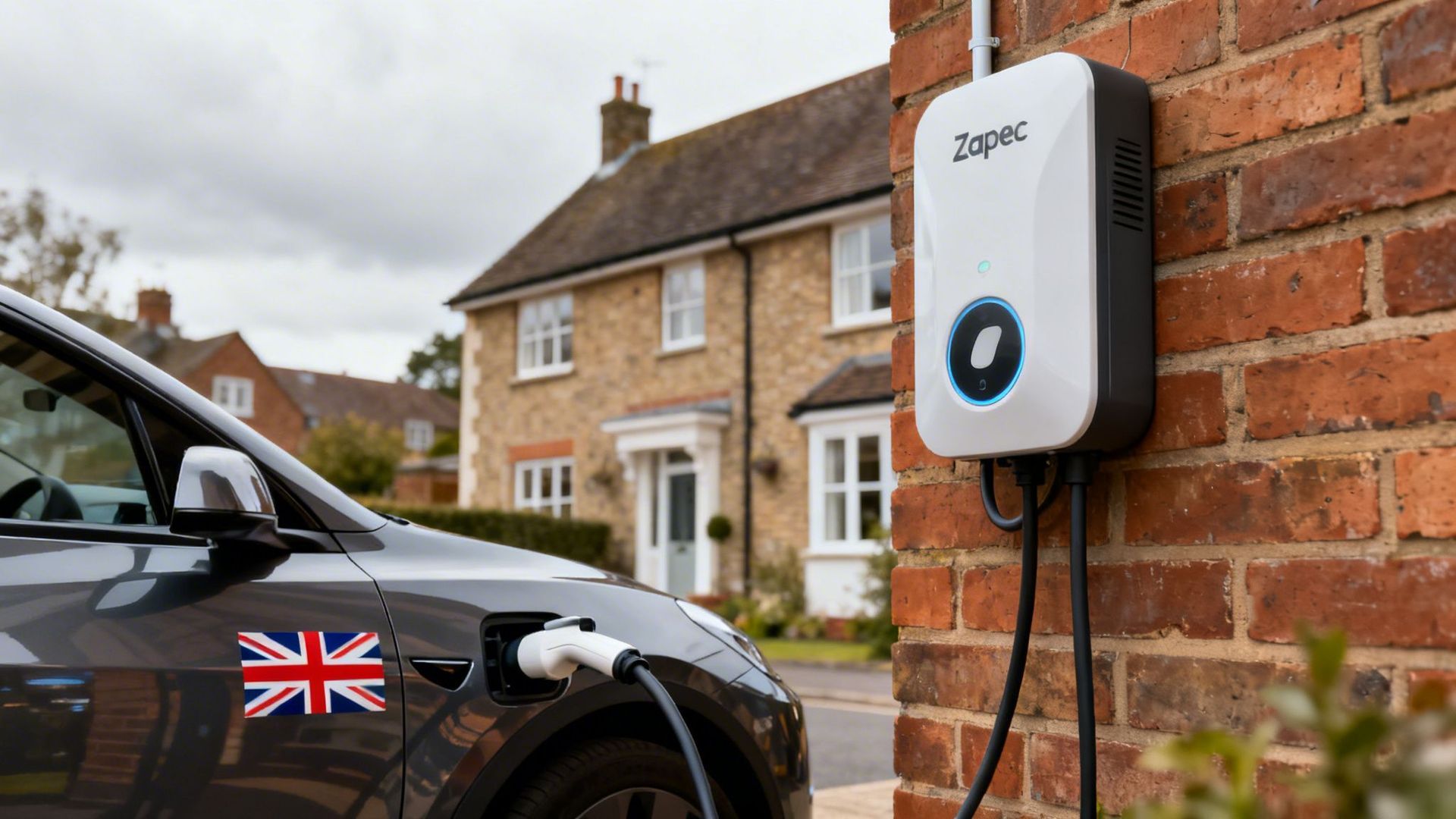
Honestly, for most people, it's far less hassle than a weekly trip to a smelly petrol station. If you have a driveway or a dedicated parking spot, getting a home charger installed is the single best move you can make. You just plug the car in when you get home, like you do with your phone, and wake up every morning to a 'full tank'.
Many energy suppliers now offer special EV tariffs with ridiculously cheap electricity overnight. We’re talking pennies per mile, completely changing the economics of running a car.
The catch? If you live in a flat or a terraced house with no off-street parking, it gets trickier. You'll be relying on the public charging network, which can be a bit of a lottery depending on where you live. Before you even think about buying, you must scout out the charging options near your home and workplace. Fire up an app like Zap-Map and get a real sense of what’s available.
What’s the Catch With All These Cheap Used EVs?
It's a perfectly fair question. When a deal looks too good to be true, it often is. With used EVs, the 'catch' usually falls into one of three buckets:
- Battery Health: The cheapest cars are often cheap for a reason. They might be older models with a significantly degraded battery. A low price is no bargain if the car's real-world range has been slashed in half. This is precisely why checking the SoH is non-negotiable.
- Dated Technology: The pace of EV development has been ferocious. A car from five or six years ago will have a smaller battery, slower charging speeds, and less sophisticated tech than a new model. That's fine if you just need a local runabout, but it could be a deal-breaker if you do regular long journeys.
- Rapid Depreciation (The Good 'Catch'): You're actually benefitting from a massive market correction. The market was flooded with ex-lease cars, and those early models lost value fast. The compromise is that you're buying slightly older tech, but the huge cost saving often makes it a brilliant trade-off.
Are Used EVs Expensive to Insure and Maintain?
Let's split this in two. Insurance can, in some cases, be a bit pricier than for a comparable petrol or diesel car. Insurers are still getting their heads around repair costs for specialist parts, but the price gap is closing fast. The golden rule is simple: get insurance quotes before you agree to buy the car .
Maintenance, on the other hand, is where you really win. It's gloriously, wonderfully cheap. Just think about what an electric car doesn't have:
- No oil changes
- No exhaust systems to rust and fall off
- No clutch or complex gearbox to worry about
- Brake pads and discs last ages thanks to regenerative braking
Your main running costs will be tyres (EVs are heavy and can be tough on them), suspension bits, and wiper blades. Your annual servicing bill will be a fraction of what you’re used to, saving you a small fortune over the life of the car. It's a huge part of the used EV appeal.
Finding the perfect used EV is about blending savvy research with practical checks. At VoltsMonster , we cut through the noise to bring you honest, entertaining, and insightful reviews and guides on all things electric. For more brutally honest advice and the latest from the world of EVs, check out our content at https://www.voltsmonster.com.
VoltsMonster Electric Vehicle Blog