Buy Second Hand Electric Car: A Practical Guide to Not Buying a Dud
Right then. You’re thinking of going electric, but the thought of spanking fifty grand on a new one makes your wallet audibly squeak. Smart move. Buying a second-hand electric car is a cracking idea, but it’s a different kettle of fish to nabbing a used petrol runaround. Get it right, and you’ll be laughing all the way to the bank, wondering why you ever put up with oily rags and MOT emissions panics. Get it wrong, and you’ve just bought a very heavy, very expensive driveway ornament.
Why Is Everyone Suddenly Buying Used EVs?
Let's get one thing straight: the market for pre-loved electric cars isn't just growing, it’s exploding. This isn't some niche hobby for sandal-wearing eco-warriors anymore; it's gone properly mainstream, and for damned good reasons. The first wave of new EVs that hit showrooms a few years back are now flooding the used market, which means there's more choice than ever.
The UK's used electric vehicle market has seen mental growth over the past couple of years, with sales more than doubling. To put it in perspective, back in January 2024, just 10,135 used EVs found new homes. Fast forward to January 2026, and that figure shot up to 22,111 sales —the second-highest monthly total ever recorded. You can read more about this remarkable growth and see how it's changing the game for buyers. This surge proves the early scepticism is fading, replaced by the realisation that a second-hand EV can be a genuinely brilliant buy.
So, what's behind the sudden rush?
- Depreciation is Your New Best Mate: New EVs lose value faster than a politician's promise. It's a brutal hit for the first owner but fantastic news for you, the savvy second-hand buyer. You get to swerve that massive initial drop in value.
- Running Costs are Laughably Low: Swapping pricey petrol station fill-ups for cheap overnight electricity tariffs is a game-changer for your bank balance. Chuck in less maintenance and no road tax on most models, and the savings really start to add up.
- They're Genuinely Good Now: Let's be honest, the first generation of EVs were a bit… rubbish. But modern used models from the last few years offer proper real-world range, plenty of tech, and a driving experience that’s surprisingly fun.
The biggest hurdle isn't range anxiety anymore; it's bad-deal anxiety. That nagging fear of buying a dud with a battery that can barely power a toaster is real, but it’s completely avoidable if you know what you’re looking for.
And that's where this guide comes in. We’re here to cut through the marketing fluff and dealer jargon to give you the unvarnished truth. We'll show you what to inspect, what to walk away from, and how to snag a deal that won’t leave you stranded on the M6 in the pouring rain. Forget what you think you know—the electric jungle has its own set of rules, and we're about to give you the map.
Where to Hunt for Your Next Used EV
So, you’ve decided to buy a second-hand electric car. Excellent choice. Now for the fun part: wading through the murky waters of the used car market to find something that doesn't have the battery life of a mayfly. This isn't like buying a knackered old Fiesta; where you choose to hunt will massively influence the price, your peace of mind, and the chances of being sold an absolute lemon.
The used EV market is absolutely booming. Throughout 2025, sales shot up by a landmark 45.7% year-on-year, with a staggering 274,815 used battery electric vehicles finding new homes. This surge pushed their market share to a record 3.5% —up from just 2.5% the year before. In simple terms, there's more choice than ever, but also more competition snapping up the good ones. You can read more about these record-breaking used EV sales to see just how quickly things are moving.
The Polished Floors of Franchised Dealers
Your first and most obvious port of call is the main dealer. Think gleaming showrooms, free coffee that tastes vaguely of disappointment, and salespeople in suits sharp enough to cut glass. This is by far the safest, most sanitised way to buy a second-hand electric car.
You're definitely paying a premium here, but this is what it gets you:
- Approved Used Schemes: Most manufacturers have them. This means the car has gone through a multi-point inspection, comes with a fresh MOT, and—most importantly—a warranty. This isn't some flimsy third-party cover; it's usually a comprehensive warranty backed by the manufacturer themselves.
- Consumer Protection: Buying from a dealer gives you proper rights under the Consumer Rights Act 2015. If the car turns out to be faulty, you have a clear legal path to getting it sorted.
- No Dodgy History: A good dealer will have done all the HPI checks, making sure the car isn’t stolen, written off, or carrying outstanding finance.
The downside? The price tag. A dealer-approved used Nissan Leaf will be significantly more expensive than a similar one you'll find on Facebook Marketplace. You’re essentially buying peace of mind, one overpriced pound at a time.
The Wild West of Private Sales
Next up, we have the untamed wilderness of private sales on sites like Autotrader, Gumtree, and eBay Motors. This is where the real bargains are found, but it's also where the monsters live. You’re dealing with individuals, which can be brilliant or a complete and utter nightmare.
You might find a fellow EV enthusiast who has cherished their car. Or, you could meet someone desperate to offload a vehicle with a rapidly dying battery just before the warranty runs out. Vetting the seller is just as important as vetting the car. Ask probing questions, gauge their knowledge, and if their story sounds fishier than a trawler's bin, walk away.
The golden rule of private sales is simple: if a deal looks too good to be true, it almost certainly is. That £8,000 Tesla Model 3 probably has a 'history' its owner isn't keen to share.
Car Auctions: The High-Stakes Gamble
For the truly brave (or foolish), there are car auctions. This is where you can potentially snag a vehicle for a fraction of the dealer price, but it’s the ultimate high-risk, high-reward strategy.
You'll often get minimal time to inspect the car, and your legal protections are practically non-existent. You buy 'as seen', which means if it conks out the second you drive off the lot, that's your problem. Simple as that.
This route is only for experienced buyers who know exactly what they’re looking for and can spot a lemon from fifty paces. For everyone else, it’s a brilliant way to turn your savings into a very heavy, non-functional driveway ornament.
Each of these routes has its merits. If you want a more detailed breakdown of where to look online, you might be interested in our guide on the 7 best second hand electric car sites in the UK.
How to Check an EV Battery’s Health
Right, let’s get straight to the heart of the matter. The battery. It’s the single most expensive and important part of any electric car. Get this bit wrong, and that bargain you just bought could quickly turn into a very modern, very expensive garden ornament.
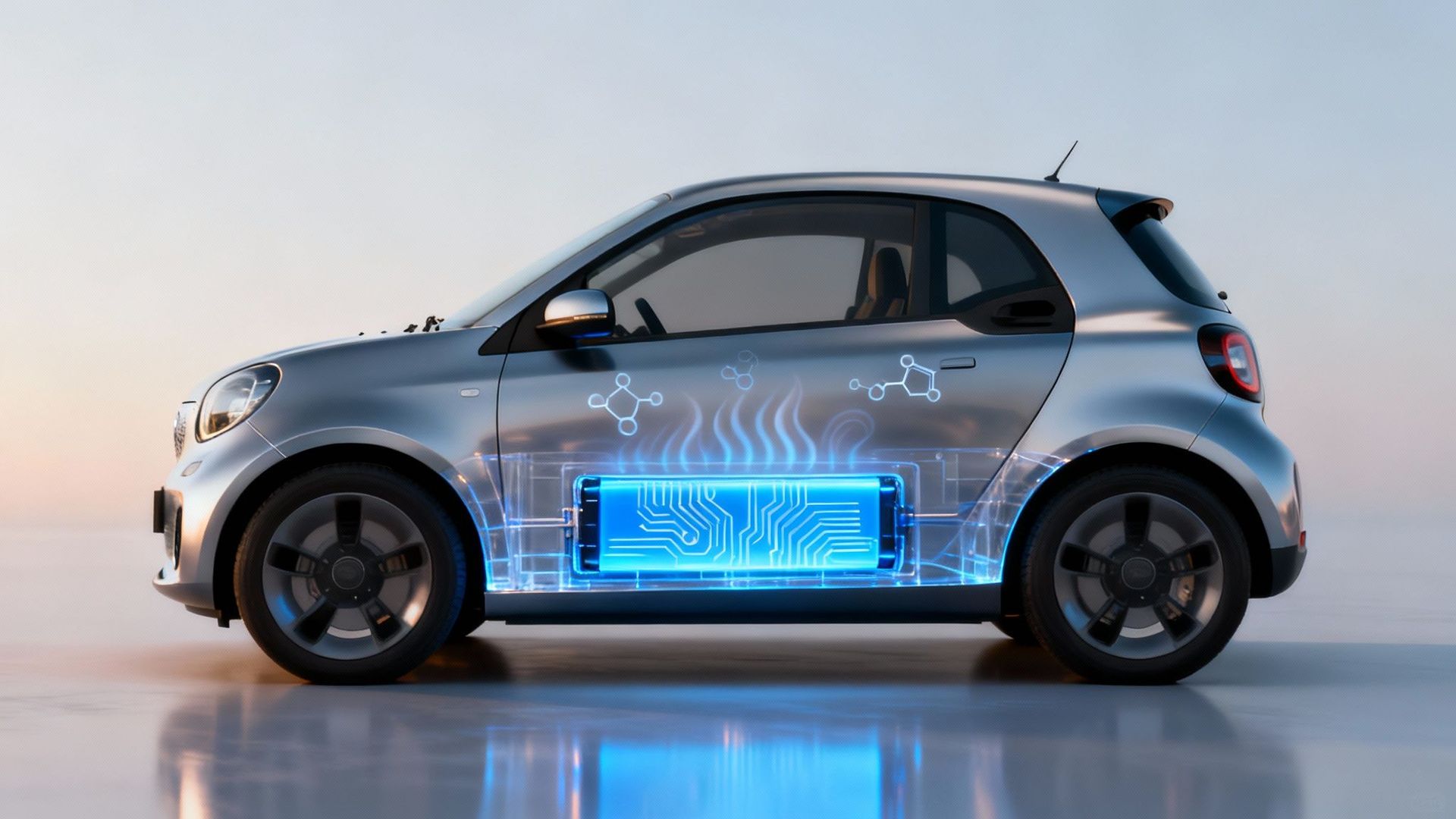
When you’re looking at a second-hand EV, you’re not just buying the car; you're buying what's left of its battery life. So, forget the shiny paintwork for a second. A tired battery will cause more headaches than a hundred stone chips. This gradual decay, known as degradation , is the number one thing you need to investigate.
What Is "State of Health"?
Every EV battery has a State of Health (SoH) . It’s a simple percentage that tells you how much of its original capacity is left. Think of it like your phone after a couple of years – it just doesn’t hold a charge for as long as it did out of the box. A new car starts at 100% SoH , and that figure inevitably drops over time with every charge.
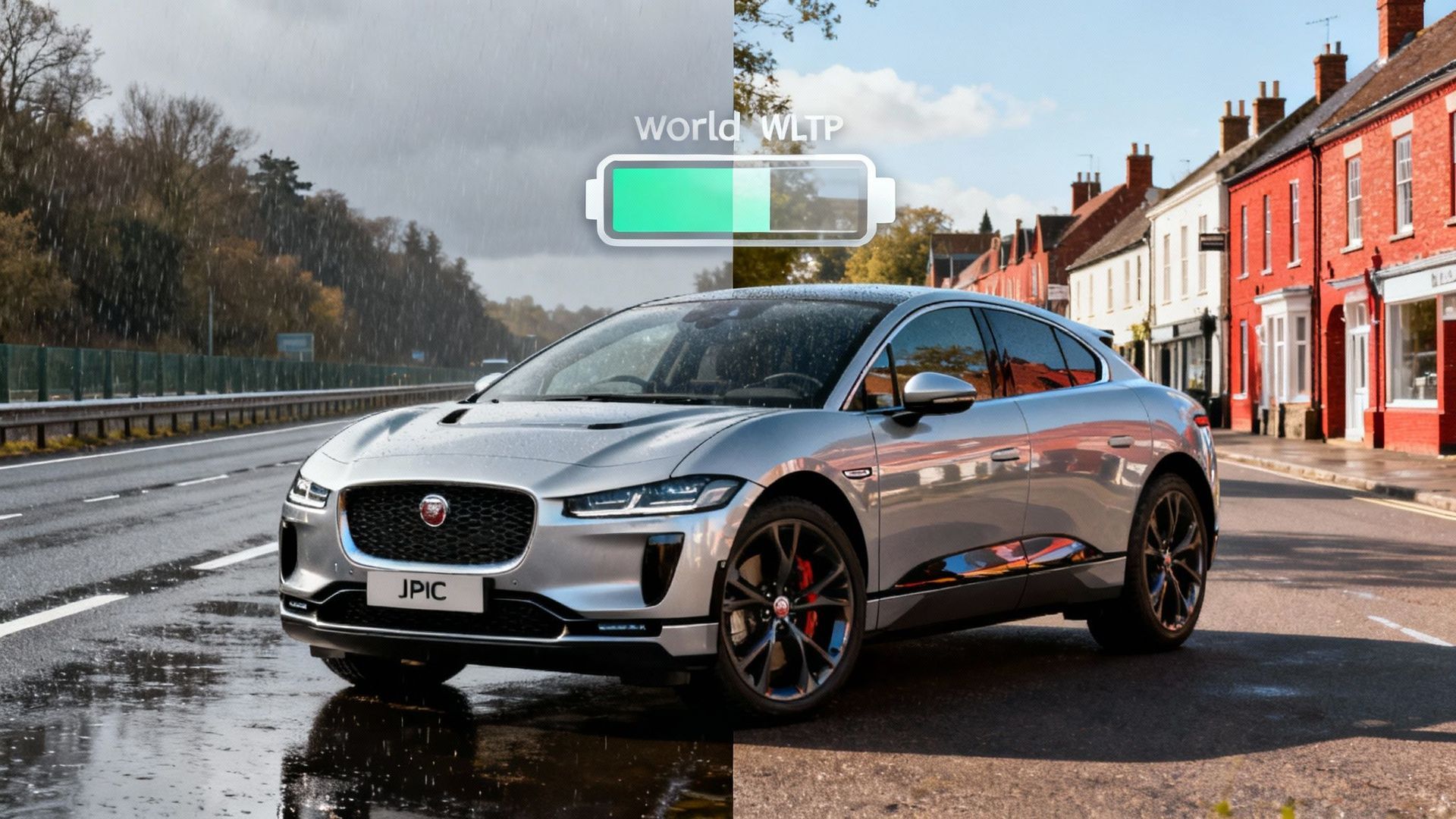
Your job as a buyer is to play detective and find out that exact SoH figure. The car's dashboard might give you a nice, optimistic range estimate, but frankly, that’s about as reliable as a weather forecast. It changes with the temperature, your driving style, and whether you've got the heating on full blast. You need to dig deeper for the real number.
For instance, an early 24kWh Nissan Leaf could manage around 80 miles when it was new. Fast forward a few years and 50,000 miles , and a battery with 80% SoH will struggle to give you 60 miles on a good day. That’s the reality of degradation, and it's why a proper reading is absolutely crucial.
This infographic can help you decide on the best place to find your used EV, depending on whether you prioritise a warranty or a potential bargain.
The trade-off is clear: go to a dealer for the peace of mind of a warranty, or hunt for the best prices in a private sale, where you take on more of the risk yourself.
Getting a Real SoH Reading
So, how do you get to the truth? Some newer EVs might actually show you the SoH in a submenu if you poke around the infotainment system, but many, especially older models, keep it well hidden. This is where you need to get a bit more hands-on.
One of the most reliable ways is to use a third-party app.
- For Nissan Leaf Buyers: The undisputed king is the LeafSpy app. You'll need a cheap OBD-II dongle that plugs into the car's diagnostic port (usually under the dashboard) and the app on your phone. It gives you a treasure trove of data, including that all-important SoH percentage.
- For Other Models: Similar tools exist for most brands. A quick search on an owner’s forum for the specific car you’re looking at will almost certainly point you in the right direction.
If a seller—whether it's a private individual or a dealer—gets funny about you plugging something into their car, consider it a massive red flag. What are they trying to hide? You should insist on doing the check, or simply walk away.
A healthy SoH for a three-year-old car with average mileage ( around 30,000 miles ) should be somewhere in the 90-95% range. If you see a car of that age dipping into the low 80s, something's amiss. It might have been relentlessly hammered on rapid chargers, which is known to accelerate degradation.
A quick check during your viewing can tell you a lot. Here’s a simple table to guide you.
Quick Battery Health (SoH) Checklist
| Check | What to Look For | Red Flag |
|---|---|---|
| Dashboard Range | Does the estimated range on a full charge seem reasonable for the car's age and mileage? | An unusually low range estimate (e.g., a 150-mile car showing 90 miles) |
| OBD-II Scan | Use an app like LeafSpy to get the precise SoH percentage. | The seller refuses to let you plug in a dongle or the SoH is below 85% on a sub-5-year-old car. |
| Charging History | Ask the owner how they typically charged the car. | They admit to exclusively using public rapid chargers day in, day out. |
| Warranty Status | Check if the original battery warranty (often 8 years/100,000 miles ) is still active. | The car is just outside its battery warranty period. |
While this table is a good starting point, nothing beats getting a proper data reading.
The Impact of Charging Habits
Not all charging is created equal. A battery that’s been gently topped up overnight on a slow home charger will be in far better shape than one that's been constantly blasted on 50kW+ rapid chargers. Heat is the ultimate enemy of a lithium-ion battery, and rapid charging generates a lot of it.
Ask the seller about their charging routine. Of course, they could tell you anything, but you can look for clues. Check the sat-nav history for frequent trips to motorway services. Was it an ex-company car that lived on the road? A battery that has been repeatedly charged to 100% and run down to near-empty will also degrade faster than one kept in the sweet spot between 20-80% .
Ultimately, getting a true picture of the battery's health is non-negotiable. If you want a more in-depth look at how to interpret these figures, we've gone into even more detail on the truth about battery health reports on used EVs. Arm yourself with this knowledge, and you’ll be able to confidently tell a healthy, reliable EV from a dud.
Your Used EV Inspection Checklist
Right, you’ve wrestled with the battery’s State of Health and feel confident it’s not about to conk out. Brilliant. Now for the easy bit? Not so fast. Underneath all that silent, futuristic wizardry, it’s still just a used car. And used cars are experts at hiding expensive, soul-destroying problems.
It's a classic mistake. You get so fixated on battery percentages and range figures that you completely miss the knackered suspension bush or the dodgy air-con. Think of this checklist as your pre-flight inspection—it's your final defence against buying a beautifully efficient, utterly broken lemon.
Beyond the Battery Basics
First things first, let's look at the EV-specific bits that aren't the main battery pack. These are the details that separate a well-cared-for car from one that’s been neglected. You’re not just kicking tyres here; you’re prodding the very things that make an EV an EV.
Start with the charging port . Open the flap. Is it clean, or is it caked in grit and grime? Look closely at the pins for any signs of damage, bending, or corrosion. A dodgy port can lead to charging failures, and that’s a headache you really don’t need.
Next, have a look at the charging cables . Any used EV should really come with at least two of them:
- The 'Granny' Cable: This is your slow-and-steady charger that plugs into a standard 3-pin wall socket. Make sure it's actually there and that the casing isn't cracked or frayed.
- The Type 2 Cable: This is your workhorse for most public chargers and home wallboxes. Again, check its condition. These things aren't cheap to replace, often setting you back upwards of £150 .
While you're at it, plug the car in. Does it actually start charging without a fit of error messages on the dash? This simple test can save you a world of pain later.
Remember, the presence and condition of these cables tell a story. If they're missing or look like they've been chewed by a badger, it suggests a careless owner. What else have they been careless about?
Checking for Model-Specific Gremlins
Every car has its quirks, and EVs are no different. Certain models are notorious for specific, non-battery-related faults. Knowing what to look for can turn you from an average punter into a savvy buyer.
For instance, if you're looking at an older Renault Zoe , be aware that some early models had frustrating onboard charging issues that could prevent them from charging at all. With a Tesla Model S or X , those fancy pop-out door handles are a well-known failure point. Give every single one a try.
Similarly, fire up the infotainment system and have a proper play. Is it painfully slow, does it crash, or does the screen have dead pixels? These systems often control everything from the sat-nav to the climate control, and a glitchy unit can be infuriating to live with. Finally, on the test drive, pay attention to the regenerative braking . Does it engage smoothly when you lift off the accelerator, or does it feel jerky? It should feel natural and intuitive.
The Paperwork Trail Never Lies
Now for the really boring, but utterly critical, part: the paperwork. This is where you uncover the car’s true history, and it's your best defence against buying something with a hidden, expensive past.
First up, the V5C logbook . Check that the VIN (Vehicle Identification Number) on the document matches the one on the car itself (usually visible at the base of the windscreen). Crucially, make sure the seller’s name and address match what’s on the V5C. Any discrepancies here are a massive red flag.
Next, you need to see the service history . For an EV, this is paramount. A full main dealer service history isn't just nice to have; it's often a strict requirement for the battery warranty to remain valid. No history could mean no warranty. Simple as that.
Lastly, you absolutely must get an HPI check . This will tell you if the car has any outstanding finance, has ever been written off, or is reported as stolen. It costs about £20 and is the best twenty quid you will ever spend when buying a second-hand car. Don't just take the seller's word for it—run the check yourself.
Follow these steps and you'll be well-equipped to spot any potential trouble. For a deeper dive, check out our guide on the top 5 things to look for when inspecting a used EV.
Getting the Price Right: Haggling and the True Cost of an EV
So, you’ve found the one. The battery looks healthy, all the right cables are in the boot, and the test drive didn’t reveal any nasty surprises. Excellent. Now for the bit that makes most of us Brits want to curl up in a ball: talking about money.
Before you even dream of making an offer, you need to do your homework. Whether you're facing a dealer in a shiny suit or a private seller from down the road, they have a price in mind. Your mission is to counter it with a realistic figure backed by cold, hard facts.
Get yourself on Autotrader and eBay Motors. The key here isn’t just to gawp at the asking prices. You need to dig deeper. Search for sold listings to see what people are actually paying for a similar car—same age, mileage, and battery condition. That’s your benchmark.
This research is more critical than ever. The wild west of used EV pricing has calmed down a lot. These days, you'll find the average price for a decent used electric car sits somewhere between £20,000 and £24,000 . If you're on a tighter budget, you're in luck; popular first-gen models like the Nissan Leaf or Renault Zoe can now be had for under £14,000 . The market has matured after a period of steep drops, which means you have a much more stable footing for negotiation.
How to Play the Haggling Game
Right, you’ve got your target price. How do you get the seller to meet you there? Haggling isn’t about being aggressive or awkward; it’s a calm, fair negotiation based on the facts you’ve gathered.
With a private seller, try to build a bit of a friendly rapport first. When it’s time to talk turkey, start with an offer below your target price – but don’t go so low it’s insulting. The most important part? You have to justify it. Point out the things you noticed during your inspection. "The tyres are getting a bit low," "I noticed a stamp missing from the service book," or "There's a decent scuff on that alloy wheel." Each one is a perfectly valid reason for a price tweak.
Dealers are a different beast. The price on the windscreen is almost never the final price. They have wiggle room. Instead of just trying to lop a grand off the top, think creatively. Can they throw in a fresh MOT? A proper valet? What about covering the cost of those slightly worn tyres you spotted? These perks have real cash value and are often an easier pill for a dealership to swallow than a straight discount.
You'll almost certainly hear the dealer’s favourite line: "I'll have to run that by my manager." It’s a classic move designed to make you feel you're pushing them to their absolute limit. Don't buy it. Stick to your researched price, stay polite but firm, and never forget the most powerful tool you have: your feet. Be prepared to walk away.
Beyond the Sticker Price: The Real Cost of Ownership
The price you shake hands on is just the start. A cheap EV can morph into a money pit if you haven't considered the other costs lurking in the background. To know if you’re truly getting a good deal, you have to look at the total cost of ownership.
Don't get caught out by these common expenses:
- Insurance: This can be a real stinger. Premiums for EVs are often higher than for an equivalent petrol car because repairs can be more specialised and costly. Get a few quotes using the car's registration number before you commit to buying.
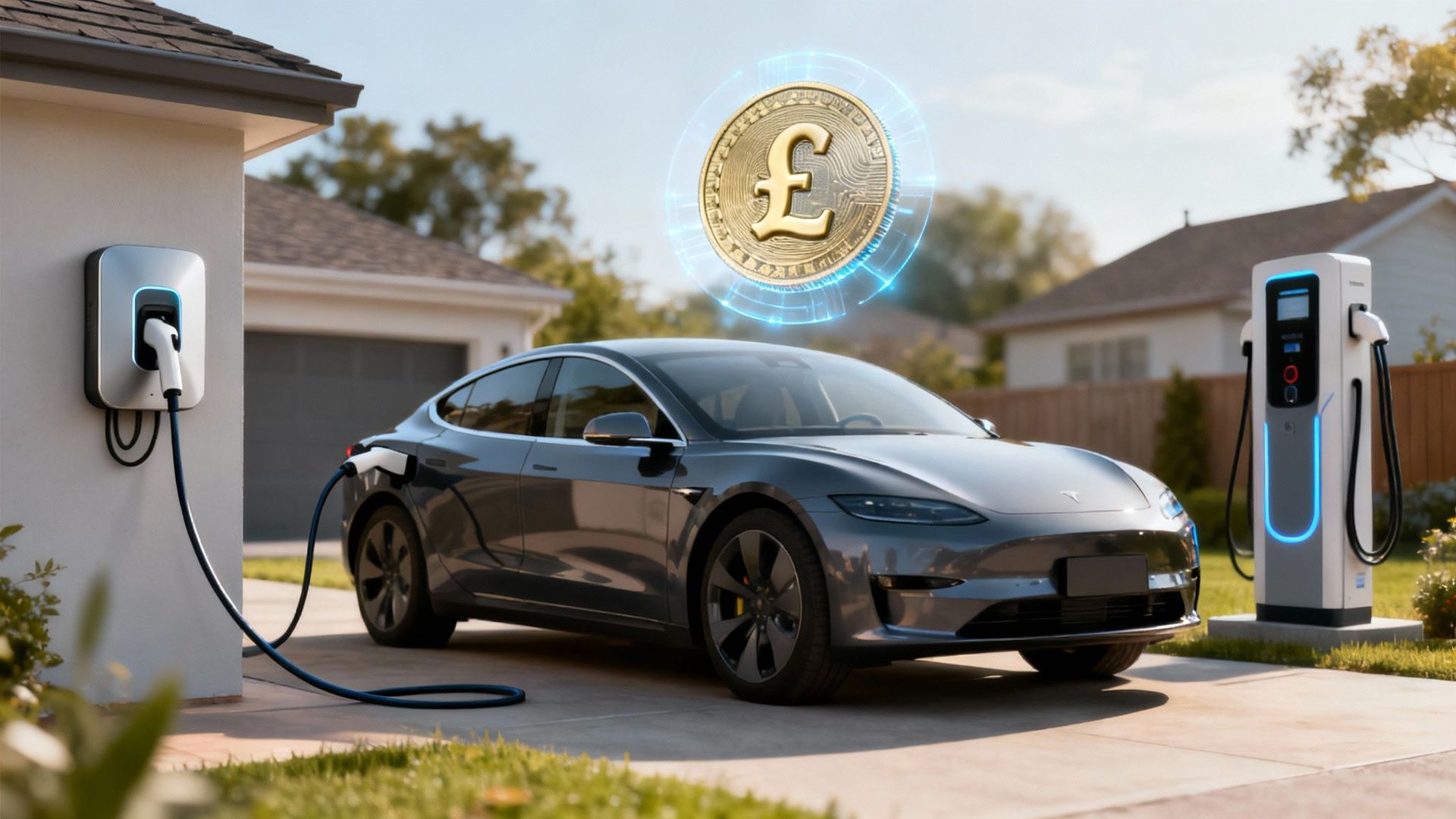
- Home Charger Installation: Trust me, relying on a 3-pin plug will drive you mad. You'll need to budget around £800-£1,000 for a professionally installed wallbox. It’s a hefty upfront cost, but it's the only way to tap into those super-cheap overnight electricity tariffs that make EVs so cheap to run.
- Vehicle Excise Duty (VED): The 'free road tax' party won't last forever. While most used EVs are currently exempt, the rules are changing from 2025. It’s a future running cost you absolutely need to factor into your long-term budget.
Forgetting these costs is how a brilliant deal on paper becomes a financial headache down the line. When you buy a second-hand electric car, winning the negotiation is only half the job; understanding the full financial picture is what truly clinches the victory.
Common Questions About Used Electric Cars
Right, we’ve covered a lot of ground. But there are always a few lingering questions that can knock your confidence when you’re about to take the plunge. Let's tackle them head-on.
Is The Battery Warranty Still Valid?
In most cases, yes, as long as the car is within the manufacturer's specific age and mileage limits. The industry standard tends to be around 8 years or 100,000 miles , whichever comes first.
But here’s the catch, and it's a big one: the small print. A continuous, full manufacturer service history is almost always a requirement for the warranty to be transferred to you. If the previous owner skipped a service or used a non-approved garage, that warranty could be worthless. Always, always check the service book.
Do I Really Need a Home Charger?
Need one? Technically, no. Will life be a whole lot easier with one? Absolutely. You can get by with a 3-pin "granny charger" or by making regular trips to public charging points, but it gets old, fast.
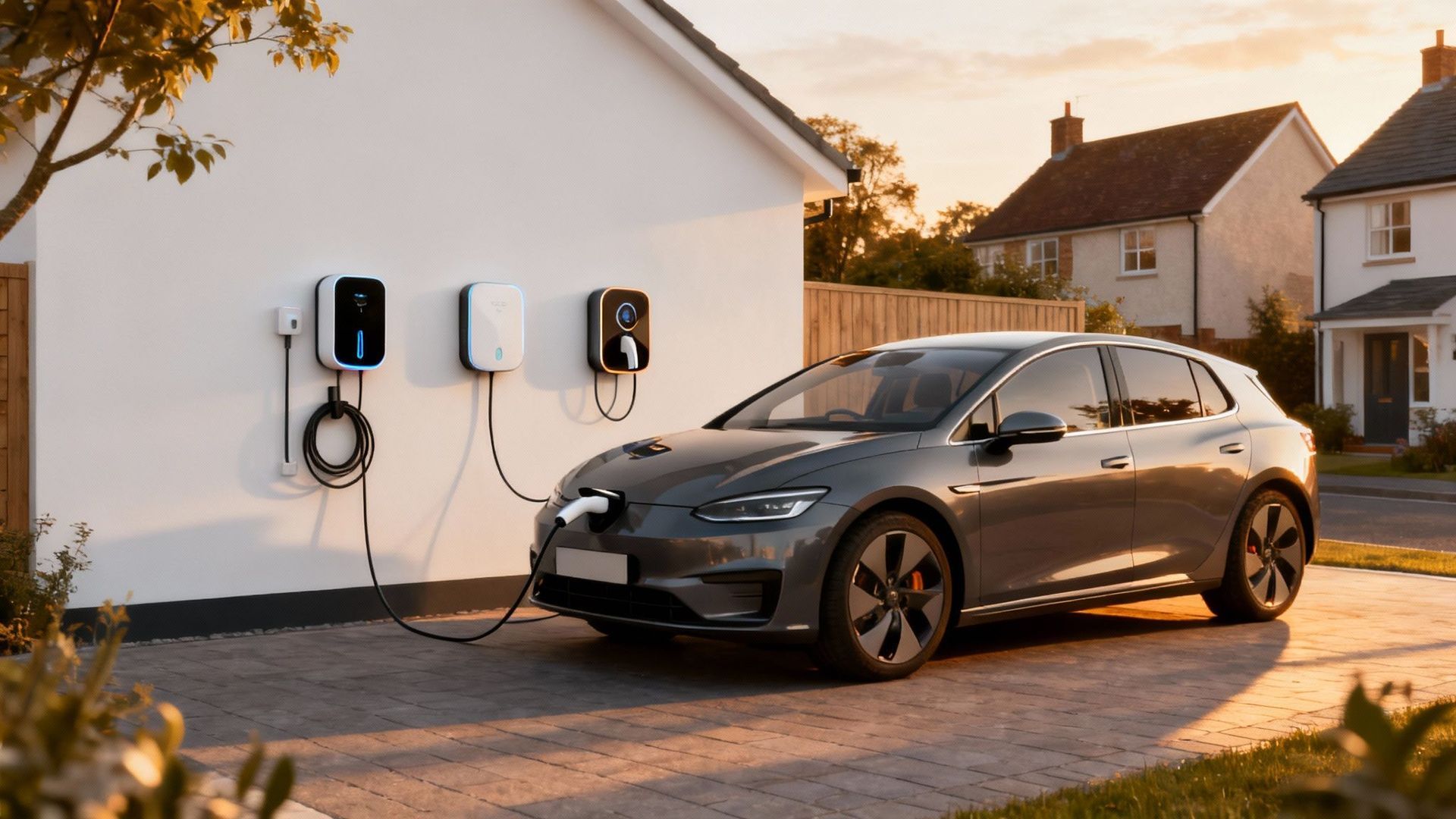
A proper home wallbox is the key to unlocking the best parts of EV ownership. It's safer, significantly faster, and allows you to take full advantage of cheap overnight electricity tariffs. That's where you make the serious savings. Factor in around £800-£1,000 for a fully fitted unit.
Are Older Used EVs More Expensive To Insure?
It's not so much the age, but EVs in general can sometimes attract higher premiums than an equivalent petrol or diesel car. Insurers are still getting to grips with them, and they know that repairs, especially anything involving the battery pack, can be incredibly expensive and require specialist technicians.
Don't fall into the trap of assuming insurance will be cheap. Before you get emotionally attached to a car, run a few quotes using its specific registration number. You’d be amazed at how much the cost can vary between different models.
The market is getting more competitive, but being hit with an eye-watering insurance premium after you’ve already bought the car is a classic rookie mistake. Do your homework first.
Ready to dive deeper into the world of electric vehicles? Find honest reviews, practical guides, and entertaining vlogs at VoltsMonster and join a community that tells it like it is. Explore our latest content at https://www.voltsmonster.com.
VoltsMonster Electric Vehicle Blog