How to Find a Genuinely Cheap Electric Car Without Selling a Kidney
Right, let's talk about getting into an electric car without having to remortgage your nan’s bungalow. For donkey's years, the idea of owning an EV felt like some ludicrous fantasy, reserved for tech billionaires and virtue-signalling celebs. But the simple truth is, that's all changed. Genuinely affordable electric cars are finally here, and frankly, some of them are brilliant.
We’re not talking about six-figure status symbols that look like a spaceship's door wedge. We're talking about proper, real-world cars that can save you a fortune on the road.
The Electric Revolution Is Finally for the Rest of Us
Let's be brutally honest for a moment. For years, the whole electric car thing felt like a cruel joke, didn't it? The promise was clean, quiet, cheap motoring, but the reality was a price tag that would make a Premier League footballer blush. The market was flooded with high-end tech aimed at early adopters with seriously deep pockets, leaving the average Brit peering into the showroom with a mix of envy and profound suspicion.
But the tide has well and truly turned. The UK's electric vehicle market has exploded, with over 473,000 fully electric cars flogged in a single recent year. That’s a staggering 25% increase and a huge chunk of all new car registrations. What's really exciting is that affordable EVs are stealing the spotlight. Models like the MG ZS Hybrid+ have proven that you don't have to compromise on quality or appeal just because you're on a budget. If you want a closer look at these market-shaking trends, you can see how the budget EV market is evolving.
Redefining 'Cheap' in the EV World
So, what does 'cheap' actually mean when you ditch the petrol pump? It's not just about the price on the windscreen; that's only half the story. A truly cheap electric car is a lesson in smart, long-term spending. The upfront cost might still be a little higher than a comparable petrol clunker, but the real magic happens once you own it.
Think of it this way:
- Laughably low 'fuel' costs: Charging at home overnight costs pennies compared to the eye-watering price of petrol or diesel. It’s a game-changer.
- Minimal maintenance: With far fewer moving parts, there’s a whole lot less to go wrong. Say cheerio to expensive annual services for things like exhaust systems, clutches, and oil changes.
- Tax perks: Many EVs still benefit from zero road tax, which is a lovely little saving that adds up year after year.
This guide is designed to cut through the marketing fluff and show you exactly how to find a genuinely cheap electric car that actually fits your life and your wallet. Let's get cracking.
What Does a 'Cheap' Electric Car Really Cost?
Let's be honest, the word ‘cheap’ is a bit of a moving target. What passes for a cheap pint in London would be considered daylight robbery up in Yorkshire, and it’s exactly the same story with electric cars. The price on the windscreen is just the opening scene; the real story unfolds over the lifetime of the car.
Thinking only about the purchase price is like buying one of those fancy coffee machines. It feels like a big outlay at first, but then you realise you're saving a fiver every day by skipping the trip to Costa. Before you know it, the machine has paid for itself. That’s the mindset we need here.
This is where we look past the initial price tag and see why a slightly pricier EV often works out to be the genuinely cheaper car in the long run. It’s about turning what feels like an expense into a properly smart investment.
The Numbers That Actually Count
When you pit a budget EV against a similar petrol car, the upfront cost is only one piece of a much bigger, and frankly, more interesting puzzle. The real savings are hiding in plain sight, tucked away in your day-to-day, monthly, and yearly expenses.
Let’s get into the nitty-gritty of where an electric car starts to pull ahead:
- Fuelling Costs: Charging an EV at home on a cheap overnight tariff can be as little as 5p per mile . Filling up a petrol car? You’re easily looking at three or four times that. For an average UK driver doing around 7,000 miles a year, that’s a saving of over £700 annually, straight back in your pocket.
- Tax and Servicing: For now, most EVs are exempt from Vehicle Excise Duty (road tax). Better yet, with no engine oil to change, spark plugs to replace, or exhaust systems to fix, servicing costs are slashed over the car’s lifetime.
- Depreciation: This used to be the big worry, but the game has changed. The resale value of popular budget EVs is holding up remarkably well. To get the full picture, you can learn more about the truth about electric car depreciation and see how it really affects your wallet.
This infographic paints a clear picture of just how rapidly the UK is embracing electric driving, showing the growth, sales, and market share.
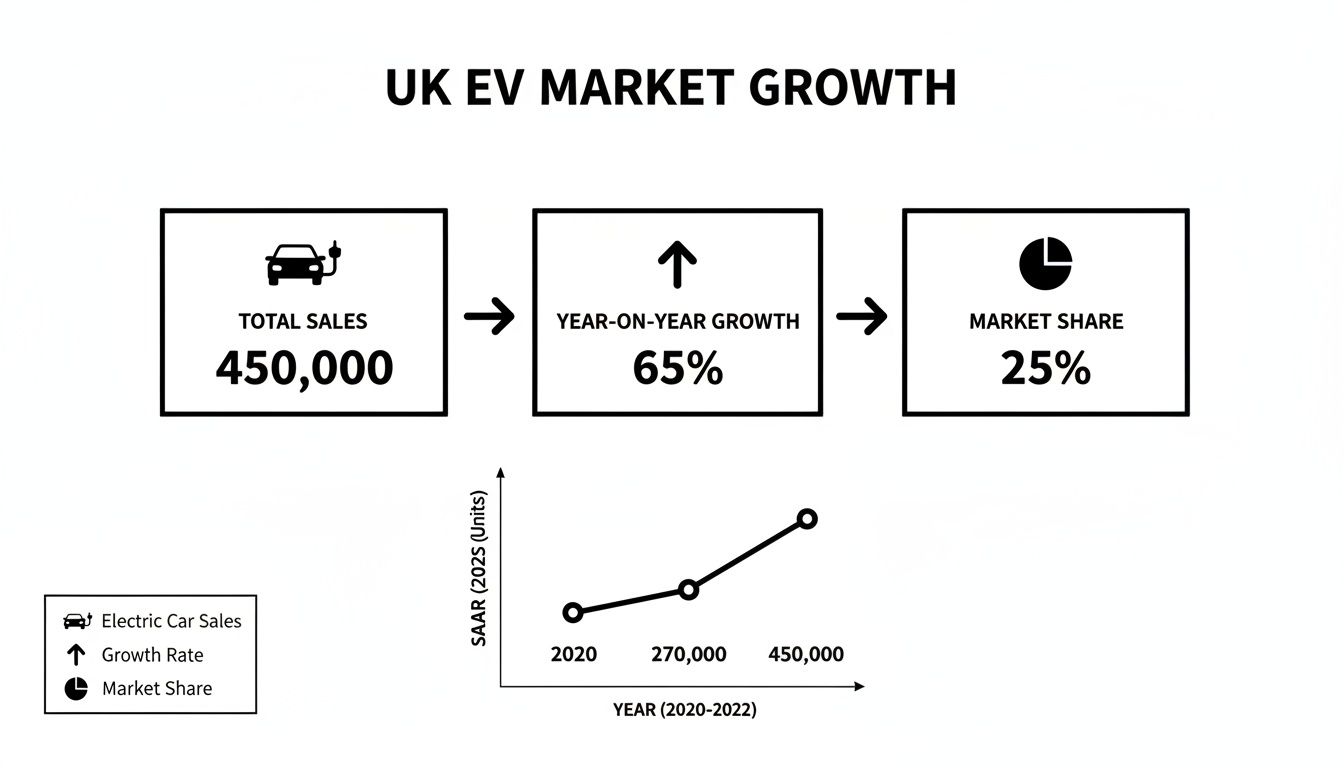
As you can see, the shift to electric isn't just some passing fad; it's a mainstream move powered by drivers who are looking for real, long-term value.
The sticker price is the headline, but the running costs are the real story. A cheap electric car isn’t just about the initial saving; it’s about the cumulative thousands you don’t spend over years of ownership.
Petrol Pains vs Electric Gains: A Five-Year Cost Smackdown
To put this into perspective, let's run the numbers. We’ve pitted a typical budget EV against its petrol-powered rival to see who comes out on top after five years on the road.
| Cost Factor | Typical Budget EV (e.g., Kia EV3) | Comparable Petrol Car (e.g., Ford Puma) | The Verdict |
|---|---|---|---|
| Purchase Price (New) | ~£34,000 | ~£26,000 | Petrol wins the showroom battle on price alone. |
| 5-Year Fuel/Charging | ~£2,450 (@ 7p/mile) | ~£7,000 (@ 20p/mile) | A massive £4,550 saving for the EV. That's a few holidays. |
| 5-Year Road Tax (VED) | £0 (for now) | £900+ | Another clear win for the electric option. |
| 5-Year Servicing | ~£700 | ~£1,500 | Fewer moving parts mean the EV saves you around £800 . |
| 5-Year Total Cost | ~£37,150 | ~£35,400+ | The gap closes dramatically. Add in depreciation, and it often flips. |
When you add it all up, the financial argument becomes incredibly compelling. That car that looked a bit pricey at the dealership can quickly become the undisputed champion of cheap motoring. It’s not just a car; it's a long-term strategy for keeping more of your hard-earned cash where it belongs.
Reviewing Britain's Best Budget EVs
Right then, let's get down to brass tacks. You've seen the numbers and understand that a cheap electric car is about more than just the sticker price. Now, it's time to meet the real contenders vying for the title of Britain's best budget EV.
We're not just rattling off spec sheets here. This is the brutally honest, real-world rundown on what you should actually consider spaffing your hard-earned cash on. We’ll get into the questions that really matter. Can it survive a family holiday to Cornwall without inducing a panic attack? Is the boot big enough for the weekly shop, the pram, and a perpetually unimpressed Labrador?
Let's dive in and separate the genuine bargains from the battery-powered disappointments.
The Workhorse: MG ZS EV
If you're after maximum space for minimum cash, the MG ZS EV is practically waving at you from the showroom. It’s an unpretentious, surprisingly spacious SUV that has become a familiar sight on British roads for a very good reason: value.
Think of it as the car equivalent of a massive Sunday roast—not fancy, but deeply satisfying, and you get a hell of a lot for your money. The Long Range model delivers a respectable real-world range that’ll comfortably see you through most daily commutes, pushing over 220 miles without much fuss. Inside, it's more practical than plush, but the boot is generous and there's plenty of room for passengers. It’s the sensible, logical choice for a family dipping their toes into the EV world.
The Smart Newcomer: Skoda Enyaq
Skoda has a real knack for making cars that are just… clever. The Enyaq is no exception. Built on the same solid foundations as its pricier Volkswagen Group cousins, it offers a brilliant blend of comfort, practicality, and quality that feels a class above its price point.
You could call it the Aldi of the EV world; you're getting a premium-feeling product without the silly badge tax. The interior is thoughtfully designed, the boot is cavernous, and the range is genuinely impressive, with some versions easily topping 300 miles on a full charge. It’s a supremely competent all-rounder that makes you question why you’d ever need to spend more.
A truly cheap electric car doesn't just save you money on fuel; it delivers on the practical promises of space, comfort, and reliability. It's the full package that makes daily life easier, not just cheaper.
The Tiny Titan: Dacia Spring
Now for something a bit different. If your driving life revolves around city streets and you see a large car as more of a liability than a luxury, the Dacia Spring demands your attention. It is, without a shadow of a doubt, the UK's cheapest proper electric car.
It’s basic, it’s small, and it’s gloriously, unashamedly simple. This isn’t the car for cross-country epics; its range is modest and its performance is, well, let's call it ‘leisurely’. But for darting to the shops, tackling the school run, or as a second car, it’s an absolute game-changer. It makes EV ownership genuinely accessible. If this no-frills approach sounds right up your street, our full Dacia Spring review breaks down exactly who this car is perfect for.
The Game-Changer: Kia EV3
Finally, let’s look at what might just be the new benchmark for the whole affordable EV market. The Kia EV3 is a masterclass in packaging. It serves up futuristic looks, a high-tech interior, and a frankly astonishing claimed range of up to 372 miles —all for a price that undercuts many of its key rivals.
Kia's confidence is obvious, backed by its industry-leading 7-year warranty that gives you immense peace of mind. It’s packed with clever features and feels like it belongs in a much higher price bracket. This is the car that proves buying a cheap electric car no longer means settling for compromises on range, tech, or style. It’s a genuine threat to the established players and a fantastic option for buyers who want it all.
Spotlight On the Kia EV3: Steal of the Year
Every now and then, a car arrives that completely resets the market. Right now, that car is the Kia EV3. It’s a bold statement to anyone who thinks you need deep pockets to own a feature-packed, long-range electric car. This isn't just another EV; it's currently the smartest cheap electric car purchase in the UK. Full stop.
Forget any old-fashioned ideas you have about budget motoring. The EV3 is a masterclass in giving you more than you paid for. It feels like getting a business class seat on an economy ticket—futuristic styling, a high-tech cabin that looks like it was lifted from a concept car, and performance that is genuinely impressive.
Numbers That Silence the Sceptics
Let’s get down to brass tacks, because the stats are where the EV3 really starts to look less like a bargain and more like an outright heist. Kia has thrown down a gauntlet that other manufacturers will struggle to pick up.
It has rapidly become a budget EV powerhouse in the UK, clocking over 11,000 registrations and securing a top-10 spot. Its starting price under £35,000 delivers absurd value, boasting a claimed 372-mile range , ultra-fast 10-80% charging in just 30 minutes , and Kia's legendary 7-year warranty. You can discover more insights about these impressive market figures from WardsAuto.
The Kia EV3 isn't just a cheap electric car; it’s a brilliant car that happens to be cheap. It delivers on the three things that actually matter to EV buyers: massive range, proper peace of mind, and a price that doesn't make your eyes water.
This blend of long-distance capability and a warranty that lasts longer than most celebrity marriages is a massive confidence booster. It effectively kills the two biggest fears people have about going electric: range anxiety and battery life.
More Than Just a Car, It's a Power Station
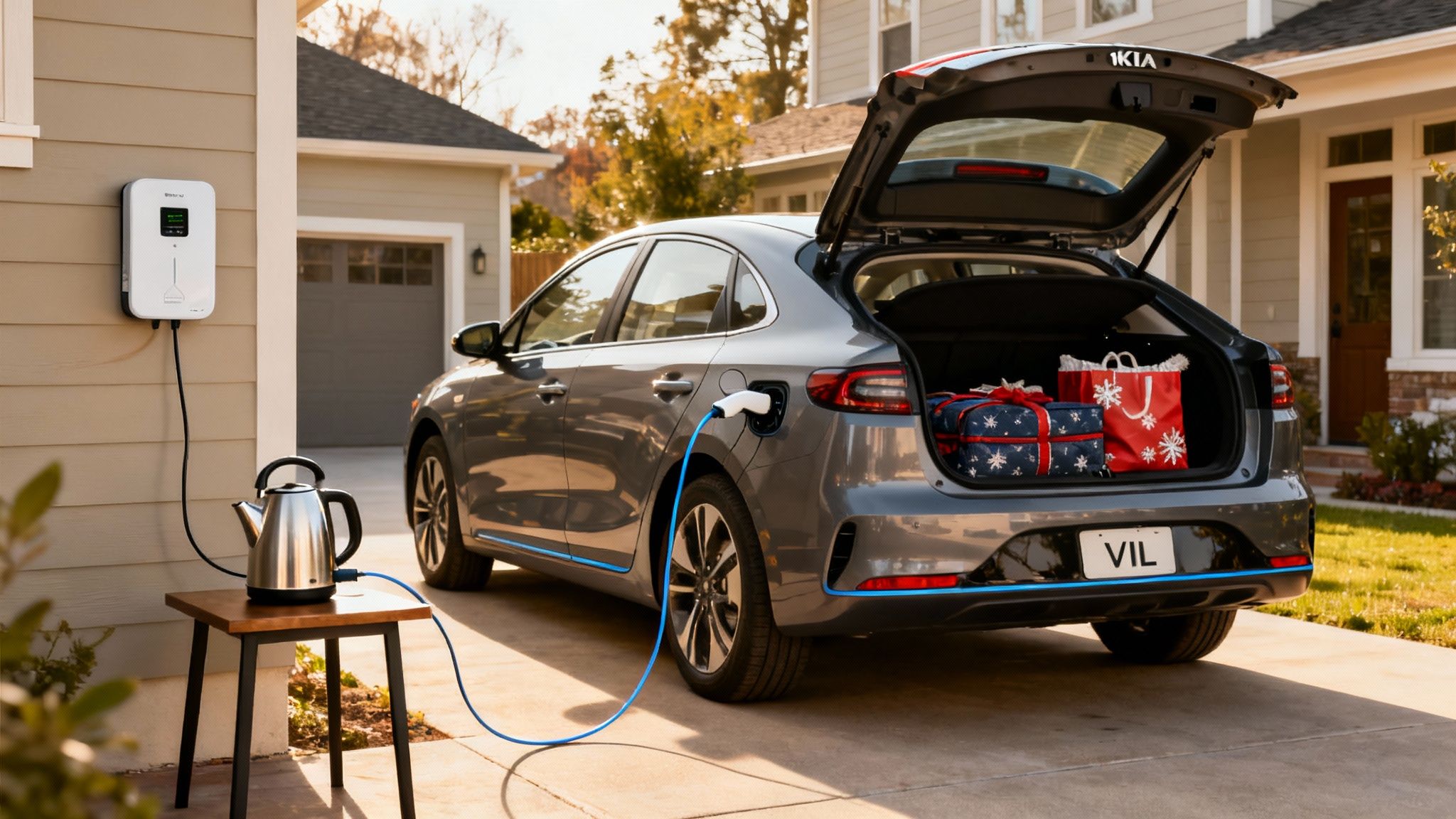
Beyond the headline figures, the EV3 is packed with genuinely useful tech that you’d normally expect to pay a premium for. One of the standout features is its Vehicle-to-Load (V2L) capability.
This isn’t just some silly gimmick. V2L turns your car into a giant mobile battery pack. Here’s what that actually means in the real world:
- Power during a blackout: Run your kettle, charge your phone, or even power your telly when the lights go out.
- Campsite hero: Forget noisy generators. Power your camping gear directly from the car.
- On-the-go workspace: Charge your laptop and other tools wherever you park.
It’s this kind of clever, practical thinking that elevates the EV3 from a simple mode of transport to a genuinely useful bit of kit. Many UK deals even bundle a home charger into the purchase price, making the switch to electric even more seamless. For anyone ready to buy an affordable EV that punches well above its weight, the Kia EV3 is, without a doubt, the current steal of the year.
How to Buy a Cheap EV Without Getting Fleeced
Alright, you’ve done the research and you know what you’re looking for. Now it’s time to step into the lion’s den: the car dealership. This is where a little bit of prep can save you thousands. Think of it as a game where the prize is a brilliant, cheap electric car and the smug satisfaction of knowing you got a cracking deal.
First things first, let's get the right mindset. A dealership isn't your friend; it's a business set up to get the most money out of your wallet. Your job is to walk in prepared, armed with facts, and completely ready to walk away if the deal doesn't feel right.
Mastering the Dealership Dance
Negotiating for a new EV isn’t quite the same as haggling over a ten-year-old banger. The profit margins can be tighter, but there are still pressure points you can use to your advantage. It’s all about knowing where the wiggle room is.
Before you even step on the forecourt, do your homework. Know the exact spec you want and the maximum price you’re willing to pay. This is your shield against being upsold on pointless extras, like ‘premium’ floor mats that cost more than a weekend away.
- Manufacturer vs. Dealer Incentives: You need to know who's offering the deal. A manufacturer discount (like a scrappage scheme) is set in stone and applies at every dealership. A dealer incentive, however, comes out of their own pocket. This is where you can often push for a better price or get them to throw in a home charger.
- The Power of Silence: It sounds simple, but it works. After the salesperson gives you a price, just be quiet for a moment. That awkward silence is a powerful tool. More often than not, they’ll be the first one to break it with a better offer.
- End-of-Quarter Panic: Dealerships run on sales targets, usually based on quarterly figures. If you show up in the last week of March, June, September, or December , you could be in a very strong negotiating position. They need to shift cars, and you're their solution.
The All-Important EV Test Drive
Test driving an electric car is a completely different kettle of fish. You’re not just listening for a rattling exhaust; you're getting a feel for how the car will actually fit into your life. Don't settle for a quick spin around the block – insist on a proper, long test drive.
The test drive is your one chance to interrogate the car. Push every button, test the different regenerative braking settings, and, most importantly, drive it on roads you use every day. This isn't a joyride; it's a fact-finding mission.
Check how responsive the infotainment system is—is it slick or frustratingly laggy? Pay close attention to the range calculator. See how your driving style on a familiar route affects the predicted mileage. This is the real-world data that matters far more than the official WLTP figures.
Don't Overlook the Nearly-New Market
The second-hand market for EVs is absolutely booming, and it's where some of the best bargains are hiding. An ex-demonstrator, for example, is often a fantastic sweet spot. These are the cars used by the dealership for test drives, so they might have a few thousand miles on the clock but are practically brand new and come with a hefty discount.
Buying a used EV, however, means you need to do a few specific checks, especially around the battery. The battery's State of Health (SoH) is the single most important thing to check, as it tells you how much of its original range the car still has. If you’re serious about going used, you need to know what to look for. Our guide on the top things to inspect on a used EV will stop you from buying a dud.
Honestly, getting a professional inspection could be the best hundred quid you ever spend. It ensures your cheap electric car doesn't turn into an expensive paperweight.
Answering Your Biggest EV Questions
Right, let's get into the nitty-gritty. You’ve heard the promises and seen the ads, but a few nagging questions are probably still bouncing around your head. It’s time for some straight answers to the most common worries about buying a cheap electric car.
Think of this as your final pre-flight check. We're here to clear up the confusion so you can start your search with total confidence.
Are the Batteries in Cheap Electric Cars Any Good?
In a word: yes. Forget any horror stories you've heard about batteries dying after a year or two. We're a long way past the early days of EV technology.
Most affordable new electric cars now come with a very reassuring 8-year/100,000-mile battery warranty as standard. For brands like MG, BYD, or Kia, the battery is a solid piece of engineering designed to last. If you're looking at a used model, it's wise to check the battery's 'State of Health' (SoH), but for a brand-new car, it’s really not something to lose sleep over.
The battery in a modern, affordable EV isn't the weak link anymore. It's a seriously robust component, and the long warranty is the manufacturer's way of putting its money where its mouth is.
Can I Run a Cheap EV If I Live in a Flat?
It's definitely more of a challenge, but don't write it off. While having a home charger on your driveway is the ideal scenario, thousands of people in flats and terraced houses are making it work. It just requires a different way of thinking.
You start treating charging like you do filling up with petrol—it's something you do when you're out and about. The UK's public charging network is expanding all the time. Many EV owners simply rely on charging at the supermarket during their weekly shop or plugging in at work. It takes a bit more forward planning, but it's completely doable.
Your first step should be to download an app like Zapmap. Have a good look at what chargers are available near your home, your workplace, and the places you visit regularly. You'll likely be surprised by how many options are already there.
Are There Still Government Grants for Electric Cars?
For most private car buyers, the simple answer is no. The government's plug-in car grant was scrapped a while back, which was a blow for sure. But don't let that be the deal-breaker.
The real 'grant' now comes from the massively reduced running costs. You’re saving a packet on:
- Fuel: Swapping eye-watering petrol prices for cheap overnight electricity is where you'll feel the biggest win.
- Road Tax: For the time being, pure electric cars are exempt from Vehicle Excise Duty (VED).
- Maintenance: With far fewer moving parts, you can say goodbye to oil changes and expensive engine servicing.
There are still some grants available for specific things, like installing a home charger if you live in a flat or for wheelchair-accessible vehicles. It’s always a good idea to check the official government website for the latest updates. The headline, though, is that the big savings now come from the day-to-day ownership, not the initial purchase price.
Ready to find the perfect EV that won't break the bank? At VoltsMonster , we cut through the noise with honest reviews, real-world advice, and all the insights you need to make a smart choice. Explore our guides and reviews at VoltsMonster and join the electric revolution the right way.
VoltsMonster Electric Vehicle Blog