Electric Vehicle Testing: A Brutal How-To Guide for Sceptics
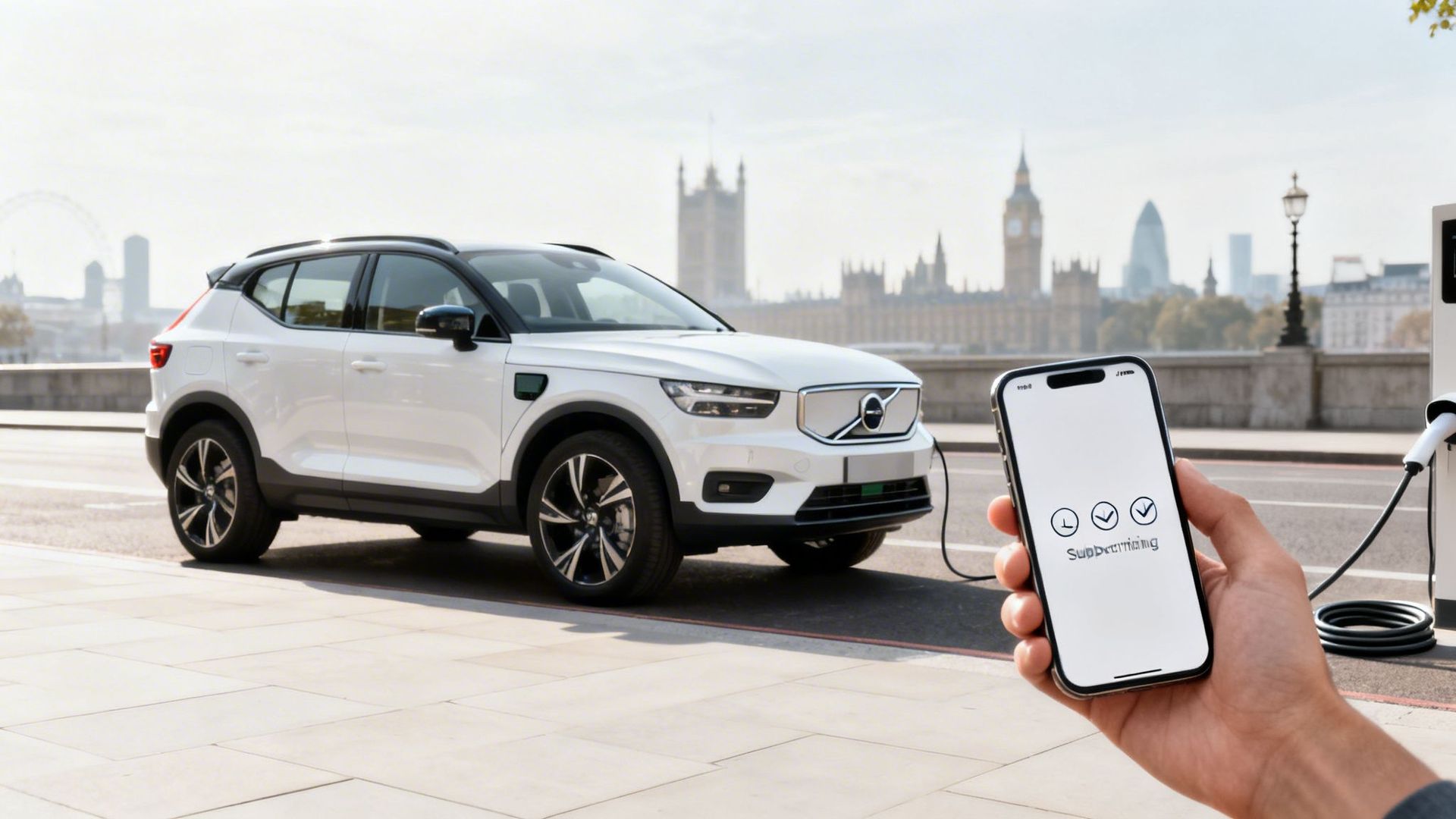
Forget the glossy TV ads showing EVs gliding silently through a picturesque, sun-drenched London. The reality is that before any electric car ever graces a British showroom, it must first survive a brutal gauntlet of electric vehicle testing designed to uncover every last embarrassing weakness. This is your no-nonsense look at how EVs are really put through the wringer.
Welcome to the EV Torture Chamber
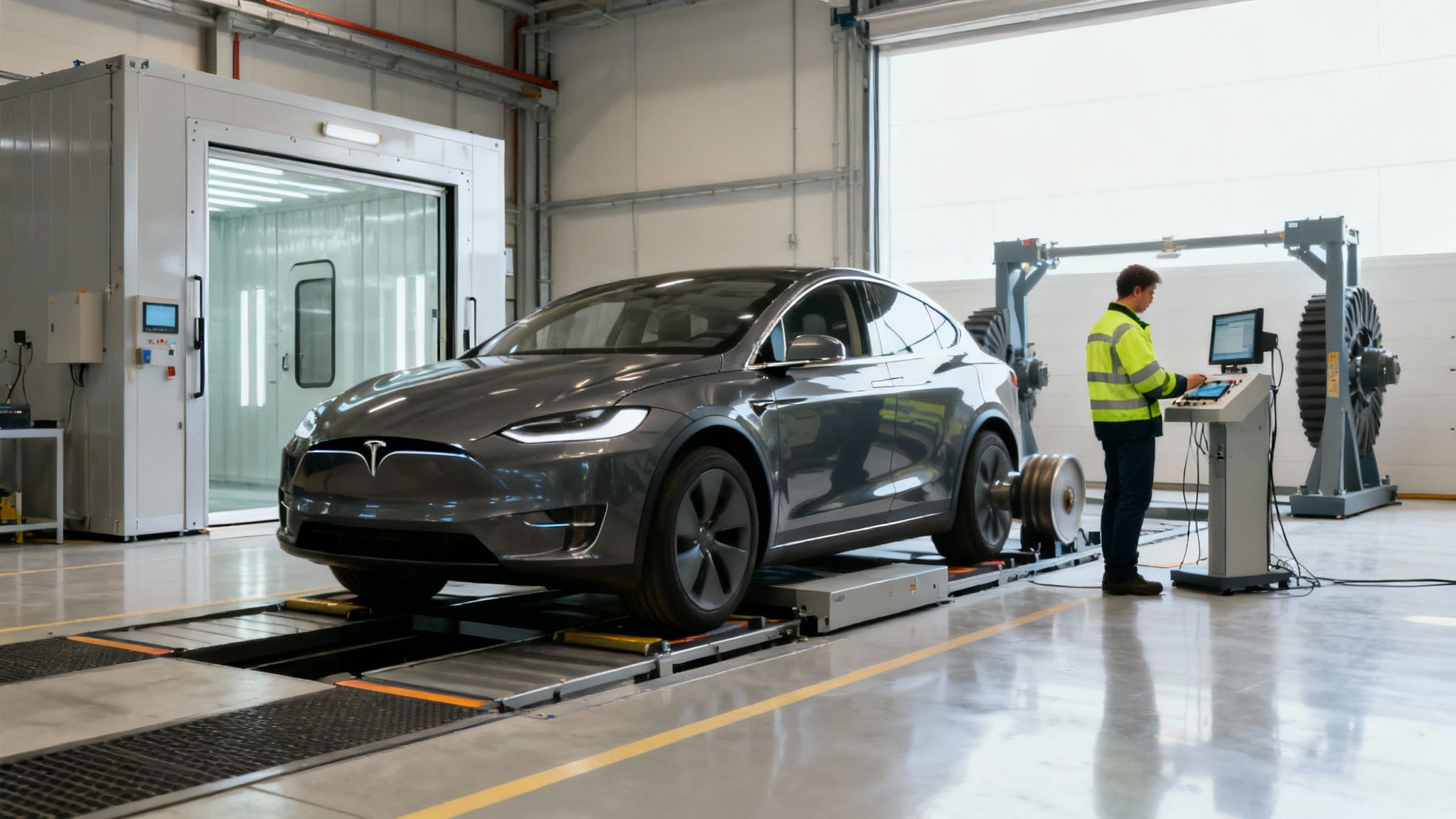
We're not just talking about a quick polish and a pat on the bonnet here. Imagine something more like a medieval torture chamber for machines, a place where engineers gleefully push the latest tech to its absolute breaking point. This guide yanks back the curtain on the entire sordid process.
We'll take a journey from the sterile, climate-controlled labs where official WLTP range figures are born (and other convenient fictions are spun), right out onto the pothole-ridden reality of a British B-road. This is where marketing fantasy collides with real-world friction, and where those impressive advertised performance numbers often go to die a quiet, embarrassing death.
More Than Just Kicking the Tyres
With an electric vehicle, the stakes are far higher than with your old petrol-guzzler. A dodgy EV isn't just an inconvenience; it's a multi-thousand-pound brick of high-voltage chemistry parked on your drive. So, as you'd expect, the testing is appropriately severe.
This meticulous process ensures the car you’re eyeing up can actually handle:
- The Great British Weather: From freezing the batteries until they practically beg for mercy to simulating a relentlessly soggy Tuesday in Stoke-on-Trent.
- Electrical Mayhem: Zapping the car's complex systems with huge electrical surges to make sure they don’t throw a wobbly at the worst possible moment.
- Forensic Collisions: Smashing them into barriers with scientific precision to verify the safety of both you and the very, very expensive battery pack.
This rigorous process is why you can (mostly) trust that your new EV won't spontaneously combust on the M25. It’s a baptism by fire, ice, and high-voltage electricity.
We’ll dig into why that advertised 300-mile range seems to evaporate in winter and what those safety ratings actually mean when you’re stuck in a jam. This is everything you need to know about the punishing journey an EV takes long before you even think about parting with your cash.
The WLTP Lab Fantasy: Why Official EV Range Figures are a Bit of a Joke
You’ve seen the acronym WLTP splashed across every electric car brochure and website. It stands for the rather grand 'Worldwide Harmonised Light Vehicle Test Procedure', and its purpose is to give us a standardised range figure for every new EV.
In theory, that’s great. In practice, its connection to the real world is about as strong as a Wi-Fi signal in a Peak District valley.
The test itself is like a gentle jog on a treadmill inside a perfectly climate-controlled gym. The conditions are almost laughably ideal: the car is driven with timid acceleration, the ambient temperature is a balmy 23°C , and there’s absolutely no wind, rain, or hills to contend with. It’s a sterile, repeatable lab experiment designed purely to compare one car's efficiency against another under identical, utterly perfect conditions.
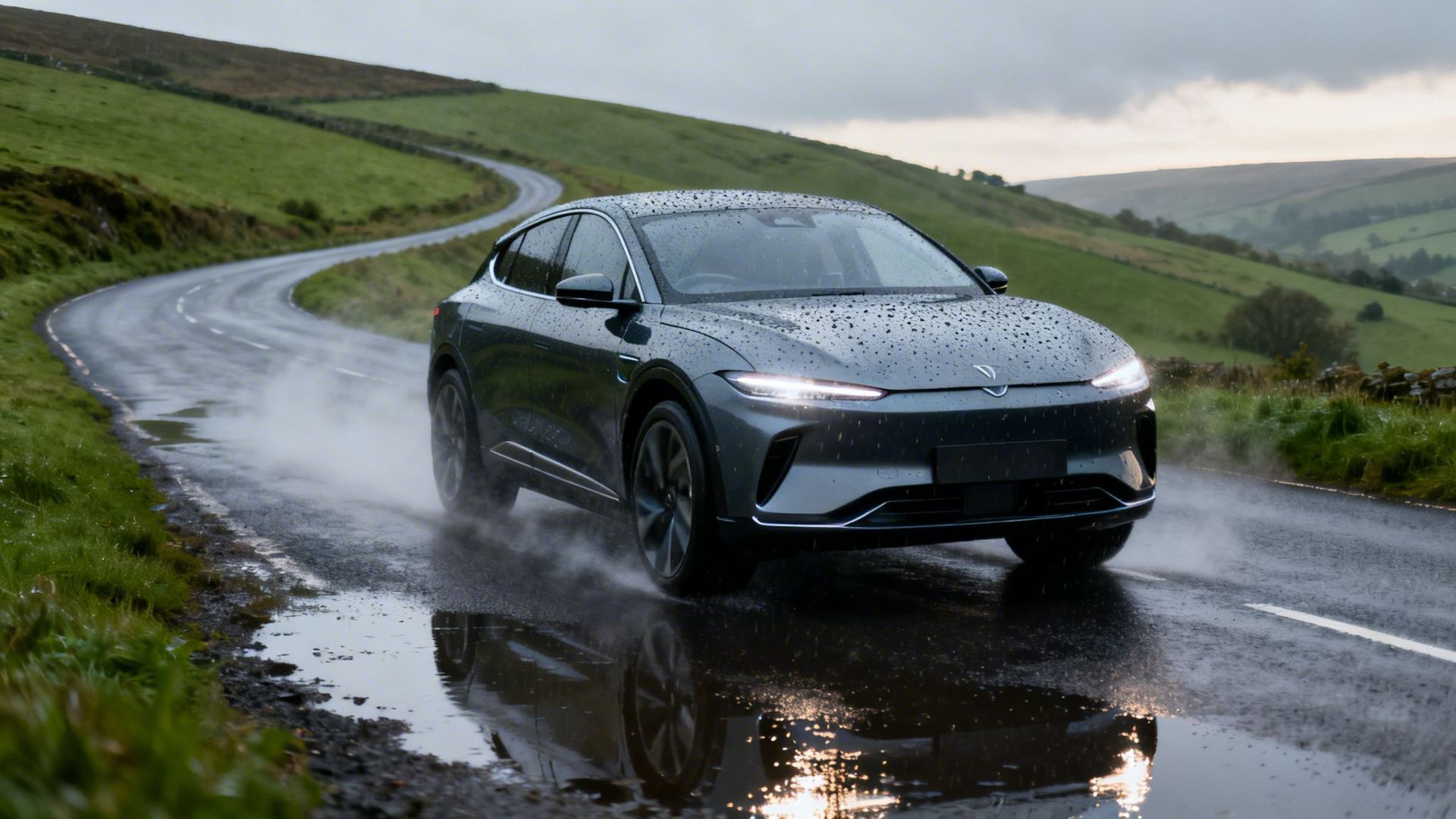
The problem, of course, is that this lab-born number then has to survive the glorious chaos of a typical British day. Our reality involves crawling through stop-start traffic on the M25, battling torrential rain on the A1, and our national obsession with cranking the heater up to ‘tropical’ the second the temperature drops below ten degrees. These are all things the WLTP test conveniently ignores.
The Treadmill vs. The Tough Mudder
The first step to becoming a savvy EV buyer is understanding the massive gap between the official range figure and what you'll actually get on the road. The WLTP gives you a baseline, but it's a fantasy number.
Think of it this way: the WLTP tells you how far an EV could go on a perfect day. A wet Wednesday in Wolverhampton tells you how far it will go. The difference is often staggering, with real-world range frequently plummeting by 20-30% or more in a cold British winter.
To give you a clearer picture, let's compare the serene world of the lab with the gritty reality of UK roads.
WLTP Lab Fantasy vs British Road Reality
| Test Condition | WLTP Lab Assumption | Actual UK Driving Experience |
|---|---|---|
| Temperature | A lovely, consistent 23°C . | Anything from -5°C with a frozen windscreen to a 30°C summer heatwave. |
| Topography | A perfectly flat, smooth surface. | Hills. So many hills. And potholes the size of small craters. |
| Traffic | None. Just a gentle, predetermined driving cycle. | School run gridlock, motorway tailbacks, and that one person doing 40mph in a 60 zone. |
| Weather | A calm, dry, and windless utopia. | Gale-force headwinds, sideways rain, and the occasional flurry of snow. |
| Cabin Comfort | Air con and heating are used sparingly, if at all. | Heater on full blast, demister working overtime, and heated seats set to ‘brand’. |
This chasm between the lab and the road is why independent, real-world electric vehicle testing is so vital. It’s not just about the numbers; it’s about how a car performs when faced with genuine challenges.
If you’re keen to see how different models really stack up when they leave the lab and hit our uniquely challenging roads, you need to look beyond the brochure. We’ve done the hard work for you in our deep-dive electric car range comparison and other convenient lies.
Ultimately, think of the WLTP figure as a useful, if deeply flawed, tool. It creates a level playing field for manufacturers to be judged against, but it doesn't prepare you for the battery-draining reality of daily driving. Consider it the starting point of your research, never the final word.
How Manufacturers Properly Torture EV Batteries
The battery isn't just another part of an electric car; it's the heart of the machine. It's also, by a country mile, the most expensive component. The last thing you want is for it to throw a wobbly on the M6 during a downpour, so manufacturers put it through a gauntlet of tests that can only be described as systematic, scientific torture.
This isn't just about figuring out the car's official range. It’s about making absolutely sure that the multi-thousand-pound block of lithium-ion cells under your seat won't suddenly turn into a very expensive, and very dangerous, firework.
Engineers begin with what they affectionately call the 'shake and bake'. The battery pack is bolted onto a brutally violent vibrating rig, designed to simulate a lifetime of rattling over Britain's finest potholed A-roads. After that, it gets chucked into a thermal chamber where it’s cycled between arctic cold and desert heat. This mimics everything from a frosty January morning in Aberdeen to a sweltering August bank holiday traffic jam on the M25.
Pushing the Electrical Limits
Once the battery has been sufficiently shaken and baked, the real fun begins. The electrical stress tests are designed to push the battery far beyond any scenario it should ever face in the real world. This is where engineers find out if their safety systems are truly robust or just a bit of wishful thinking.
These delightful trials include:
- Forced Overcharging: Deliberately pumping in far more electricity than the battery is designed to handle. This tests the crucial shut-off mechanisms that prevent it from, well, going bang.
- Rapid Discharging: Draining the power at a ferocious rate to see how the pack copes with extreme demand without melting down.
- Short-Circuiting: Intentionally creating a short circuit in a highly controlled environment. The goal is to ensure the failsafes kick in instantly, preventing a thermal runaway event—that’s the technical term for a battery fire.
The infographic below really highlights the stark difference between sterile lab tests and the unpredictable conditions these batteries must endure out on the road.
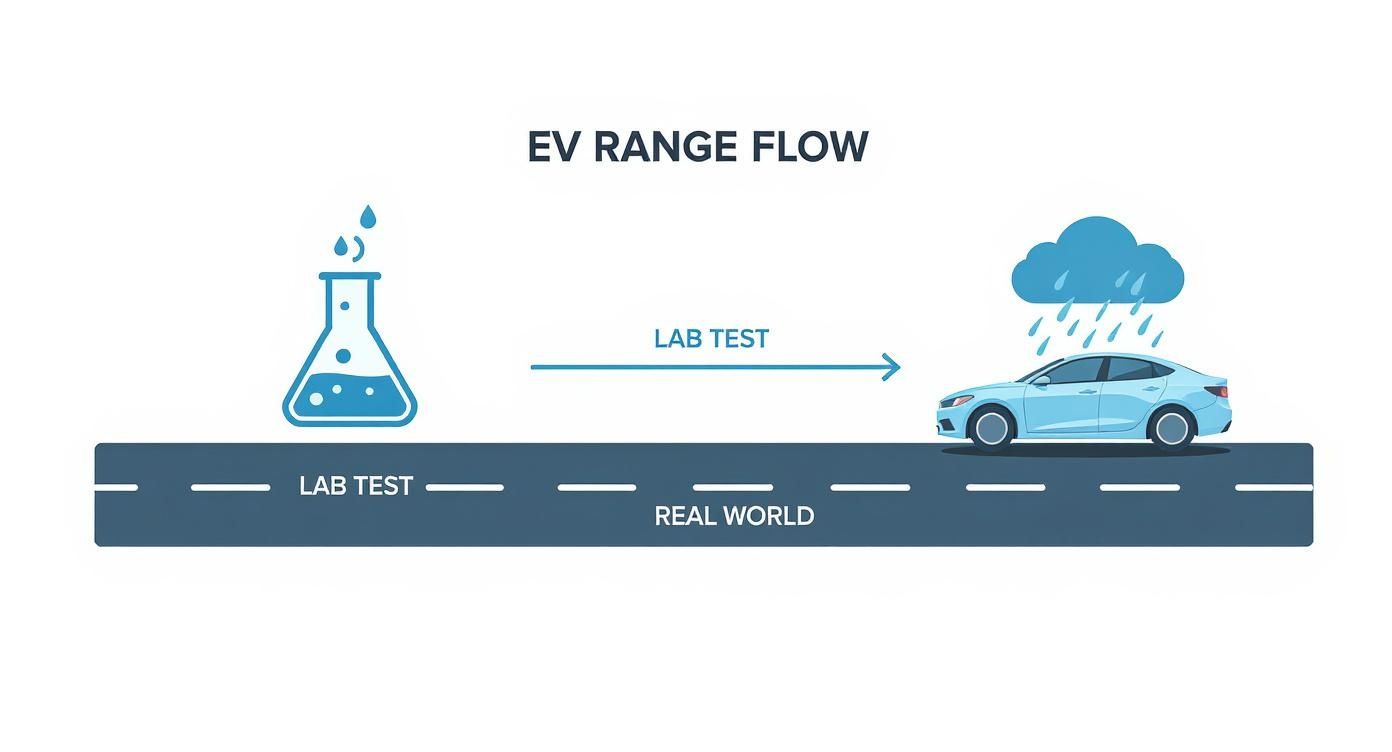
This just goes to show that a battery's performance isn't a single, static number. It's a dynamic response to the ever-changing, and often harsh, reality of daily driving.
The Spectre of Degradation
Ultimately, all this brutal electric vehicle testing is about one thing: fighting battery degradation . This is the slow, inevitable decay of a battery's ability to hold a full charge over time. A brand-new EV might promise a 300-mile range, but after five years and thousands of charge cycles, that figure will have dropped. On average, you can expect a battery to lose around 1.8% of its capacity each year.
Battery degradation is the exact same reason your old smartphone barely makes it to lunchtime. In an EV, though, it’s the difference between a stress-free commute and a frantic search for the nearest charging station.
A good warranty will cover excessive degradation. Most manufacturers guarantee the battery will retain at least 70% of its original capacity for eight years.
With governments constantly tinkering with incentives, the focus on reliable, long-lasting battery performance has never been greater. The UK government, for example, has reintroduced purchase grants, but a key part of qualifying for them involves stringent testing of battery life specifically in UK weather conditions. You can read the latest on UK vehicle statistics and incentives.
The goal is to ensure that even with financial help, buyers are getting a car that’s genuinely built to last. If you want to dive deeper into the science behind the cells themselves, you can learn more by exploring the latest innovations in electric vehicle battery technology.
Smarter Crash Tests for Heavier Cars
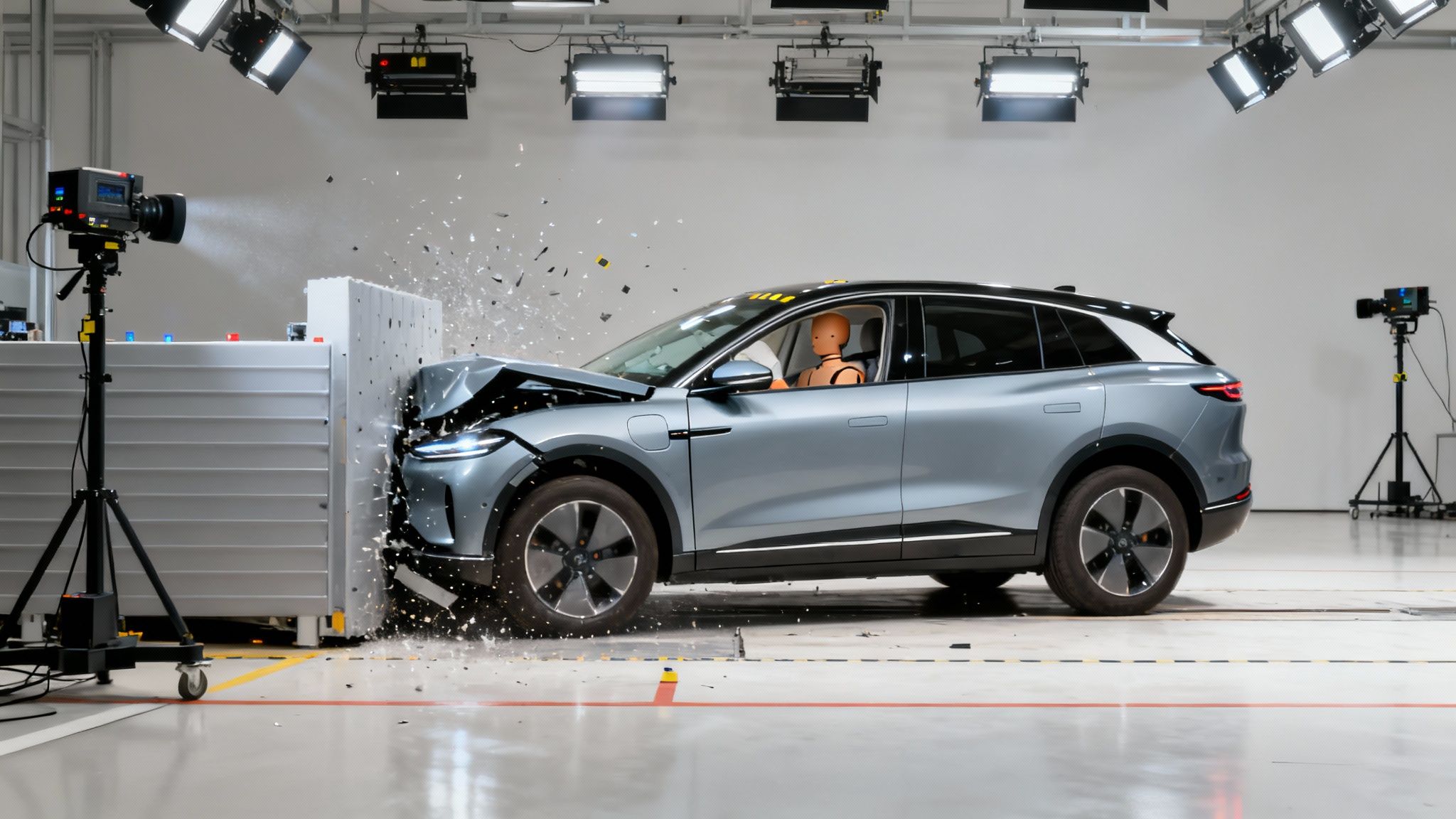
For decades, crashing cars for science was a pretty standard affair. You'd take a perfectly good petrol car, pop some crash-test dummies inside, and run it head-first into a barrier. But the arrival of electric vehicles has completely rewritten the rulebook, mainly because EVs are seriously heavy.
That massive battery pack, a dense slab of metal and complex chemistry low down in the chassis, changes everything. It fundamentally alters how a vehicle’s structure behaves in a crash—how it crumples, absorbs energy, and ultimately protects the people inside. This is why modern electric vehicle testing has evolved far beyond just looking at crumple zones; it now has to analyse the integrity of a massive, high-voltage system under extreme duress.
The Heavyweight Conundrum
The sheer heft of an EV battery creates a fascinating paradox. On the one hand, all that weight gives the car an incredibly low centre of gravity, making it far less prone to rolling over than a top-heavy petrol equivalent. That’s a huge safety win.
But on the other hand, that same mass introduces a whole new set of problems, especially in side-impact collisions. Engineers have the immense task of designing a structure tough enough to shield the battery from being punctured or crushed. A breach could lead to a thermal runaway event – a very fiery and dangerous end to an accident.
Safety organisations like Euro NCAP have had to introduce specific protocols just for EVs. For instance, the high-voltage system must instantly and automatically disconnect on impact. More importantly, the battery must remain perfectly secure and undamaged within its armoured casing. A five-star rating for an EV is a badge of honour earned through some incredibly tough engineering.
The Silent But Deadly Problem
Beyond the raw physics of a collision, electric vehicle testing also has to tackle a more subtle danger. At low speeds, EVs are almost completely silent. While that's a blessing for cutting down urban noise pollution, it's not so great for pedestrians scrolling through their phones in a busy car park.
To stop these silent giants from becoming a menace, every new EV sold in the UK is legally required to have an Acoustic Vehicle Alerting System (AVAS). This clever bit of kit emits a distinct sound whenever the car is travelling under 12 mph (around 20 km/h) or reversing, letting people know it's there.
The testing for these systems is surprisingly meticulous. It's not just a case of making a noise; testers measure the sound's volume and frequency to ensure it's easily audible without being annoying. It's a brilliant piece of modern safety engineering that solves a problem we didn't even know we had a decade ago.
Surviving Software Glitches and Charging Headaches
The brutal physical trials we've discussed are only half the story. Modern EVs are essentially very clever, very expensive computers on wheels, and that simple fact opens up a whole new universe of potential problems. This is where the digital torture testing begins.
Engineers spend thousands of hours trying to deliberately ‘break’ the software. They’ll poke and prod at every single menu in the infotainment system, try to confuse the sat-nav with nonsensical destinations, and generally do everything in their power to make the screen freeze, crash, or have a complete meltdown.
This process is absolutely vital for over-the-air (OTA) updates. The last thing any manufacturer wants is for a software patch to accidentally turn thousands of cars into useless, motionless bricks. So, every single update is rigorously tested to make sure it installs seamlessly, every single time.
The Charger Handshake Conundrum
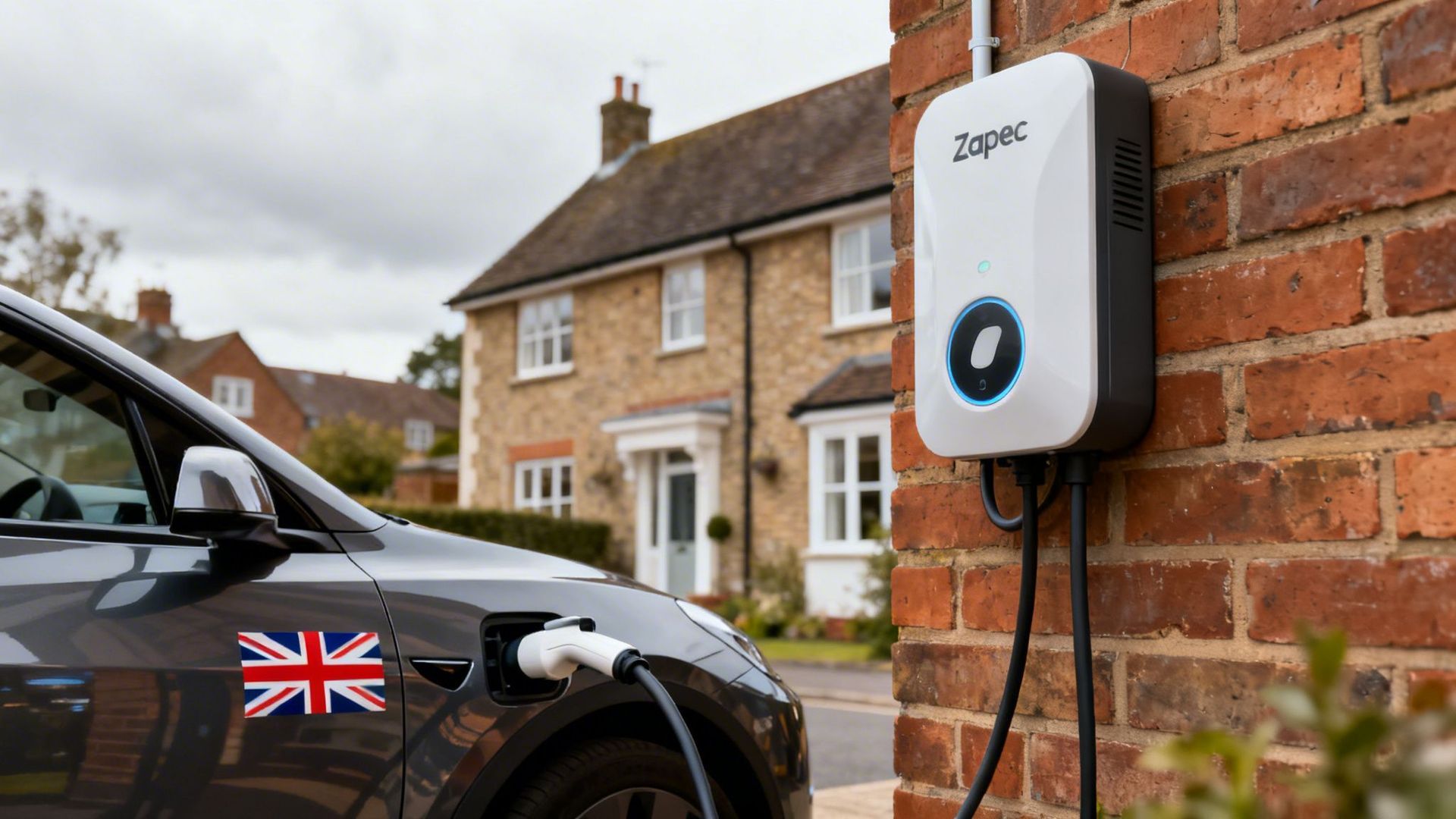
Beyond the car's own software, one of the biggest real-world headaches for EV drivers is charging compatibility. In a perfect world, you’d pull up to any public charger, plug in, and get a glorious flow of electricity. The reality can be far more frustrating, which is why understanding the EV charging landscape in the UK is so important.
Not all chargers and cars play nicely together. The communication between the two—often called the ‘handshake’—can fail for a dizzying number of reasons. This is why a huge part of electric vehicle testing involves taking a car on a grand tour of every major charging network out there.
Engineers test the car with countless different public chargers to iron out these infuriating handshake issues. Think of it as the digital equivalent of making sure your key fits the lock, only it’s infinitely more complex and prone to glitches that can leave you stranded and fuming at a service station.
- Network Compatibility: Does the car communicate flawlessly with providers like Pod Point, Gridserve, and Ionity?
- Payment Systems: Can the app or RFID card actually start a charge without throwing a tantrum?
- Charging Speeds: Does the car really hit the advertised charging speeds, or does it mysteriously throttle back for no apparent reason?
This relentless digital and electrical shakedown is designed to catch the infuriating glitches before they ever reach you. The goal is to make owning and running an EV as painless as possible, from how slick the touchscreen feels to the simple reliability of a rapid charge.
The stakes for getting this right are incredibly high, especially when it comes to winning over new buyers. A recent trend has seen corporate and fleet purchases dominate the market, while uptake among private buyers has actually declined. With only one in ten private buyers opting for a battery electric vehicle, it's clear that real-world reliability and charging convenience are paramount. This makes the exhaustive testing of software and charging systems completely non-negotiable for building trust with customers. Discover more insights about EV adoption across the UK on cleantechnica.com.
So, What Does All This Testing Actually Mean for You?
Right, we’ve just dragged you through a boot camp of engineering misery. We’ve frozen batteries, driven brand-new cars into walls, and waded through enough software bugs to make a seasoned programmer cry. What’s the point? Why should any of this matter to you, the person who just wants a reliable electric car that won’t cost a fortune to run?
It all comes down to one thing: giving you the power to be a savvy, well-informed buyer. The next time you’re flicking through a car review, you’ll be able to see straight past the flashy 0-60 mph time and that suspiciously perfect WLTP range figure. You can now look at a spec sheet with the healthy scepticism it deserves, knowing the vast difference between a lab-based fantasy and a wet Tuesday morning on the M25.
This whole brutal process of electric vehicle testing is really about giving you a fighting chance against the marketing hype.
Your Practical EV Buyer's Checklist
When you're comparing different models, don't just get fixated on the headline numbers. It pays to dig a little deeper. Armed with what you now know, here are the right questions to ask:
- Translate the Range: Take the official WLTP figure, then immediately knock about 25% off it for a more realistic winter estimate. Does that revised number still comfortably cover your daily commute and the odd long-distance trip?
- Scrutinise the Safety Rating: A five-star Euro NCAP rating is brilliant, but for an EV, it means something extra. It's confirmation that the battery pack is properly protected in a crash and that the high-voltage systems shut down safely. That’s a massive piece of mind.
- Worship the Warranty: Your battery warranty is the most important document you’ll read. Check the degradation cover specifically – most brands guarantee at least 70% of the original capacity for eight years. This is your ultimate safety net, protecting you from ending up with a very expensive driveway ornament.
Think of this knowledge as your personal hype filter. It helps you separate the cars that have been genuinely engineered for the real world from those that just look good on paper.
Choosing the right EV isn't about finding the one with the biggest numbers. It’s about finding the one that’s been put through the wringer and still came out the other side, truly ready for the glorious reality of British roads.
Common Questions About Electric Vehicle Testing
Still got a few questions buzzing around about the ins and outs of EV testing? You're not alone. Let's tackle some of the most common queries we get from UK drivers trying to make sense of it all.
Why Does My EV Range Plummet in Winter?
It all comes down to cold, hard chemistry. When the temperature drops, the chemical reactions inside your car's battery cells literally slow down, making them less efficient at releasing energy. Think of it like trying to run through treacle – everything requires more effort for the same result.
But that's only half the story. You're also asking the car to work much harder just to keep you comfortable. The cabin heater, the window demisters, and those glorious heated seats are all serious power hogs. When you add it all up, it's not unusual to see your real-world winter range drop by 20-30% compared to the official figures. This is exactly the kind of scenario that robust electric vehicle testing aims to measure.
Is the WLTP Range Figure Completely Useless Then?
Not at all, but you have to know what it's for. Think of it less as a promise and more as a standardised yardstick. It's not meant to predict your exact mileage on a wet Wednesday driving up the M6.
Its real value is in comparison. Because every new electric car goes through the exact same controlled, lab-based cycle, the WLTP figure gives you a perfectly level playing field to judge one model against another. Just see it as the absolute best-case scenario, knock a chunk off for real-world driving, and you'll be much closer to the truth.
Are EVs Really as Safe as Petrol Cars?
Absolutely. In fact, many are arguably safer. That huge, heavy battery pack is usually mounted low down in the car's floor, giving EVs a much lower centre of gravity. This makes them incredibly stable and far less likely to roll over in an accident than a traditional car.
Modern safety testing has evolved specifically for EVs. Organisations like Euro NCAP now run brutal, EV-specific crash tests. They verify that the high-voltage system is instantly disconnected in a collision and that the battery remains protected within its armoured casing, massively reducing the risk of fire or electric shock. A five-star rating on an EV is a badge of honour, earned the hard way.
At VoltsMonster , our job is to get past the marketing spin and give you the real story on electric cars. For more honest reviews and straightforward guides, check out our latest articles at https://www.voltsmonster.com.
VoltsMonster Electric Vehicle Blog