Cheap Electric Cars: Your UK Guide to Not Getting Skint on an EV
Thinking of going electric without selling a kidney? You’re in luck. The best cheap electric cars on the UK market now kick off between £23,000 and £30,000 , offering a decent range and genuinely usable tech. It’s solid proof that you no longer need a lottery win to ditch petrol and enjoy those silent, smug commutes.
Entering the Electric Era on a Realistic Budget
Let’s be honest. For years, the electric car dream came with a hefty price tag, seemingly reserved for early adopters with deep pockets. The message felt clear: save the planet, but only if your bank balance could take the hit. Thankfully, that narrative is now as outdated as a cassette player.
A new wave of properly affordable electric cars has landed in the UK, making the switch a real possibility for normal people with mortgages and a healthy dose of scepticism. We’re talking about proper cars, not glorified golf buggies. These are EVs with enough range for the weekly shop, the school run, and even the odd motorway trip without giving you a full-blown panic attack.
Why Now Is the Time to Go Electric (Without Remortgaging)
The timing for grabbing one of these budget-friendly EVs couldn't be better. With petrol prices constantly on the move, the appeal of 'fuelling' your car from a three-pin plug for pennies is massive. And while the government may have ditched its most famous grant, the market has found its own way. You can find more details on why the old EV grant is gone but it’s no big deal in our guide.
The myth that electric vehicles are a niche, expensive hobby is officially dead. The UK market is now full of budget-friendly models that are not just eco-conscious choices, but genuinely clever financial ones for everyday drivers.
This isn’t just a hunch; the numbers back it up. The surge in affordable EV adoption is impossible to ignore, with battery electric vehicles recently grabbing a 25.4% market share in a single month. Year-to-date, registrations have shot up to 426,209 units —a huge 26% jump from the previous year. It’s clear that models under £30,000 have well and truly hit the mainstream.
To get us started, let's take a quick look at the main contenders we'll be breaking down. No fluff, just the essentials to see how they stack up.
The UK's Top Budget EV Contenders at a Glance
This table gives you a bird's-eye view of the key players in the affordable EV space. Think of it as your cheat sheet before we dive into the nitty-gritty details of each car.
| EV Model | Starting Price (Approx.) | Official Range (WLTP) | Our Quick Verdict |
|---|---|---|---|
| MG4 EV | £26,995 | 218-323 miles | The undisputed king of value – a brilliant all-rounder. |
| Fiat 500e | £28,195 | 118-199 miles | Unbeatable style for city slickers who prioritise flair. |
| Dacia Spring | £14,995 | 137 miles | No-frills motoring at its absolute cheapest. Basic but honest. |
| BYD Dolphin | £26,195 | 211-265 miles | Packed with tech and surprisingly spacious for the price. |
As you can see, there's a real mix of personalities here, from the do-it-all MG4 to the ultra-chic Fiat 500e. Now, let’s get into what makes each of these cars tick.
Comparing the Best Affordable Electric Cars
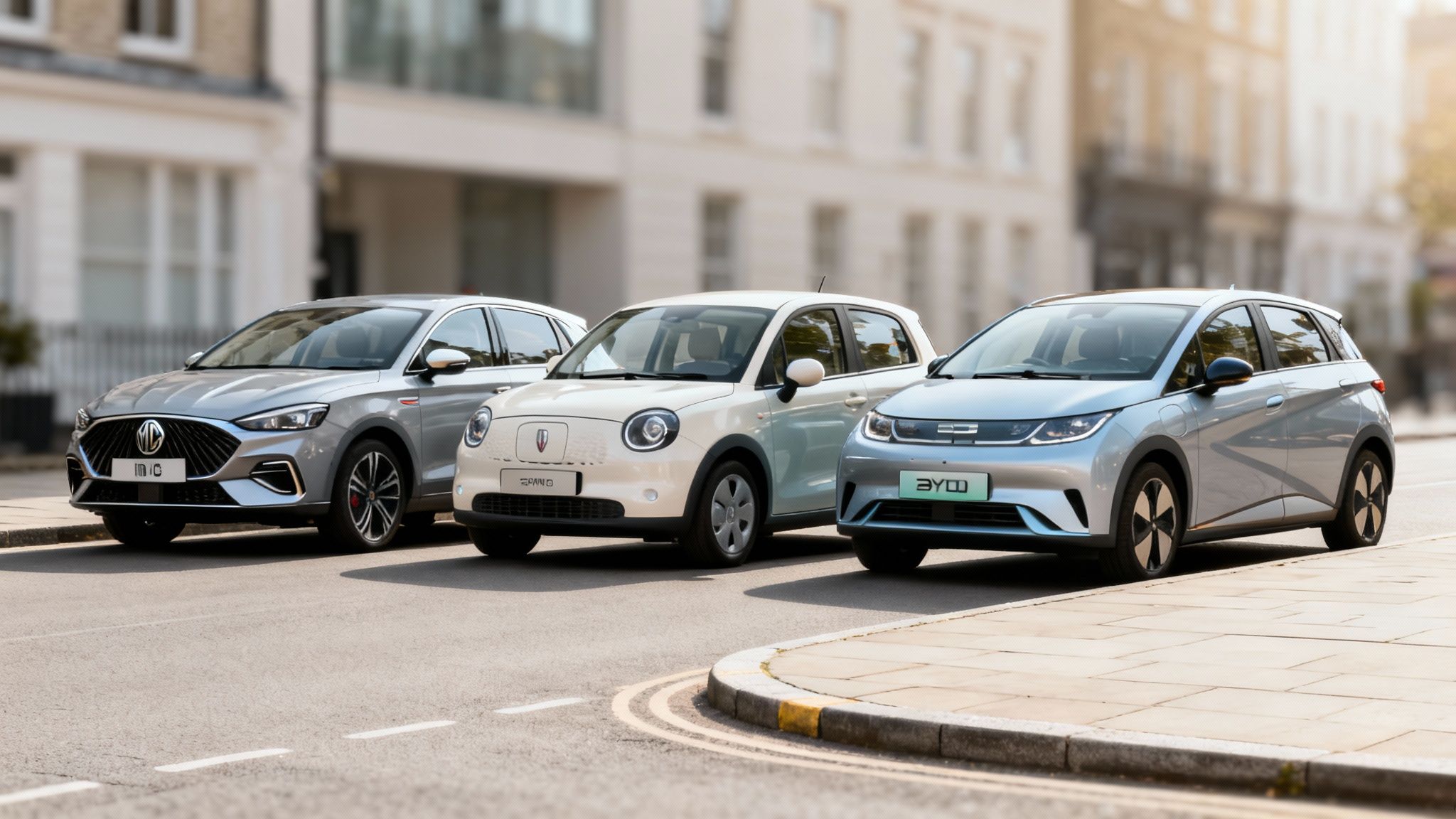
Right, let’s get down to brass tacks. You’ve seen the overview, now it’s time to really dig into the best cheap electric cars you can actually get your hands on here in the UK. We're looking past the glossy brochures to find out what these budget-friendly heroes are like to live with, day in, day out.
This is where we separate the genuine bargains from the duds dressed up in clever marketing. From the surprisingly brilliant MG4 EV and the effortlessly cool Fiat 500e to the brutally basic Dacia Spring and the gadget-stuffed BYD Dolphin, each car has its own distinct personality. We’ll cover everything from the quality of the interior plastics to how infuriating the infotainment system is on a wet Monday morning.
The MG4 EV: The Undisputed Value Champion
The MG4 EV isn't just a great cheap electric car; it’s a genuinely fantastic car, full stop. It arrived on the scene and promptly made rivals costing thousands more look a bit silly. With its sharp, almost aggressive styling, it looks far more expensive than its starting price of around £26,995 .
Inside, it’s a bit of a mixed bag. The design is modern and minimalist, dominated by a decent-sized central screen that controls most functions. You can, however, tell where costs were trimmed; some of the plastics feel a bit scratchy, like they’ve been fashioned from old milk cartons. But who cares when you get rear-wheel drive, sharp handling, and a cabin that can genuinely fit a small family? It’s the ultimate proof that you really can have your cake and eat it.
The Fiat 500e: The Urban Style Icon
If you live in a city and have even a shred of interest in style, the Fiat 500e is almost impossible to ignore. It takes the beloved retro-chic design of its petrol-powered sibling and gives it a sleek, modern, all-electric twist. It’s small, nimble, and an absolute doddle to park in tight urban spaces.
The interior is a triumph of design, featuring a minimalist dashboard, stylish switchgear, and a surprisingly premium feel for a car this size. The entry-level model offers a range of around 118 miles , which might sound a bit paltry but is more than enough for city life. Just don't plan on carrying much more than a passenger and some shopping; the back seats are best reserved for people you don’t particularly like.
The Fiat 500e proves that choosing a cheap electric car doesn't mean sacrificing personality. It’s a fashion statement on wheels, perfect for navigating congested city streets with zero emissions and maximum flair.
The Dacia Spring: The No-Frills Hero
Let's be perfectly clear: the Dacia Spring is basic. In fact, it’s so fundamentally simple it makes a garden shed look technologically advanced. With a starting price under £15,000 , it is, by a huge margin, the cheapest new electric car you can buy in the UK. And for that alone, it deserves a round of applause.
The Spring is built for a single purpose: to provide zero-emission transport for the lowest possible cost. Its 44 bhp electric motor won't be winning you any drag races, and its official range of 137 miles is best suited for local journeys. The interior is a sea of hard, grey plastic, and features are minimal. But it’s surprisingly practical, with four doors, a decent boot, and an SUV-like ride height. If your motoring needs are simple and your budget is tight, the Dacia Spring is an honest, effective, and brilliantly unpretentious choice.
The BYD Dolphin: The Tech-Packed Challenger
BYD (which stands for Build Your Dreams) might be a new name to many in the UK, but they’ve certainly arrived with a splash. The BYD Dolphin is a direct rival to the MG4, offering a compelling blend of space, technology, and value. Its killer feature is the standard equipment list, which includes a massive rotating central touchscreen, a panoramic sunroof on higher trims, and a full suite of safety systems.
The Dolphin uses BYD’s clever ‘Blade Battery’ technology, known for its safety and durability. It provides a comfortable ride and a spacious interior that feels a class above its price point. While its design is perhaps a little more generic than the MG4's, the sheer amount of tech and practicality you get for your money makes the Dolphin a seriously tempting option for anyone wanting one of the best-equipped cheap electric cars on the market.
Calculating the True Cost of Running a Budget EV
So, that shiny new electric car on your driveway looks fantastic, doesn't it? But the price on the windscreen is just the opening act. The real story of whether you’ve bagged a bargain or a money pit unfolds over years of ownership – and this is where the smug grins of long-time EV owners are truly earned.
To figure out if a 'cheap' electric car is actually cheap, you need to get your head around the Total Cost of Ownership (TCO) . This isn't just the purchase price. It’s the sum of every single penny you'll spend keeping the thing on the road, from charging and insurance to the silent financial assassin known as depreciation.
Forget the glossy brochure figures for a moment. Let's run the real-world numbers and see if your new EV will actually save you a packet or just give you a different set of bills to moan about.
The Great Charging Divide: Home vs Public
The single biggest factor in your running costs is where you plug in. Think of it as the difference between doing your weekly shop at Aldi or having your groceries delivered by a butler from Harrods – the cost gap is staggering.
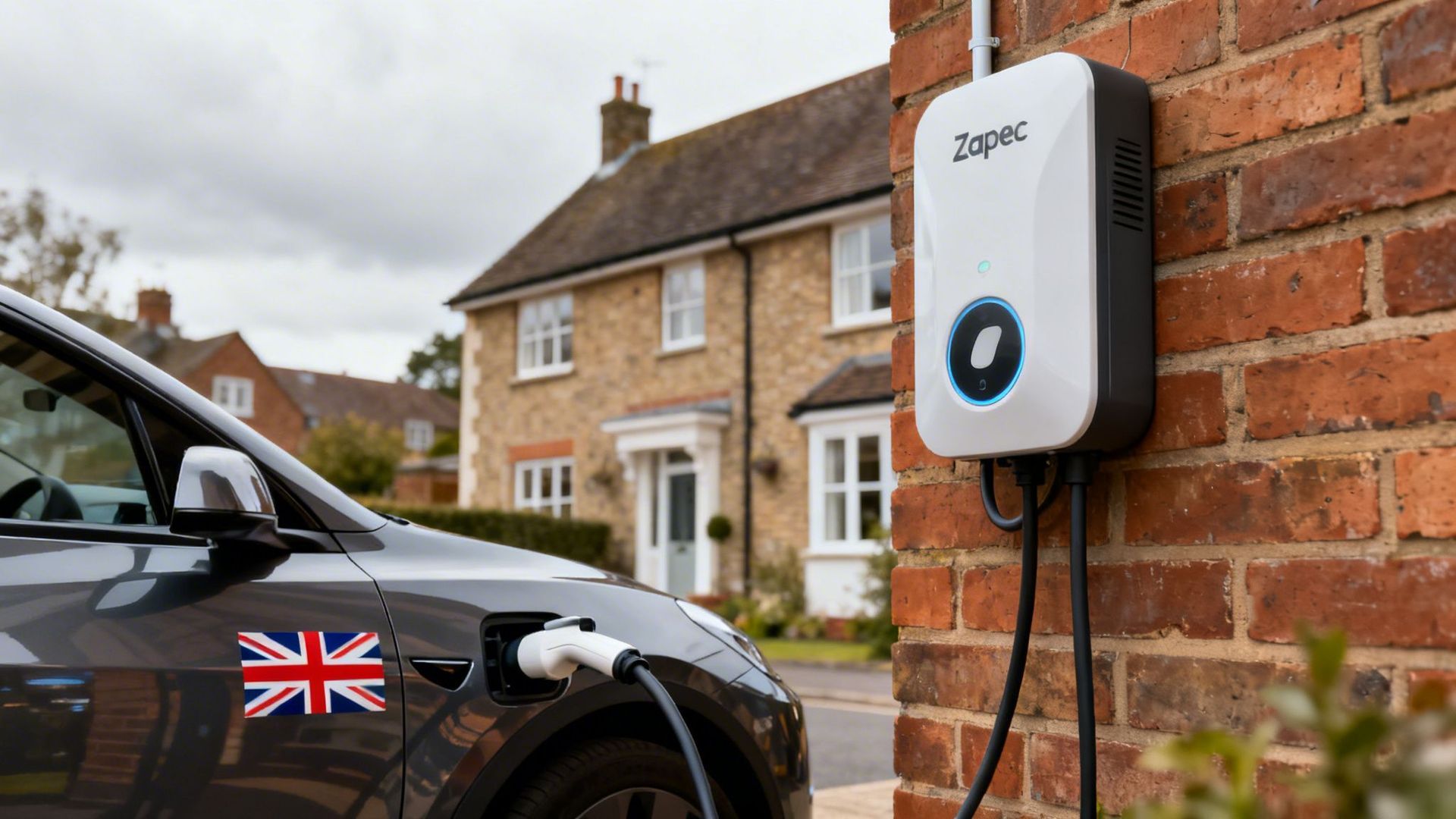
Charging at home is the golden ticket to cheap EV motoring. On an overnight electricity tariff, you can often pay as little as 7.5p per kilowatt-hour (kWh) . For a typical budget EV with a 50kWh battery, a full ‘tank’ could cost you a measly £3.75 . That’s less than a fancy coffee.
Relying solely on the public charging network, however, is a completely different ball game. You’re at the mercy of a postcode lottery, with rapid charger prices at motorway services soaring up to 85p per kWh . Suddenly, that same 50kWh charge costs a whopping £42.50 , which is uncomfortably close to petrol prices. If you're wondering how to navigate this minefield, our detailed breakdown of electric car charging costs in the UK can help you avoid getting fleeced.
The difference between home and public charging isn't just a few quid; it's the fundamental decider on whether your EV is cheap to run or just an expensive eco-statement. A home charger isn't a luxury; for genuine savings, it's a necessity.
Insurance: The Nasty Surprise
Here’s something the salesperson might forget to mention: insuring an electric car can sometimes cost more than its petrol equivalent. Insurers get a bit twitchy about the high cost of battery repairs and the specialist skills needed to fix them, often bumping up the premiums for even the most affordable models.
- MG4 EV: Sits in a very reasonable insurance group range of 28-33 , making it one of the more wallet-friendly options to insure in this class.
- Fiat 500e: Groups range from 19-23 , which reflects its city-car status and generally lower repair costs.
- BYD Dolphin: Falls into groups 21-27 , a competitive rating that definitely adds to its value-for-money appeal.
My advice? Always get an insurance quote before you fall in love with a car. That bargain EV might not feel so cheap when the annual premium lands on your doormat with a thud.
Depreciation: The Silent Destroyer
Finally, we have depreciation – the value your car loses simply by existing. Historically, EVs dropped in value faster than a lead balloon, but things are changing. The huge demand for good, affordable electric cars means models like the MG4 are holding their value remarkably well.
On the other hand, less popular or older-generation EVs can still see their values plummet. This is where a 'cheap' electric car can become a double-edged sword. A low upfront cost is great, but not if the car is worth buttons three years down the line. Researching a specific model’s predicted residual value is one of the smartest financial moves you can make. It’s the difference between a savvy investment and a costly mistake.
Real-World EV Range and Charging: What to Actually Expect
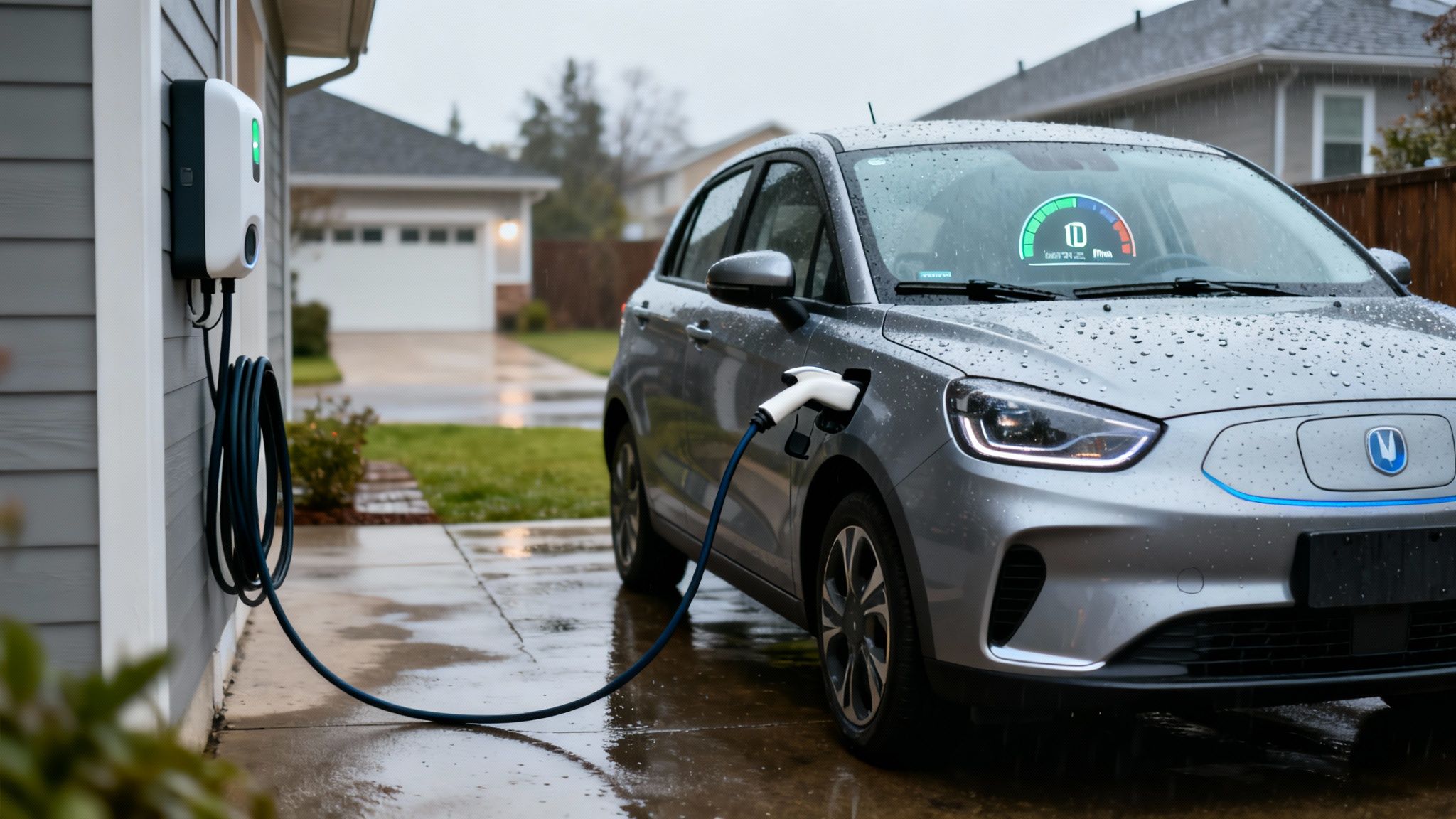
Let's get one thing straight: the official WLTP (Worldwide Harmonised Light Vehicle Test Procedure) range figures are, at best, a helpful guideline. They’re cooked up in perfect lab conditions that bear little resemblance to a cold, wet Tuesday on the M1 with the heater on full blast.
The reality is that your actual mileage will almost always be lower. Things like your driving style, the weather, and your route all chip away at those brochure numbers. A heavy right foot on the motorway is the fastest way to see your range plummet, often by 20-30% before you even think about switching on the heated seats.
This is the honest truth of living with an affordable EV. It's not the nightmare scenario many imagine; it’s just a case of adjusting your mindset. You learn to be a bit more strategic, planning ahead based on the car's real capabilities, not the fairy-tale figures.
How Cold Weather Sabotages Your Range
Your EV's battery is a bit of a diva—it really doesn't like the cold. As the temperature drops, the chemical reactions inside the battery slow right down, which makes it less efficient and cuts your range. And we're not talking about a small dip, either. You can realistically expect to lose up to 30% of your range in the depths of a proper British winter.
Think of it this way: your car is working much harder. It's powering the cabin heater, demisters, and maybe a heated steering wheel, all of which draw a surprising amount of energy directly from the main battery. That’s power that isn’t getting you down the road.
The biggest shock for new EV drivers isn't the quiet ride; it's the first time they realise that turning up the thermostat is a strategic decision. Winter range is a completely different beast, and you absolutely have to plan for it.
To give you a clearer picture, let's cut through the marketing fluff. Below, we've pitted the official figures against our more pessimistic, real-world estimates for our top budget contenders. This is what you can genuinely expect on a typical day of mixed driving.
Official vs Realistic Range: A Side-by-Side Comparison
This table gives you a no-nonsense look at the advertised WLTP range versus what you'll likely see day-to-day. We've also included the typical time it takes for a quick top-up at a public rapid charger.
| EV Model | Official Range (WLTP) | Realistic Range (Mixed Driving) | Approx. 10-80% Rapid Charge Time |
|---|---|---|---|
| MG4 EV (51kWh) | 218 miles | 160-180 miles | ~39 minutes |
| Fiat 500e (42kWh) | 199 miles | 130-150 miles | ~35 minutes |
| Dacia Spring | 137 miles | 90-100 miles | ~56 minutes |
| BYD Dolphin (60.4kWh) | 265 miles | 200-220 miles | ~29 minutes |
As you can see, the drop-off can be significant. It’s crucial to buy a car with a realistic range that comfortably covers your daily commute, with a healthy buffer left over for those unexpected detours or colder days.
Decoding the Charging Jargon
Finally, a quick word on charging speeds. You'll hear terms like ‘7kW’ and ‘100kW’ thrown around, and the difference is massive. It’s like filling a swimming pool with a garden hose versus a fire hose.
- 3kW (Granny Charger): This plugs into a standard three-pin wall socket. It’s painfully slow and best reserved for emergencies or a very gentle overnight top-up. We're talking 12+ hours for a full charge.
- 7kW (Home Wallbox): This is the gold standard for home charging. It will easily charge most budget EVs from empty to full overnight, making it the most convenient and cost-effective way to live with an electric car.
- 50kW (Public Rapid Charger): These are the workhorses you find at most supermarkets and public car parks. They can add around 100 miles of range in about 30-40 minutes, which is perfect for a mid-journey boost.
- 100kW+ (Ultra-Rapid Charger): These are the big guns, usually found at motorway service stations. On a compatible car, they can get you from 10% to 80% in under half an hour, making long-distance travel genuinely feasible.
Getting your head around this is vital. A home charger is for your daily routine; rapid chargers are for occasional long trips. Trying to rely solely on the public network will get expensive and become a real faff.
Finding Value in the Used Electric Car Market
Right, let’s step away from the shiny new showrooms and dive into the slightly more chaotic, but often more rewarding, world of used cars. While a brand-new EV is always tempting, the real treasure is found on the pre-owned market. This is where early-adopter depreciation becomes your best friend.
We're going to put our money where our mouth is and walk through a real-life example of a cracking deal we’ve spotted. This isn't just theory; it’s about applying the knowledge from this guide to a genuine listing you could find today on any major UK car site. We'll break down the mileage, age, and spec to see if it’s a diamond in the rough or a potential money pit.
Deal of the Week: A 2021 Renault Zoe
After a good old rummage through the classifieds, we’ve found a prime candidate: a 2021 Renault Zoe R135 GT Line with just 18,000 miles on the clock, up for £12,500 . On the surface, this looks like a serious bargain. It’s the more powerful 135hp model with the crucial 52kWh battery, giving it a very respectable official range of around 238 miles .
The GT Line trim means it’s packed with goodies you might not expect at this price, like a reversing camera, part-leather seats, and a decent infotainment system. With a full main dealer service history and the battery warranty intact for another four years or so, it ticks all the right boxes for a safe purchase. A quick check of its MOT history reveals no scary advisories, just the usual tyre wear.
This type of deal represents the sweet spot in the used EV market. The initial, savage depreciation has already been swallowed by the first owner, leaving you with a modern, capable, and well-equipped electric car for less than the price of a basic new petrol supermini.
Of course, no used car is without its risks. Before you even think about handing over the cash, you need to know exactly what you’re looking at. Check out our guide on the top 5 things to look for when inspecting a used EV to make sure you don’t get caught out.
This isn’t a one-off fluke, either. The used EV market is buzzing with similar opportunities right now. Recent analysis shows that sales of used battery electric vehicles have surged by 29.9% , with over 108,000 changing hands in a single quarter. This flood of affordable used EVs under £15,000 is turning 'cheap' from a dirty word into a smart buy, making electric motoring a genuine option for thousands of UK drivers, as highlighted in a recent report about the UK's shift towards budget EVs.
So, our verdict on this Zoe? It’s a definite ‘buy now’. It offers fantastic value, a usable real-world range for most people, and enough creature comforts to make daily driving a pleasure. It’s the perfect example of how a bit of savvy shopping can land you one of the best cheap electric cars out there.
Which Affordable EV Is Right for You?
Right, we've crunched the numbers and analysed the data, so it's time to land the plane. Picking the right cheap electric car isn’t about finding a single "best" one – that simply doesn't exist. It's about finding the right fit for your life, your budget, and how much you can tolerate scratchy interior plastics.
We’ve dissected the contenders, calculated the real costs, and poured a healthy dose of scorn on those wildly optimistic official range figures. Now, let’s get down to our final, no-nonsense verdicts. This is where we tell you precisely which car to buy based on your specific, real-world needs. No fence-sitting, just straight-up advice to help you spend your hard-earned cash wisely.
Our Definitive Recommendations
Forget a one-size-fits-all answer. Your perfect budget EV depends entirely on who you are and what you need it for. Here’s our breakdown for different types of UK buyers.
-
For the City Dweller: If your life revolves around squeezing into tight parking spaces while looking effortlessly cool, it has to be the Fiat 500e . It’s compact, an absolute doddle to drive around town, and has more style than a Milan fashion week afterparty. Its modest range is a non-issue for urban hops, making it the undisputed king of the concrete jungle.
-
For the Pragmatic Family: When you need maximum practicality for minimum outlay, the MG4 EV is the only logical choice. It offers genuine family-sized space, a decent real-world range, and surprisingly sharp driving dynamics for a price that makes you wonder how they do it. It’s the sensible option that’s still fun to drive.
-
For the Tech Enthusiast on a Budget: If getting the most gadgets and gizmos for your money is the goal, the BYD Dolphin is your winner. It comes loaded with standard kit that rivals would charge a fortune for, including that famous rotating screen. It’s a supremely comfortable and well-equipped car that punches well above its price tag.
Before you make a final decision, especially on a used model, it helps to visualise the key checkpoints. This flowchart simplifies the process of telling a genuine bargain from a potential banger.
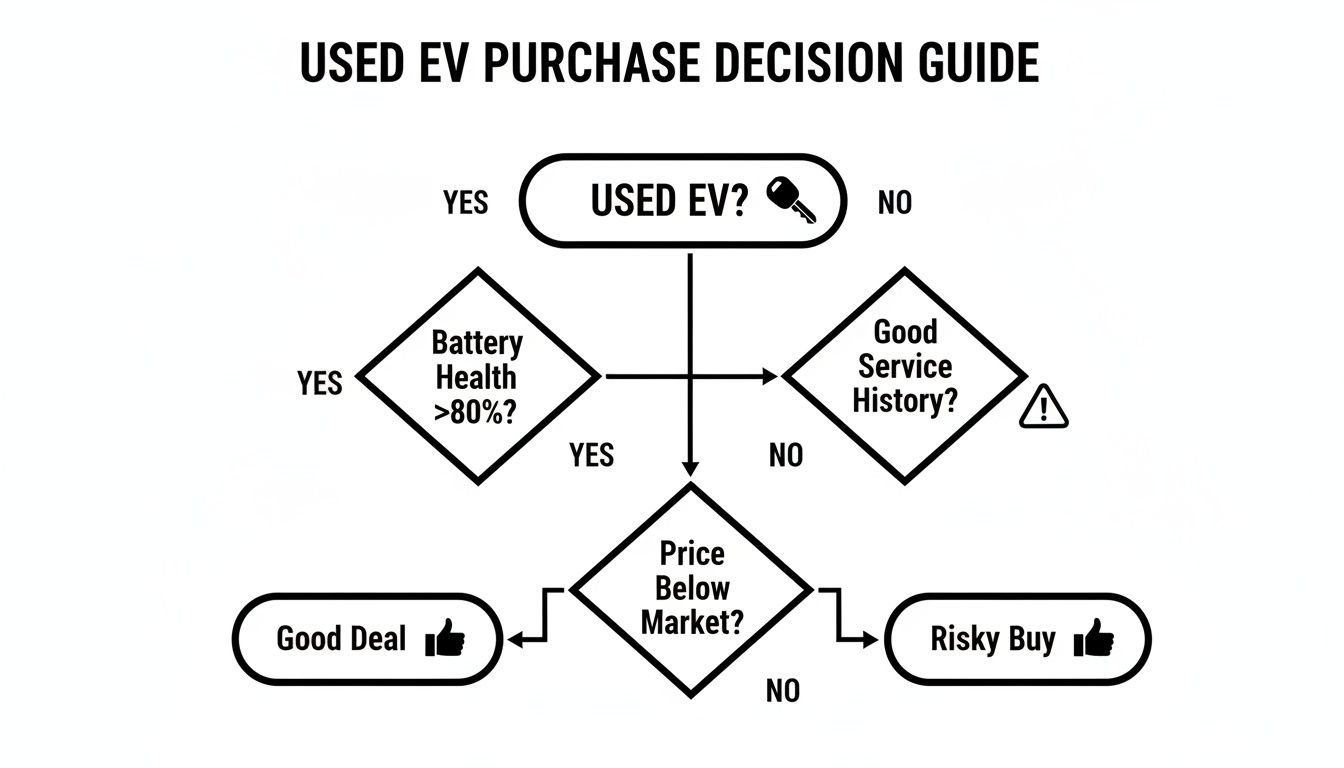
As you can see, a good deal always hinges on verified battery health and a solid service history. A risky purchase, on the other hand, often has gaps in its past and a price that seems just a bit too good to be true.
No matter which cheap electric car you choose, the golden rule remains the same: buy the car that fits the life you actually have, not the one you imagine. Be honest about your daily mileage, access to charging, and what you truly value in a vehicle.
Got Questions About Cheap Electric Cars?
Still have a few lingering doubts? That's perfectly normal. Buying any car is a big decision, and jumping into the world of electric vehicles for the first time brings its own set of questions. Let's tackle some of the most common ones head-on.
Think of this as the final myth-busting session before you decide if a budget-friendly EV is right for you. We’ll cover everything from running costs to the big one: the battery.
Is It Actually Cheaper to Run an Electric Car in the UK?
In a word, yes—but it comes with a huge caveat. If you can charge at home, particularly on a cheap overnight electricity tariff, you’ll save a fortune. A full charge can genuinely cost less than a fancy coffee, which makes looking at petrol prices a much less painful experience.
The tables turn dramatically if you're solely reliant on public chargers. Rapid charging at a motorway service station, for example, can be almost as pricey as filling a tank with petrol, pretty much wiping out the main financial incentive. Factor in potentially higher insurance premiums for some models, and the cost-saving argument gets a bit muddy. For real savings, having a home charger is almost essential.
What Should I Check When Buying a Used Cheap EV?
Inspecting a used EV is a different game to kicking the tyres on an old petrol car. Forget the engine; the battery is king.
Here’s what you absolutely must check:
- A Battery Health Report: Don’t just take the seller's word for it. Insist on seeing a recent ‘State of Health’ (SoH) report. On a car that’s only a few years old, anything below 85% should have you asking serious questions.
- Charging Port Condition: Take a close look at the charging port and the pins inside. Any obvious damage or heavy wear could lead to a very expensive and annoying repair down the line.
- Software Update History: Make sure the car’s main software is up to date. Outdated software can mess with everything from how the battery is managed to whether the infotainment screen decides to work that day.
Skipping these checks is a bit like buying a house without getting a survey done. You might get lucky, but it’s a massive gamble.
The biggest fear for most people considering an EV isn't range; it's the lifespan and replacement cost of the battery. It’s become the monster under the bed for the electric car world, but the reality is far less terrifying than the myths suggest.
How Long Do EV Batteries Really Last?
EV batteries are built to last. They don't just suddenly stop working one day; they degrade very slowly over many years and thousands of miles. In fact, most car makers offer a specific battery warranty – typically for eight years or 100,000 miles – which guarantees it will hold a minimum percentage (usually around 70% ) of its original capacity.
While a full battery replacement once cost a small fortune, those prices are steadily coming down. More importantly, it's now often possible to replace individual faulty cells within a battery pack instead of the whole unit, which dramatically cuts the cost of repairs. For the vast majority of drivers, the battery will easily outlive the car itself.
At VoltsMonster , we cut through the hype to give you the honest, entertaining, and insightful EV content you need. From reviews to guides, we've got you covered. Explore more at VoltsMonster.
VoltsMonster Electric Vehicle Blog