UK EV Car Reviews That Don't Send You to Sleep
Trying to find an honest EV car review in the UK feels a bit like searching for a decent cuppa at a motorway service station. It's often a depressing and ultimately fruitless task. Most reviews are either bafflingly technical, written by someone who probably thinks ‘regenerative braking’ is a new type of yoga, or so biased they read like the manufacturer's marketing team wrote them after a particularly long, boozy lunch.
We do things differently. Our reviews are brutally frank, written for real British drivers who just want to know if the bloody thing works.
Cutting Through the Electric Hype
Let's be honest: the electric car market is a bewildering circus right now. You're faced with a confusing mess of wildly optimistic range claims, acronyms that sound like failed 90s boybands (WLTP, anyone?), and evangelists who'd have you believe queuing for a broken charger in the pouring rain is a spiritually enlightening experience. The government’s green ambitions are admirable, but they often clash with the on-the-ground reality of potholes, a patchy charging network, and the soul-crushing despair of the M25 on a Friday.
Despite the chaos, the switch to electric is happening, and it's happening fast. This isn't just a niche movement for people who knit their own sandals anymore; it’s a mainstream reality. The UK market officially registered its one-millionth plug-in car way back in 2022, a milestone that shows just how quickly drivers are ditching their petrol-guzzling chariots. This explosive growth is fuelled by genuinely better cars, more choice, and ranges that are finally starting to look less like a practical joke.
What to Expect From Our EV Car Reviews
Forget the fluff. Our mission is to be your no-nonsense guide through this electric jungle. We’re not here to simply regurgitate spec sheets or drone on about panel gaps. We focus on the things that actually matter to you—the poor sod who has to live with the car day in, day out.
- Real-World Range: We test cars in typical British conditions. Think wind, rain, and a boot full of shopping from Lidl, not on some sun-drenched European test track.
- Charging Palaver: We’ll tell you how easy (or infuriatingly difficult) it is to top up the battery on a long journey using the UK's public network of occasionally-working charge points.
- Practicality Checks: Can it swallow the family's luggage for a trip to Cornwall, or is the boot only big enough for a single, sad-looking bag of quinoa?
- Infotainment Insanity: We rate the onboard tech based on how likely it is to make you want to punch the screen out of the dashboard.
Our reviews are designed to answer one simple question: Is this electric car a genuinely good tool for modern British life, or is it just an expensive, over-hyped gadget with wheels?
We've put in the hours so you don't have to. For a look at our top recommendations, you might be interested in our guide to the 7 best electric cars in the UK for 2025 and how not to buy a dud.
So, Who's in the Running This Year?
Right then, let's get acquainted with our contenders. For this year's big EV showdown, we've pulled together a fascinating line-up that really shows the breadth of what’s available on the UK market right now. We've intentionally dodged some of the usual suspects to give you a proper look at some of the most interesting metal out there, covering everything from the supremely practical to the wonderfully bonkers. Think of this as the weigh-in before the bell rings.
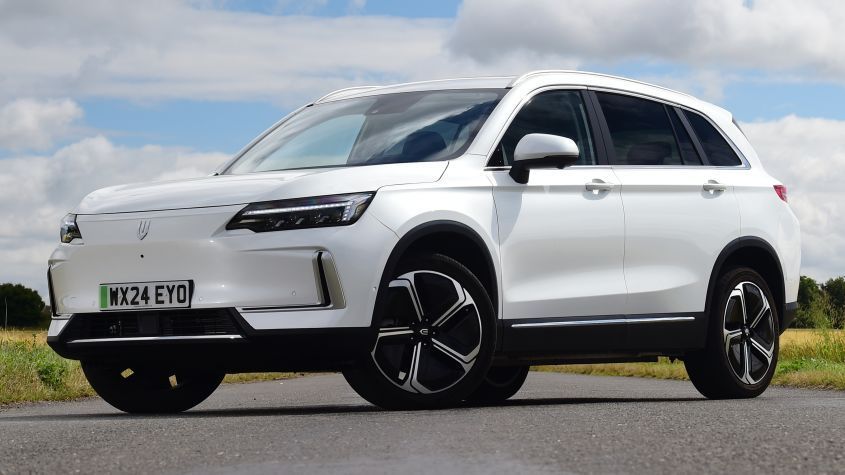
First up, fighting out of the sensible corner, we have the Sensible Family SUV . This is the EV equivalent of a trusty pair of walking boots – dependable, comfortable, and built for purpose. It’s not here to set lap records or turn heads, but it will swallow a family's weekly shop, tackle the school run without a whisper, and keep running costs firmly in check. Its mission is simple: to offer maximum space and practicality with zero fuss.
A Closer Look at Our Line-up
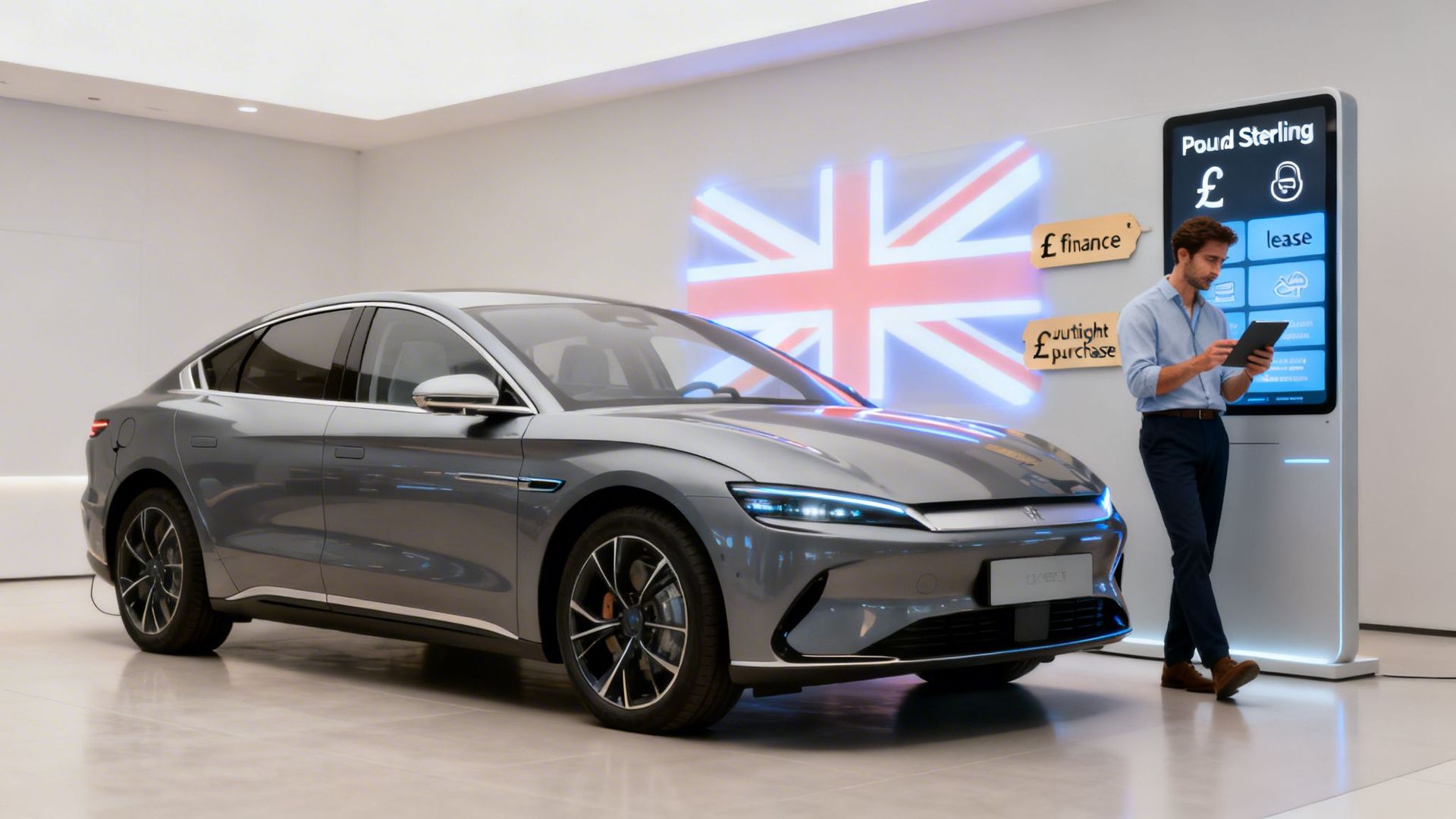
Next into the ring is the Sleek Performance Saloon . This one’s aimed squarely at the driver who enjoys a spirited B-road blast but has made peace with the silent revolution. It promises the kind of instant, neck-snapping acceleration that messes with your internal organs, paired with genuinely sharp handling and enough kerb appeal to get the neighbours twitching their curtains. It's the perfect tool for the long-distance exec who wants to arrive at meetings feeling refreshed but not bored to tears.
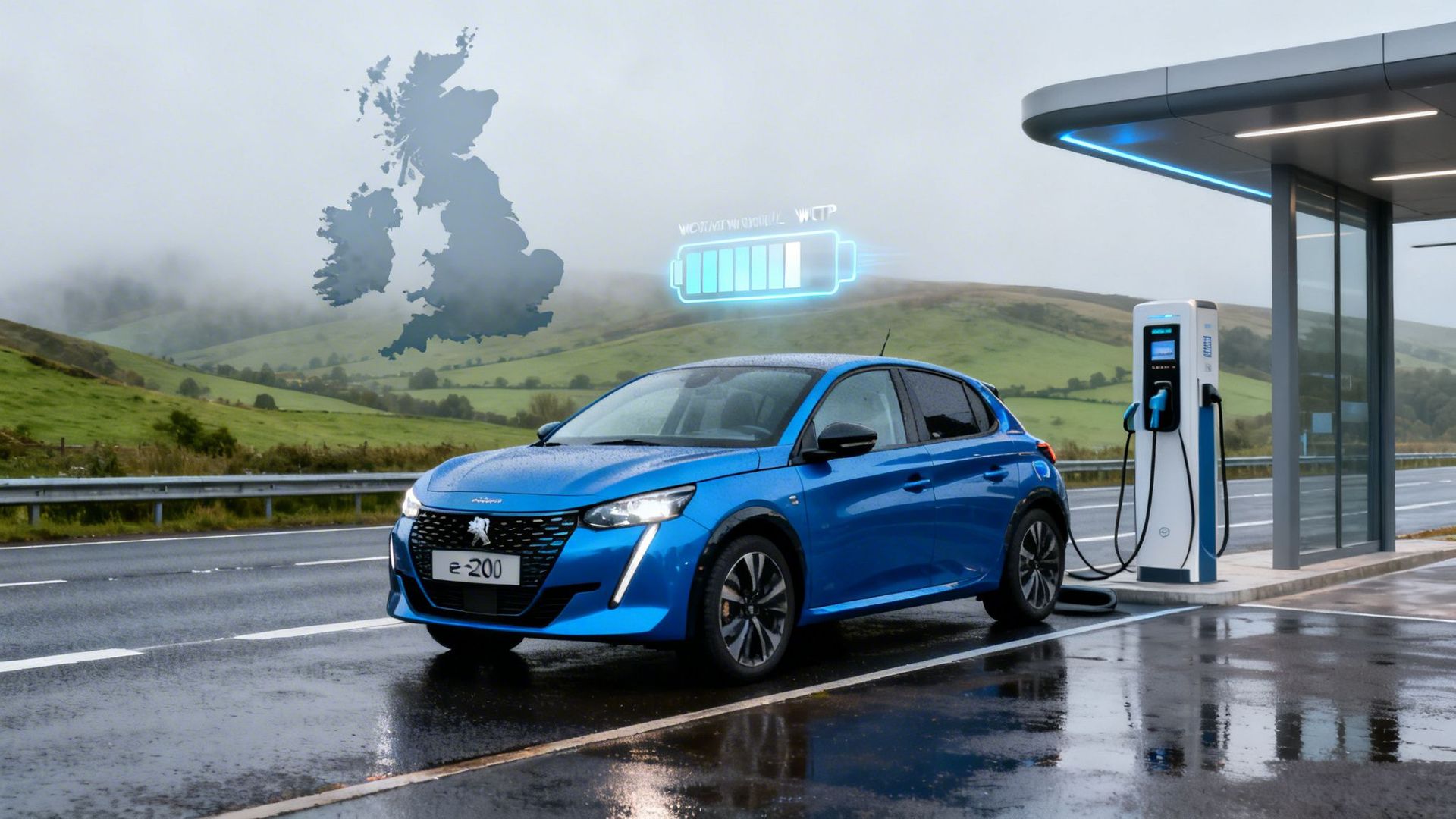
Then there's the Budget City Hatchback . This plucky little fighter is born and bred for the urban jungle. Small enough to nip through gridlocked city streets and slot into those impossibly tight parking spots, its main job is to bring electric driving to the masses. It’s living proof you don’t need a lottery win to say goodbye to the petrol station. Ideal as a second car or for anyone whose driving world exists mostly inside the M25.
And finally, the one we’ve been itching to get our hands on: The Wildcard. This is the one that's here to shake things up, the disruptor in a field of conformity. It’s a reminder that electric cars can be genuinely interesting, and not just another white goods appliance.
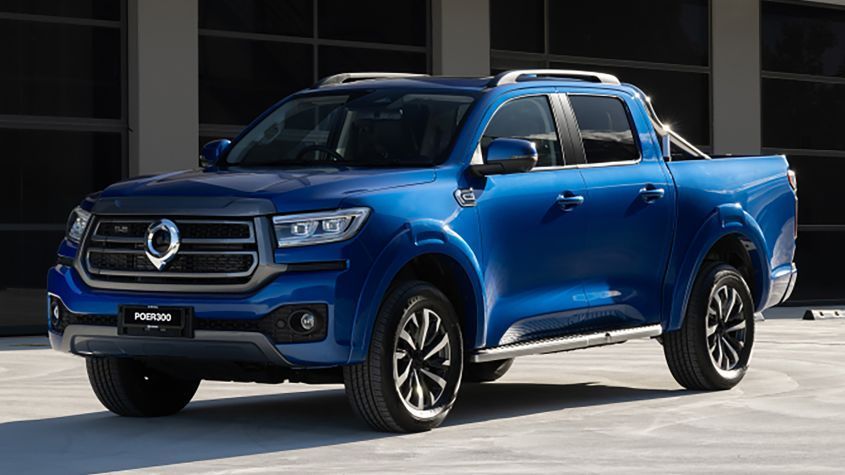
Our final contender is The Wildcard . This is the maverick, the car that tears up the EV design rulebook. With its bold styling, clever use of interior space, and a few quirky features, it deliberately swerves convention. It doesn't necessarily try to be the absolute best in any single category, but instead, it offers an irresistible mix of futuristic design and genuine personality. This one is for the tech lovers, the early adopters, and anyone who simply can't stand the thought of driving a bland-looking car.
So, there you have it. A practical SUV, a rapid saloon, a nimble city car, and a quirky innovator. Each brings a unique set of skills to the contest. In the following sections, we’ll dig into the detail to find out which one really stacks up and deserves your hard-earned cash. Let the battle commence.
The Great British EV Real-World Test
Right, let's get down to it. It’s time to toss the glossy manufacturer brochures in the bin, especially the ones with their frankly insulting claims about range achieved by a lightweight monk on a windless day in a vacuum. This is where we subject our contenders—the sensible SUV, the sleek saloon, the city-slicker hatchback, and the quirky wildcard—to a series of brutal, real-world tests shaped by the unique misery of British driving.
We’re talking pothole-riddled B-roads, soul-crushing motorway traffic, and weather that can't make up its mind. This is a practical, head-to-head battle, not a recital of a spec sheet. Let’s see how they really stack up when the going gets grim.
This chart shows our four key contenders, representing the core choices facing UK buyers today, from practical family haulers to innovative wildcards that break the mould.
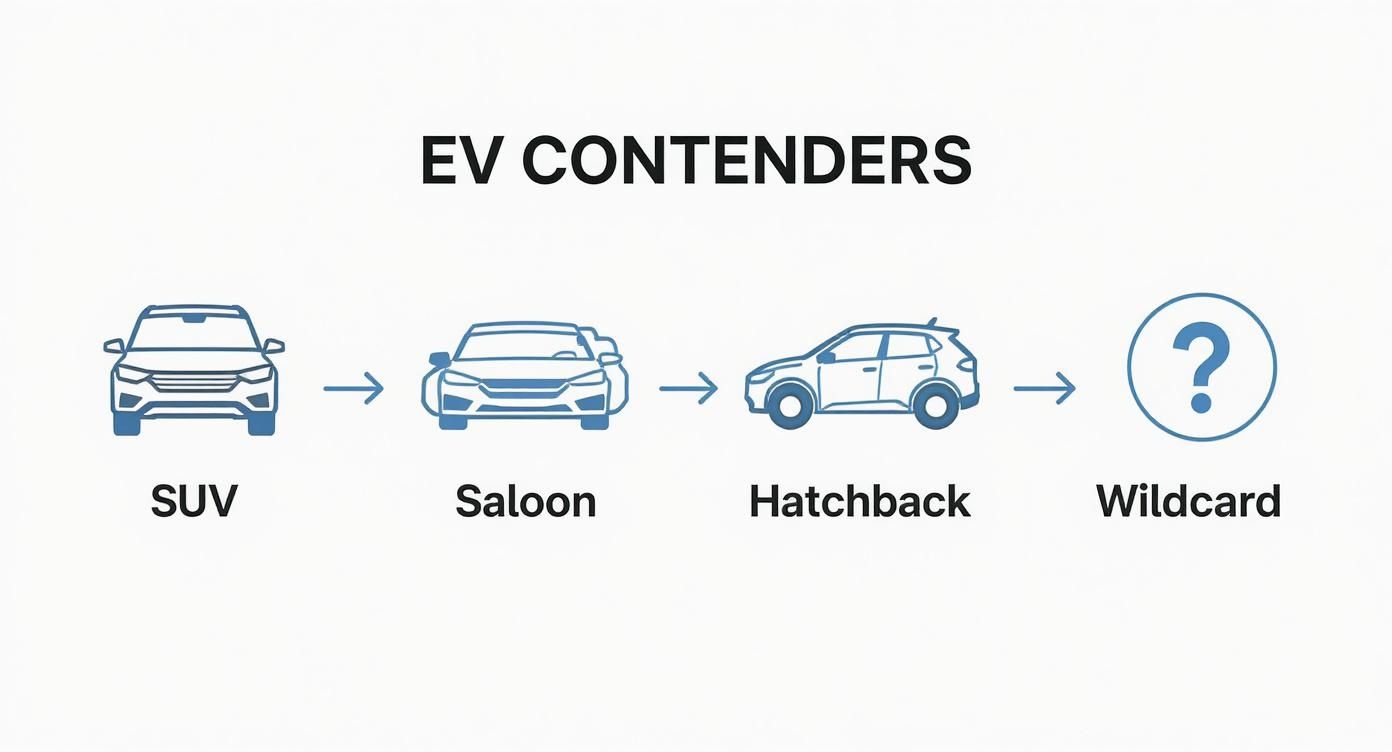
Each category presents a different answer to the electric driving puzzle, highlighting just how diverse the options on the market have become.
Real-World EV Comparison For UK Drivers
Forget the lab-tested figures for a moment. This table cuts through the noise to show how these cars perform in situations that every British driver will recognise, from the school run to a bank holiday slog down the M6.
| Metric | Family SUV (e.g. Kia EV6) | Performance Saloon (e.g. Polestar 2) | City Hatchback (e.g. MG4) | Wildcard (e.g. Hyundai Ioniq 5) |
|---|---|---|---|---|
| Realistic Motorway Range (at 70 mph) | Tends to be the weakest. Expect ~200-240 miles from a claimed 300. As aerodynamic as a brick. | Often the strongest due to aerodynamics. Can get surprisingly close to official figures. | Decent, but high speeds drain the smaller battery quickly. Best for shorter trips. | Varies wildly, but usually better than an SUV. Its unique design pays off here. |
| The 'School Run' Efficiency Test | Good. Surprisingly efficient in stop-start traffic despite its size. | Very good. Regenerative braking shines, clawing back miles between traffic lights. | Excellent. This is its natural habitat. Extremely low running costs for urban hops. | Superb. Often designed for city life, with strong regen and easy manoeuvrability. |
| Public Charging Frustration Level | Low. Modern SUVs often have rapid charging ( 150 kW+ ) and well-placed ports. | Very Low. Typically built for fast charging to match its long-distance cruising ability. | Medium. Charging speeds can be slower, making long journeys a bit more of a faff. | Low to Very Low. Many wildcards boast ultra-fast 800V architecture. A huge plus. |
| 'Big Shop' Boot Space Test | Excellent. Easily swallows a weekly shop, pushchair, and assorted family junk. | Deceptive. The saloon boot opening can be awkward for bulky items like pushchairs. | Challenging. Requires strategic packing and maybe leaving the dog behind. | Surprisingly good. Clever packaging and 'frunks' often create a very usable space. |
As you can see, the 'best' car really depends on your life. A saloon might ace the motorway run, but an SUV is king when it comes to sheer, unglamorous practicality.
Range Anxiety Versus Reality
The number one question on everyone’s lips: how far will it actually go on a single charge? We’re not interested in the official WLTP figures, which are about as believable as a politician's promise. Our test is simple: we charge each car to 100% , set the climate control to a distinctly British 19°C , and drive them on a mixed route of A-roads, motorways, and town centres until they give up the ghost.
The results are always telling. The sleek saloon, with its slippery profile, consistently gets closer to its advertised range on long motorway slogs. Yet, the plucky city hatchback often surprises, proving remarkably efficient in stop-start urban traffic where its regenerative braking can really work its magic.
The family SUV, burdened by its weight and brick-like aerodynamics, tends to see its range plummet fastest at a steady 70 mph . The wildcard entry often sits somewhere in the middle, its efficiency depending heavily on its unique design. This matters, because the difference between a claimed 300 miles and a genuine 220 miles is the difference between a relaxed journey and a frantic search for the nearest charger while your bladder is screaming for mercy.
The greatest lie in the automotive world isn't "I'll indicate in a moment," but the official range figure of an electric car. Our job is to find the truth, even if it's a bit disappointing.
The Public Charging Palaver
Finding a working, available, and reasonably priced public charger in the UK can feel like a quest from Arthurian legend. It’s a national lottery of broken units, confusing apps, and eye-watering pricing. Our ‘Charging Palaver’ test measures the real-world agony factor of topping up each car on the go.
We assess a few key things:
- Maximum Charging Speed: How quickly can the car slurp electricity from a rapid charger? A car that can accept over 150 kW (like our performance saloon and wildcard) will get you from 10% to 80% in the time it takes to grab a stale service station sandwich. A slower charging car, however, might have you sitting through the entire director’s cut of Lord of the Rings.
- Charging Port Location: Is the port conveniently located at the front, or is it tucked away at the rear corner, forcing you into an awkward multi-point turn just to reach the cable? It sounds trivial, but you’ll be cursing the designers after your third attempt in a tight bay in the pouring rain.
- Ease of Initiation: Does the car communicate flawlessly with the charger, or does it throw a digital tantrum? We see if it needs you to unplug, replug, and swear at it three times before it finally starts drawing power.
This test is about more than just numbers; it's about real-world usability. A car with a slightly smaller battery but ultra-fast, reliable charging can be far less stressful to live with than one with a huge battery that takes an age to replenish.
Boot Space Tetris
An EV's boot capacity is often compromised by batteries stuffed under the floor. The brochure might quote a generous-sounding figure in litres, but that number is meaningless until you try to cram a family’s weekly shop, a pushchair, and holiday luggage into it. Welcome to Boot Space Tetris.
Our scientific method involves a standardised load: one bulky pushchair, two large shopping bags, a case of lager, and a ridiculously oversized teddy bear. The family SUV usually swallows this with room to spare, often boasting a cavernous boot and a flat floor. The saloon, with its narrower opening, can be a bit more challenging—getting the pushchair in might require some forceful persuasion and a few choice swear words.
The hatchback, unsurprisingly, requires some clever packing and possibly sacrificing the teddy. This is where the wildcard often shines. Some models offer brilliant packaging, with deep underfloor storage or even a ‘frunk’ (front boot) perfect for stashing charging cables, freeing up precious main boot space.
Thankfully, the days of crippling range anxiety are starting to fade. New EV models now average an official range of almost 300 miles per full charge in 2025, a significant 28% increase from the prior year's 235 miles . More importantly, the real-world range is averaging a much more usable 234 miles , supported by a growing network of nearly 1,500 fast charging bays.
Infotainment Insanity
Finally, we judge the car’s central touchscreen—the digital brain that controls everything from your navigation to the radio. The question is simple: is it a helpful co-pilot or an infuriating digital monster designed to induce road rage?
We rate them on responsiveness, the logic of the menu layout, and how reliably they connect to Apple CarPlay and Android Auto. Some systems are slick, intuitive, and a genuine joy to use. Others are a laggy mess of confusing sub-menus, making a simple task like adjusting the fan speed a perilous, multi-tap distraction while you should be watching the road.
This is a critical part of the ownership experience, and a terrible infotainment system can genuinely ruin an otherwise great car. If you're keen to understand more about how these factors play out across different models, check out our deep dive in an electric car range comparison for the UK and other lies.
Finding the Right EV for Your Driving Life
An electric car that's perfect for a city slicker could be a complete nightmare for a family that loves escaping to the Cotswolds for the weekend. The secret to choosing the right EV isn't about finding the 'best' car on paper; it's about finding the best car for you. Most reviews get bogged down in spec sheets and miss this crucial point entirely.
To cut through the noise, we've sketched out a few brutally honest personas. See which one sounds uncomfortably familiar, and you'll get a crystal-clear idea of which of our contenders is the right tool for your specific job.
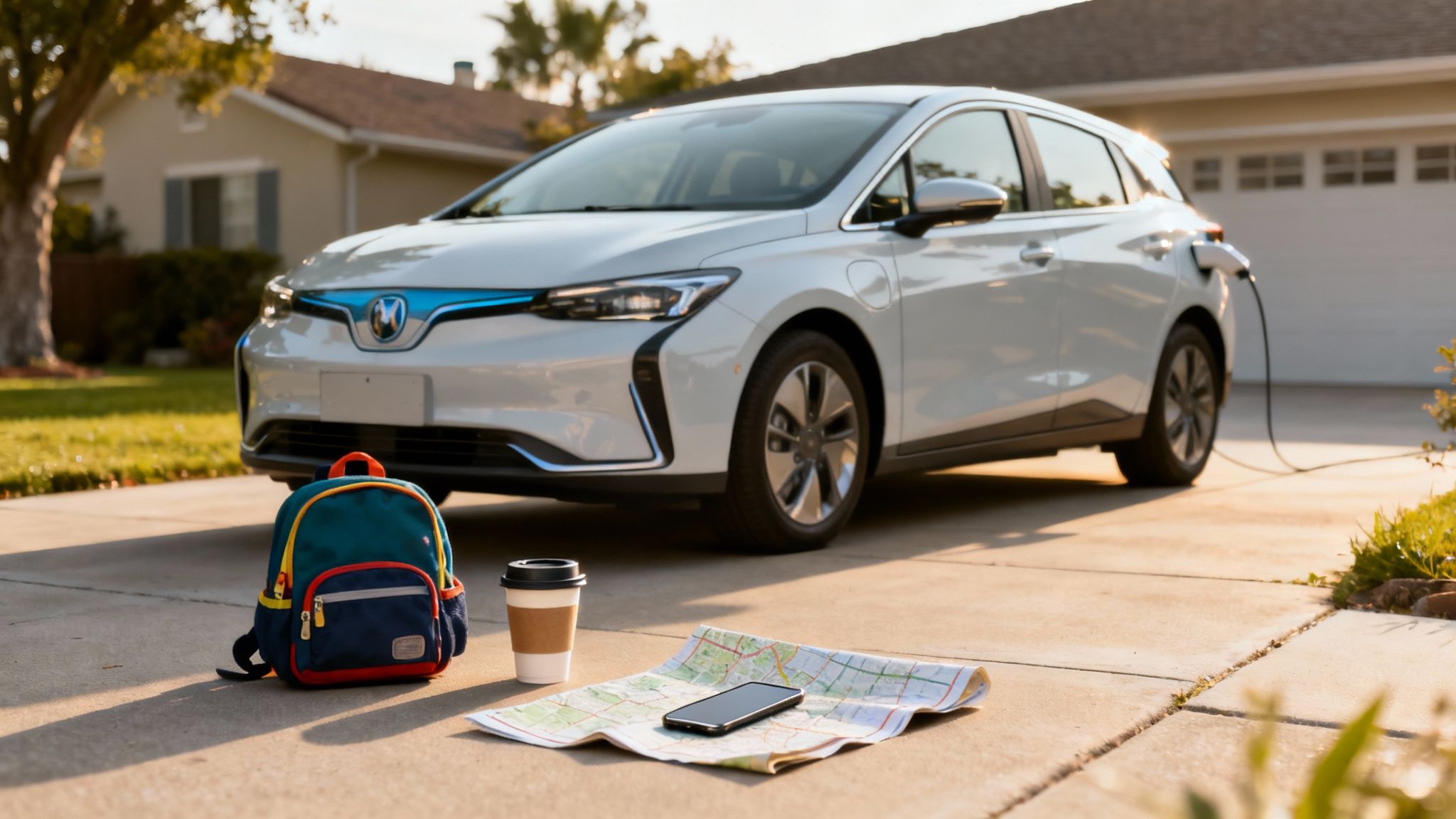
The School Run Specialist
Your life is a whirlwind of drop-offs, pick-ups, and dashes to the supermarket. You need a car that's easy to park, has a tight turning circle, and features interior surfaces that can withstand a direct hit from a rogue Fruit Shoot. A massive range is utterly irrelevant; your entire world exists within a 10-mile radius of your front door.
- Top Priorities: Manoeuvrability is key, alongside a boot that can swallow school bags and shopping without a fight. You also need doors that open wide enough in those ridiculously tight parent-and-child bays.
- Deal Breakers: A complex infotainment system that requires a degree in computer science to operate is a definite no. The same goes for a massive footprint that makes parking a sweaty-palmed ordeal, and a sluggish pull-away at roundabouts.
- Ideal Contender: The City Hatchback is your champion. It’s born for this life of short, sharp journeys. Its running costs are comically low, and its compact size makes it the undisputed king of the urban jungle. A family SUV is a close second if you need that extra boot space for weekend trips.
The Motorway Mile-Muncher
Your car is your office on wheels. You practically live on the M1, measuring your life in service station coffees and average speed camera zones. For you, an EV must be a serene, comfortable cruiser with a rock-solid, real-world range. Crucially, it must have the ability to charge incredibly quickly.
For the long-distance driver, charging speed is actually more important than the absolute maximum range. A car that can add 150 miles in 20 minutes is far more practical than one that takes an hour to do the same, regardless of its starting range.
The last thing you need is to be sat at a broken charger in Toddington Services when you're already late for a meeting. Reliability and efficiency at a steady 70 mph are completely non-negotiable.
- Top Priorities: A genuine range of at least 250 miles (in all weather), ultra-rapid charging ( 150kW+ ), comfortable seats, and a quiet cabin are essential.
- Deal Breakers: Poor aerodynamics that cause the range to plummet on the motorway are a deal-breaker. Slow charging speeds that turn a quick stop into a long lunch and an overly firm ride are also out.
- Ideal Contender: The Performance Saloon is built for this job. Its slippery, aerodynamic shape cuts through the air, preserving precious battery life at high speeds. These models also typically boast the fastest charging technology, making them the perfect companion for a life lived in the outside lane.
The Tech Enthusiast
You don’t just want a car; you want a smartphone on wheels. You're the person drawn to massive touchscreens, over-the-air updates, and clever features that make your friends jealous. You probably know what 800V architecture is and get genuinely excited by a well-designed mobile app that can pre-heat your car on a frosty morning.
For you, the driving experience is as much about the user interface as it is about the handling. A clunky, slow infotainment system is a cardinal sin.
- Top Priorities: A slick, responsive central screen and seamless smartphone integration (Apple CarPlay/Android Auto) are must-haves. You'll also be looking for innovative features like vehicle-to-load (V2L) power sockets and a futuristic design.
- Deal Breakers: You'll be put off by dated software, a lack of connectivity features, and a design that simply plays it too safe.
- Ideal Contender: The Wildcard . This is where the unconventional, forward-thinking models really shine. Cars like the Hyundai Ioniq 5 or Kia EV6 often lead the charge with genuinely useful tech, bold design, and clever quality-of-life features that will keep you delighted long after the new-car smell has faded.
The Cautious Convert
You're intrigued by the idea of an EV, but the thought of running out of battery in the middle of nowhere brings you out in a cold sweat. You’ve heard the horror stories about broken chargers and wildly optimistic range claims. You just need a car that offers a gentle, reassuring entry into the world of electric motoring.
You're not fussed about neck-snapping acceleration or bleeding-edge tech. You just want a car that works, is easy to understand, and absolutely won't leave you stranded.
- Top Priorities: A predictable and honest range display is paramount. You're also looking for a comfortable and familiar-feeling cabin and a simple, intuitive charging process.
- Deal Breakers: Any hint of unpredictability is a major red flag, as is a confusing user interface or a range that varies dramatically with the weather.
- Ideal Contender: The Family SUV . These vehicles are designed to be the sensible, reassuring choice in the market. They often have large batteries providing a solid range buffer, and their straightforward, user-friendly nature makes them the perfect first step for anyone nervous about making the switch. Think of them as the dependable workhorses of the EV world.
Our Final Verdict: Which EV Should You Actually Buy?
Right, let's cut to the chase. After all the testing, number-crunching, and a fair bit of wrestling with dodgy public chargers, it's time to lay it all out. We’ve pushed these cars hard on proper British roads to give you the real story, not just the brochure hype. This isn't about crowning one "ultimate winner," but about giving you the clarity to pick the electric car that genuinely fits your life, your budget, and frankly, your patience.
The UK's electric car scene is growing up fast. In fact, as of October 2025, pure electric cars made up more than a quarter of all new car sales – a massive milestone. Throw in the plug-in hybrids, and that number balloons to an incredible 40% of the new car market. Plugging in is officially mainstream. You can get the full rundown on the latest trends from October's electric car sales figures.
But with all this choice comes a bigger risk of making a very expensive mistake.
The All-Rounder: Best for Most People
If you’re after the best all-round package for the money, the Family SUV is still the one to beat. No, it won't set your pulse racing, and it's not going to win any design awards, but its brilliant mix of practicality, decent real-world range, and easy-to-use tech is just impossible to argue with. Think of it as the sensible shoes of the EV world – not glamorous, but utterly dependable for the daily grind.
It just works for family life. It swallows the weekly shop and the kids' football kits without a fuss, and it has enough range in the tank for those longer weekend trips away. For anyone making the switch to electric for the first time, or for a growing family, it's the most logical and least stressful way into EV ownership.
The Mile-Muncher: For the Motorway Warriors
Spend your life on the M1? The Performance Saloon is in a different league entirely. Its sleek, aerodynamic shape and focus on ultra-rapid charging make it the undisputed king of long-distance driving. It cuts through the air much more efficiently than a bulky SUV, which means you'll spend less time sipping lukewarm coffee at a service station and more time actually getting where you're going.
It’s built for one thing: to eat up motorway miles in quiet comfort and at serious pace. For the high-mileage business driver, nothing else comes close.
The One to Watch: Only if the Price is Right
Now, this might be a bit controversial. The City Hatchback is fantastic at what it does – zipping around town. But as your only car, it can feel compromised. The shorter range and often slower charging speeds can make longer journeys feel like a military operation. It’s a brilliant second car or a dedicated urban runabout, but unless you find an absolute corker of a deal, its limitations can quickly become frustrating.
Before you sign on the dotted line for any EV, you need to know what you’re getting into. To help you sidestep the common traps, have a read of our guide on how to spot a bad EV deal before you commit.
At the end of the day, the best reviews don't just tell you which car is "best" – they help you figure out which car is best for you. Use our real-world tests to make a choice you’ll be happy with, not an expensive guess.
Frequently Asked Questions About UK EV Ownership
Right, you’ve waded through the reviews, digested all the data, and you’re still not quite decided. That’s perfectly normal. Switching to an electric car can feel like learning a new language, one filled with baffling acronyms and vague promises about range and charging.
So, let's tackle those nagging questions that are probably still rattling around your head. Think of this as the final bit of clarity you need before making a decision.
Will My Electricity Bill Go Through The Roof?
Not if you’re smart about it. The key is to charge at home overnight on a specific EV tariff. Doing this is dramatically cheaper than a trip to the petrol station – you're basically swapping the eye-watering cost of unleaded for the price of running your tumble dryer a few times.
It’s the public rapid chargers that can really sting your wallet. If you rely on them too much, you could end up paying almost as much per mile as you did for petrol. Home charging is the absolute secret to unlocking those smugly low running costs everyone talks about.
How Long Do EV Batteries Actually Last?
Modern EV batteries are built to outlast the car they're in. Manufacturers back them with hefty warranties, usually for 8 years or 100,000 miles , which shows you how confident they are in the technology. These batteries degrade very slowly over time; they don't just suddenly die on you one morning.
Don't fall for the horror stories about £15,000 replacement bills. They're incredibly rare and often just scare tactics from your mate down the pub. Honestly, you’re far more likely to get fed up with the car’s dated infotainment system long before the battery becomes a problem.
Is The UK Public Charging Network Really Good Enough?
It’s… getting there. On motorways and major A-roads, the network is generally decent, although it can get crowded at peak times. The real adventure starts when you head into the countryside or try to find a working charger in a supermarket car park that isn't blocked by a massive diesel pickup truck.
It definitely requires more forward planning than just pulling into the nearest petrol station. Apps like Zap-Map will become your new best friend, but even then, finding an available, working charger can sometimes feel like a bit of a lottery.
Ready to find an EV that won't drive you mad? At VoltsMonster , we provide the brutally honest reviews, vlogs, and podcasts you need to navigate the electric car world with confidence. Check out our latest content at https://www.voltsmonster.com.
VoltsMonster Electric Vehicle Blog