Solid State Battery Toyota: The Holy Grail or Just More Hype?
Let's be blunt: the solid-state battery Toyota is cooking up could be the cure for the electric car's most chronic complaints—pitiful range and charging times that feel like a geological era. Forget the techy jargon for a moment. This tech hints at a future where your EV could drive from London to Edinburgh on a single charge that takes less time than a proper pub lunch.
So, What Is This Toyota Solid-State Battery Anyway?
Right, let’s cut to the chase. Think of the battery in today's electric cars as a bit like a leaky bag of volatile chemicals. It’s got a flammable liquid electrolyte sloshing about inside, it’s heavy, and it takes up a ridiculous amount of space for the power it delivers. It works, but it's far from brilliant. This is the lithium-ion battery we’ve all come to know and, let's be honest, tolerate.
The solid-state battery Toyota is developing is a completely different beast. Instead of a wobbly, flammable bag, imagine a dense, stable, and compact power brick. The game-changing move is swapping that liquid electrolyte for a wafer-thin, solid layer of material—often some specialised ceramic, polymer, or sulphide-based concoction.
Why Should I Give a Toss?
That one simple switch—from liquid to solid—is the key that unlocks a whole raft of improvements. These are the kinds of benefits that could finally make EVs a practical choice for everyone, not just folks with a driveway and the patience of a saint. This fundamental shift gets right to the heart of the biggest headaches for UK drivers.
Here’s what’s on the cards:
- Proper Range: The solid design allows for a much higher energy density. In simple terms, you can cram more power into the same physical space. Toyota is muttering about a potential range well over 700 miles .
- Seriously Quick Charging: With no volatile liquid to coddle, these batteries can be charged at a much higher rate. The goal is a 10-80% top-up in about 10 minutes .
- Much Safer: Getting rid of the flammable liquid dramatically cuts the risk of the car turning into a bonfire—a persistent, if slightly over-hyped, worry for many.
In short, Toyota isn't just trying to make a better battery. It's aiming to build a completely better electric car experience from the ground up, getting rid of the compromises that have held EVs back for so long.
This isn’t just another small, incremental shuffle in battery technology. It’s a genuine attempt to leapfrog the competition and solve the core issues that make people think twice before going electric. From that nagging range anxiety on a wet journey up the M6 to the mind-numbing wait at a service station, this technology is designed to make owning an EV as painless as running a petrol car. That, right there, is the grand plan.
How It Works, Without the Boring Bits
Right, let’s get under the bonnet and see what’s what. The real magic in Toyota's solid-state battery engineering is replacing the volatile, liquid electrolyte found in current batteries with a solid, stable material. It sounds like a simple swap, but the consequences are massive.
Think of a traditional lithium-ion battery like a packed commuter train at rush hour. The ions – the tiny particles carrying the electrical charge – have to muscle their way through a sloshing, chaotic liquid. It’s inefficient, generates a lot of heat, and carries a small but very real risk of everything going spectacularly pear-shaped.
Toyota’s solid-state design, on the other hand, is more like a dedicated, high-speed rail line. The ions travel through a structured, solid pathway, moving cleanly and quickly from one terminal to the other. This efficiency is the key to creating a battery that's not only more powerful but also fundamentally safer.
No Liquid, No Problem
Getting rid of that flammable liquid is what makes this technology a genuine step-change. It solves one of the biggest perception problems electric cars have faced: the (admittedly rare) risk of battery fires. By building a battery that is inherently stable, Toyota can push its performance limits without the nagging worry of thermal runaway—the technical term for a battery having a complete meltdown.
This infographic gives a great visual breakdown of the key differences.
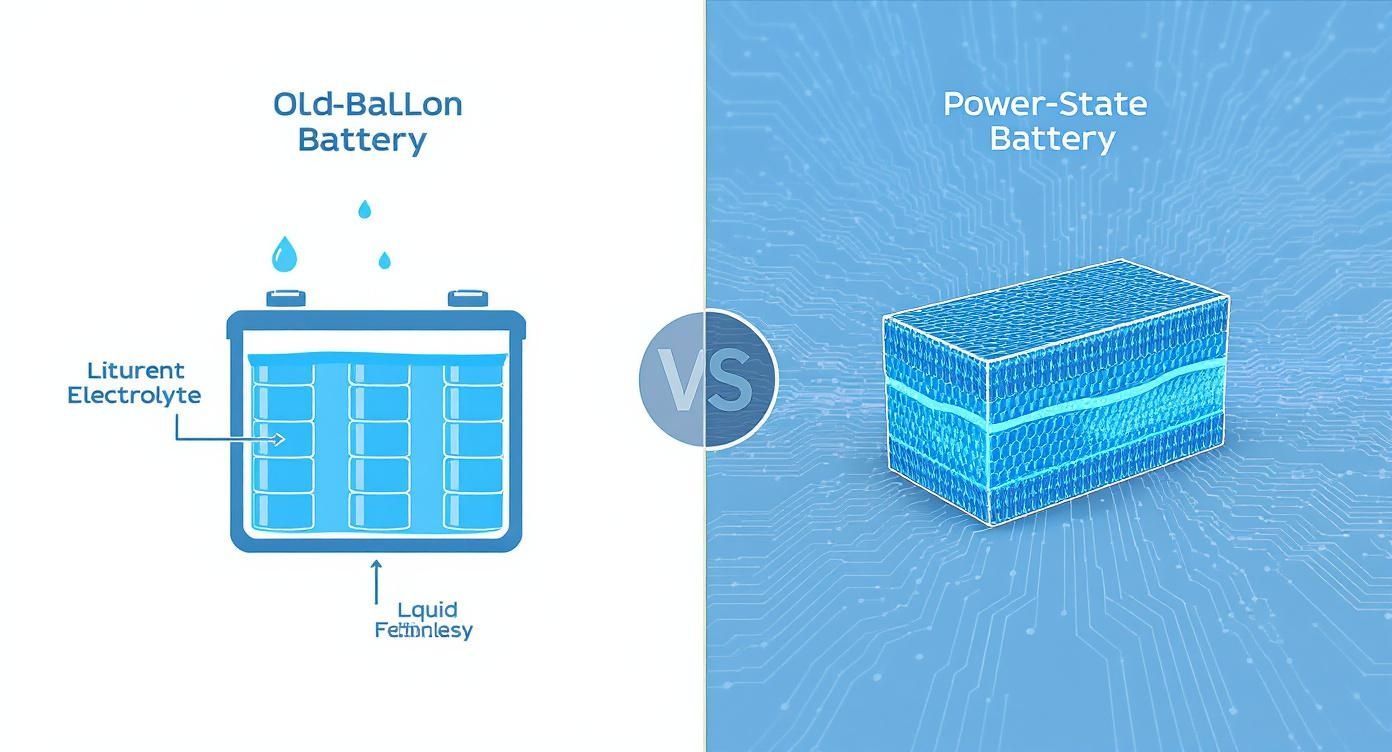
You can see how the solid-state architecture is far more compact and robust. We're moving away from the fragile, liquid-filled cells of today towards something much more like a dense, solid power brick.
This smarter design is what allows for a much higher energy density . In simple terms, Toyota can cram more power into a smaller and lighter space. This has positive knock-on effects for everything from a car's handling to how much room you have inside, but its most important job is unlocking those incredible range figures we keep hearing about. For a more detailed look, you can get up to speed by exploring the latest innovations in electric vehicle battery technology.
The core principle is simple: a more controlled, solid environment for ions to travel through leads to a battery that is safer, more powerful, and charges faster. It’s less about a single dramatic invention and more about clever, fundamental chemistry.
Ultimately, this solid structure doesn't just prevent fires; it also allows for much faster charging. With no liquid that can overheat and degrade, electricity can be pumped in at a much higher rate. This is how Toyota plans to slash charging times down to just 10 minutes —about the time it takes to neck a coffee—directly addressing one of the biggest hurdles for potential EV drivers in the UK.
Faster Charging and Ludicrous Range: The Real-World Payoff
Alright, enough with the lab coats and chemistry lessons. What does all this clever science actually mean for the average driver stuck on the M25 on a wet Wednesday morning? This is where the theory hits the tarmac.
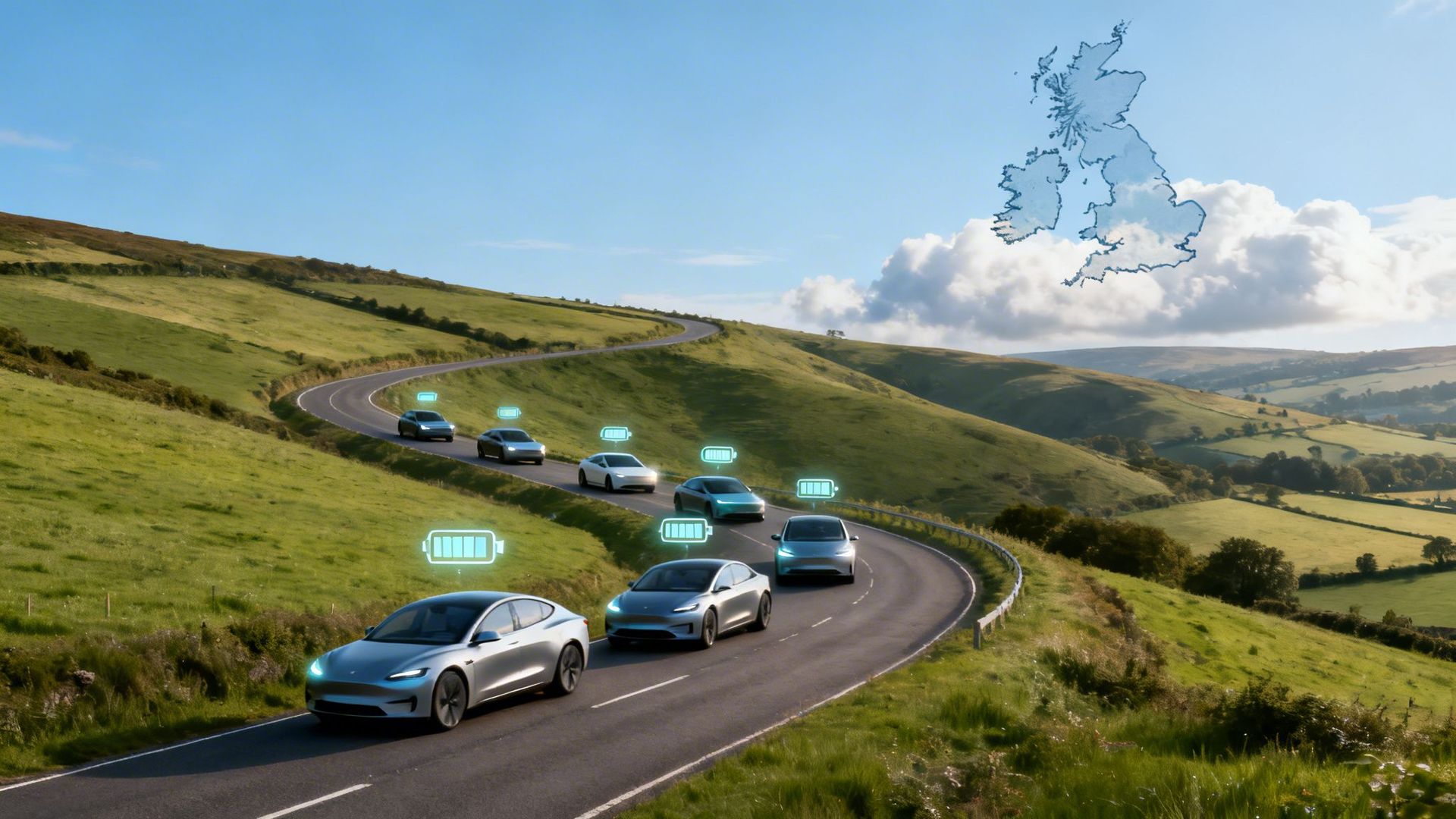
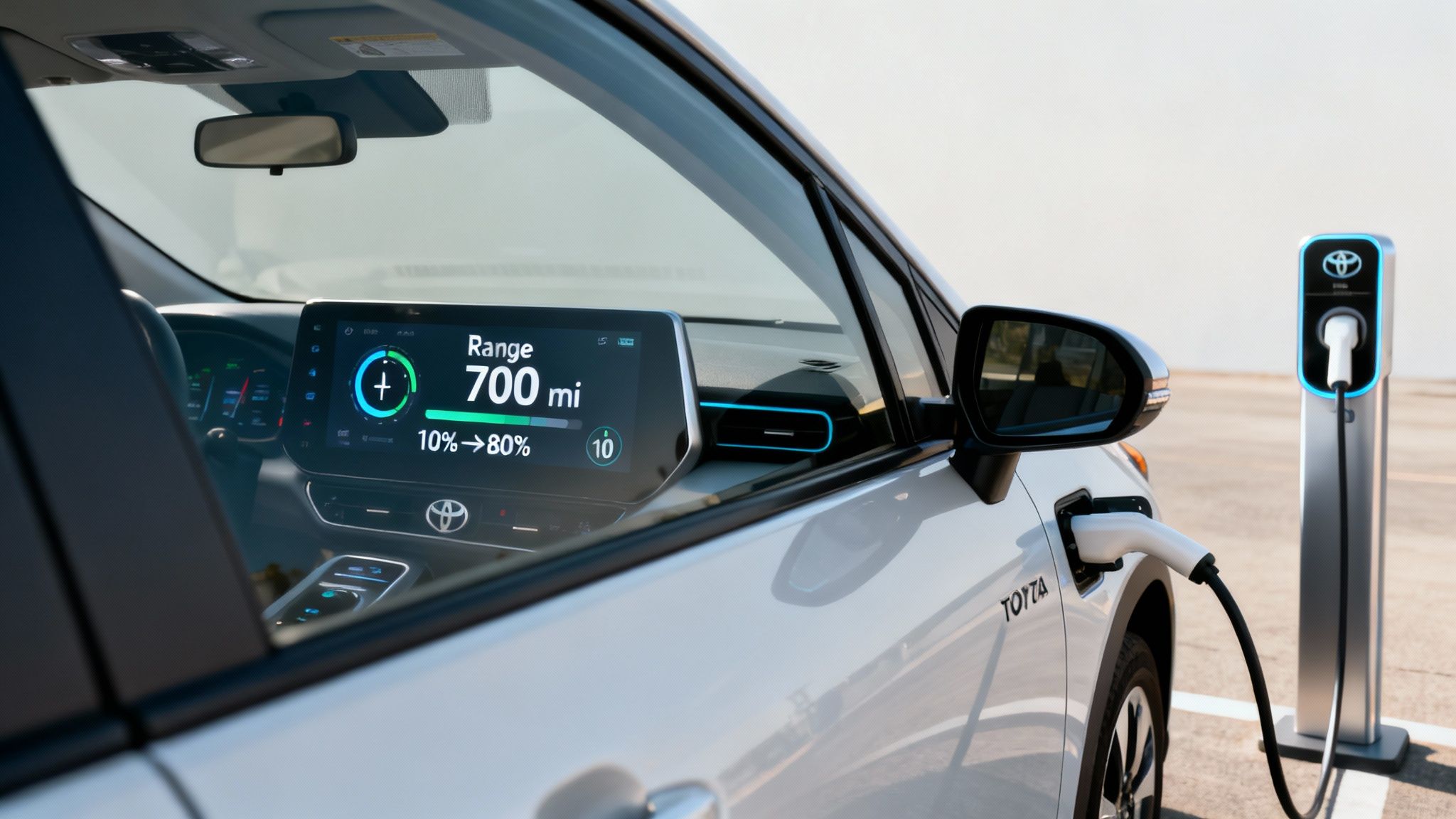
Let’s be honest, the figures Toyota is touting sound almost unbelievable. They’re aiming for a driving range that could push past 700 miles on a single charge. To put that into perspective, that’s like driving from London to Inverness and still having enough battery left to find your hotel. It’s a number that makes today’s range anxiety seem like a quaint relic from a bygone era.
But the charging speed is the real showstopper. Toyota’s goal is to get from a 10% to 80% charge in just 10 minutes . That’s quicker than grabbing a grim coffee and a stale sandwich at a service station. It completely tears up the rulebook for what owning an EV means, removing one of the biggest hurdles for many people.
Solid State vs Lithium-Ion: A Head-to-Head Tussle
To really appreciate the scale of this leap forward, you need to see how the numbers stack up against the batteries powering today’s electric cars. This isn't just a small step up; it’s a whole new level of performance.
Here’s a direct comparison of Toyota's solid-state ambitions against what we're currently stuck with.
| Feature | Current Lithium-Ion Battery | Toyota Solid-State Battery (Target) |
|---|---|---|
| Charging Speed | 30-45 minutes for 10-80% | Under 10 minutes for 10-80% |
| Max Range | Typically 250-350 miles | Over 700 miles |
| Lifespan | Degrades noticeably over time | Designed for a much longer lifespan |
| Safety | Small risk of fire (liquid electrolyte) | Inherently more stable and fire-resistant |
As you can see, the improvements are dramatic across the board. We're not just talking about a bit more range or slightly faster top-ups. We are talking about a fundamental shift in what an electric vehicle can deliver.
The real-world payoff is simple: freedom. Freedom from range anxiety, freedom from long charging stops, and freedom from the compromises that have made some UK drivers hesitant to go electric.
This technology has huge implications for how we use cars. A 700-mile range means most drivers might only need to charge once every couple of weeks, maybe even once a month. It’s a game-changer, especially for people in flats or homes without a dedicated driveway for overnight charging.
To see just how big this jump is, take a look at an electric car range comparison for the UK to see where current models stand. It highlights just how far the technology is set to advance, making today's batteries feel like a temporary fix before the main event arrives.
When Can I Actually Get My Hands On One?
Alright, let's bring things back down to earth. After all the exciting talk of 700-mile ranges and 10-minute charging, you're probably itching to know when you can actually buy a car with one of these batteries. The short, and maybe slightly deflating, answer is: not for a good while yet. Don’t go putting your current motor on AutoTrader just yet.
Toyota is known for being careful and methodical, and they're definitely playing the long game here. The company has outlined a staggered rollout, with the very first vehicles sporting their solid-state batteries pencilled in for release between 2027 and 2028 . Even then, it won't be a floodgate opening. Expect the initial launch to be a limited affair, perhaps reserved for high-end models or even appearing in hybrids first.
This deliberate pace is all about ironing out every last wrinkle. Toyota sees hybrids as the perfect real-world test bed, a place to make sure the technology is absolutely bulletproof before it becomes the heart of a fully electric vehicle (BEV). It’s a classic Toyota strategy: measure twice, cut once, and make sure you don't end up with a public relations nightmare.
The Mammoth Task of Mass Production
So, what’s taking so long? The real challenge isn’t just building a single, perfect battery in a pristine lab. It's figuring out how to make millions of them, reliably and at a price people can actually afford. This is the vast chasm between a brilliant prototype and a product you can find in a showroom.
Several huge hurdles are in the way:
- Manufacturing Complexity: The methods for building solid-state batteries are new and incredibly precise. The sulphide-based solid electrolytes Toyota is working with demand highly specialised, controlled environments for production—a far cry from the established processes for today's lithium-ion batteries.
- Scaling Up: Constructing the factories needed to churn these out in massive numbers is a colossal undertaking. To get a sense of the scale, it helps to understand what a gigafactory is and why you should give a toss, because the investment required is simply staggering.
- Cost: At first, these batteries will be painfully expensive to produce. The novel materials and complex manufacturing mean the first cars to get them will almost certainly come with a premium price tag. Toyota is fully aware that getting that cost down is essential for them to become a mainstream option.
Toyota's roadmap isn’t a sign of weakness; it’s a refreshingly honest admission that turning a scientific breakthrough into a reliable, affordable product for the masses is an engineering marathon, not a sprint.
The plan is for a gradual ramp-up. Mass production for Toyota’s mainstream EVs is something we're more likely to see as we get closer to 2030. It’s a frustrating wait, for sure, but it’s a whole lot better than rushing an unfinished product out the door. For now, we get to watch and wait while Toyota does the hard graft behind the scenes.
The Surprising British Connection to Toyota's Tech
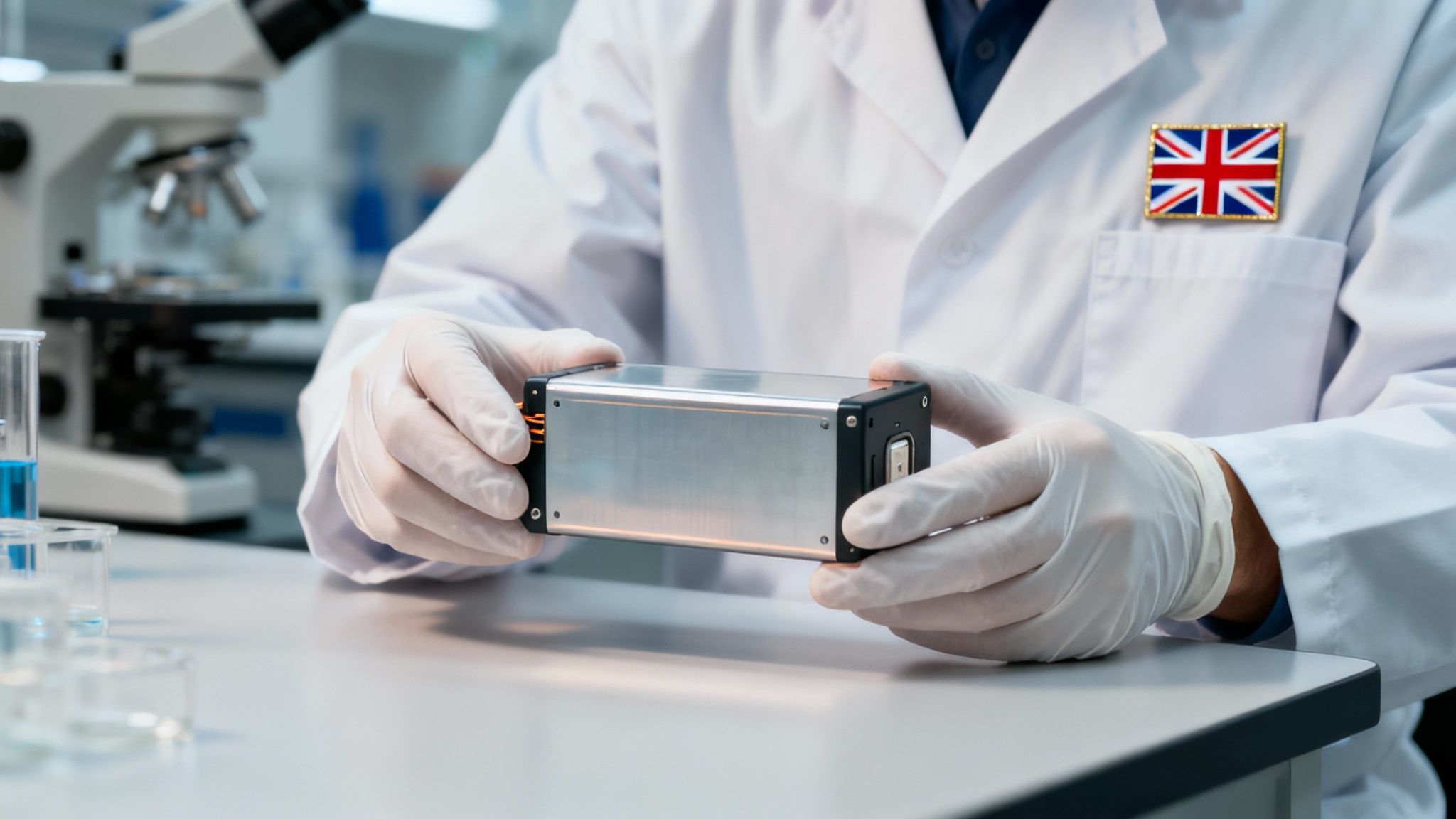
While Toyota's solid-state battery project feels quintessentially Japanese, a crucial piece of the puzzle was actually forged right here in the UK. It’s a surprising twist in the tale, but some of the foundational brainpower behind this global automotive shift can be traced back to our own shores.
This is a classic story of British ingenuity quietly making waves behind the scenes. While the headlines are often grabbed by corporate giants, it’s the smaller, specialist firms that frequently do the vital, foundational research. In this case, we’re talking about pioneers who laid the scientific groundwork that a titan like Toyota could then scale up.
This isn't just a token nod; it's a genuine testament to the scientific expertise bubbling away in Britain. It adds a welcome, if unexpected, layer of home-grown pride to this international technology race.
Southampton's Secret Sauce
The key player in this subplot is a company called Ilika Technologies , based down in Southampton. They might not be a household name, but in the world of advanced materials science, they are heavy hitters. Ilika specialises in the incredibly complex chemistry of solid-state materials, and their expertise caught Toyota’s attention years ago.
Their collaboration with Toyota goes all the way back to the late 2000s, focusing on the very building blocks of this new battery technology. A pivotal moment came with Ilika’s “Goliath” programme, which kicked off in 2018 with backing from UK government grants and partnerships with British automotive firms.
This project specifically focused on developing the solid electrolytes and silicon anodes that are essential for a viable solid state battery Toyota can mass produce. You can read more about how these components fit into Toyota's advanced battery roadmap to understand the bigger picture.
This collaboration shows that even in a globalised industry, local expertise still matters. A small British firm has played a significant role in developing a technology that could redefine the future of a Japanese automotive titan.
It’s a refreshing reminder that innovation isn't confined to Silicon Valley or Tokyo. Sometimes, the most important breakthroughs begin in a lab on the south coast of England, proving that when it comes to the future of electric cars, Blighty is still very much in the game.
How This Will Shake Up The UK Car Market
Let's bring this closer to home. When a solid-state battery Toyota finally hits UK showrooms, it won't be a quiet launch. For rival car manufacturers, it's going to be the equivalent of a seismic shock.
Think about the emergency meetings at Volkswagen or Ford the day Toyota unveils a family car that can cover over 700 miles on a single charge and top up in just 10 minutes . It instantly makes their current electric vehicle offerings look like museum pieces.
The immediate response will likely be a frantic scramble. Expect a flood of press releases and flashy concept sketches as competitors rush to reassure investors and customers that their own next-generation battery tech is "just around the corner". The pressure to catch up will be enormous.
Can Our Chargers Even Cope?
Beyond the boardroom drama, a more practical problem looms for UK drivers. Our public charging network is already struggling to keep pace with today's EVs. It’s a familiar story for many: a patchwork of working chargers, broken units, and infuriating queues at peak times.
Now, picture thousands of new Toyotas pulling up, each capable of drawing a massive amount of power to achieve that ultra-fast charge. It’s a bit like trying to fill a swimming pool through a garden hose. Many of our local substations and the national grid simply weren't designed for that kind of sudden, high-level demand.
Toyota's solid-state battery won't just challenge other car makers; it will expose the deep cracks in the UK's charging infrastructure. It highlights the massive gap between where vehicle technology is heading and the reality of the support network on the ground.
This leap forward also complicates the UK's 2035 ban on new petrol and diesel cars. How can you push for an all-electric future when the infrastructure is a decade behind the cars themselves? It also poses tricky questions for the used car market. Who’s going to buy a second-hand EV with a 250-mile range and a 45-minute charge time when a new solid-state model makes it look like a fossil? This isn't just a new battery; it's a technology that could completely redraw the British automotive map.
Still Got Questions? We've Got Answers
It's a lot to take in, and you've probably still got a few things you're wondering about. Let's get straight to the point and answer some of the most common questions about the solid state battery Toyota is developing.
This is your no-fluff guide.
Will They Be Cheaper Than Today's EV Batteries?
Not at first, no chance. The new materials and complex manufacturing mean they'll likely be more expensive at launch. However, Toyota is confident that costs will fall dramatically as they get better at making them and scale up production, mirroring the price drop we saw with lithium-ion batteries over the past decade.
Are They Really Safer?
Yes, and this is a massive deal. Traditional EV batteries use a flammable liquid electrolyte, which is the root cause of those rare but serious battery fires you hear about. By swapping this out for a stable, solid material, the risk is practically eliminated. It’s a fundamental safety improvement built into the core of the design.
Will Other Car Brands Get Them?
Absolutely. While Toyota is at the forefront with its own technology, this is a full-blown industry arms race. Major brands like Volkswagen and Hyundai are investing heavily in their own solid-state research. Once Toyota proves the technology can work on a mass scale, you can bet everyone else will either launch their own version or find a supplier, fast. No one wants to get left behind.
The key takeaway here is that solid-state technology is more than just an incremental improvement. It represents a fundamental leap forward, aiming to solve the biggest real-world problems holding EVs back.
This isn't just about building a better battery; it’s about making electric cars a practical, no-compromise choice for drivers across the UK.
For more no-nonsense EV news, reviews, and a healthy dose of reality, check out the latest from VoltsMonster at https://www.voltsmonster.com.
VoltsMonster Electric Vehicle Blog