The Ford Puma Electric Is Here to Knock the Petrol King Off Its Throne
Let's be honest, this is about as surprising as finding out a politician has been fibbing. The Ford Puma Electric , now officially saddled with the rather corporate name 'Puma Gen-E', is finally swapping its regular trips to the petrol station for a charging cable. This isn't just another electric box on wheels; it's the electric evolution of a genuine UK institution, a car that has stubbornly refused to budge from the top of the sales charts like a stubborn stain.
Britain's Favourite Car Goes Electric – Why You Should Give a Toss

The arrival of an all-electric Ford Puma felt about as inevitable as a rainy bank holiday weekend. For what feels like an eternity, the petrol version has been the undisputed king of British car sales. It’s the little crossover that, against all odds, managed to charm its way onto tens of thousands of driveways up and down the country. Now, Ford is about to find out if it can repeat the trick in a world that’s gone all-in on batteries.
But you have to ask, why the sudden rush? This timing is no accident. Ford, like every other car maker that isn't run by a bloke obsessed with rockets, is facing down the barrel of eye-watering fines if it misses strict emissions targets. At the same time, the market is overflowing with electric rivals from every corner of the globe. Making their bestseller electric isn't some noble, progressive choice; it's a defensive one, born from sheer, bottom-clenching panic.
The Make-or-Break Question
The real test for Ford lies in somehow transferring the magic of the petrol Puma into this new battery-powered contraption. The original car won us over with its cheeky looks, clever practicality (who doesn't love the MegaBox?), and, crucially, a fun-to-drive personality that many of its dullard rivals simply couldn't muster.
The big question is simple: can the Puma Gen-E keep the spark that made its predecessor a smash hit, or will the weight and silence of the battery pack accidentally perform a personality-ectomy? This is a test of character, not just kilowatts.
This move is far from a guaranteed success. The electric version is built on the same platform as the E-Transit Courier van. While that’s a jolly clever way to keep costs down, it does raise an eyebrow or two. Can a car with commercial vehicle DNA really deliver the zesty, engaging drive the Puma name promises? You can get a sense of the immense pressure Ford is under by looking at their ambitious EV production goals.
So, what does this all mean for the UK drivers who made the original a runaway success?
- A Familiar Face: Ford is betting the farm on the Puma's established name to give it a head start in a viciously competitive EV market.
- The DNA Test: The Gen-E has to prove it’s more than just a Puma badge on a generic electric skateboard. It absolutely must drive like a proper Puma.
- A High-Stakes Gamble: This is the story of a car that could either become Britain's next electric icon or a spectacular, soulless dud.
No pressure then, Ford. The whole country is watching. Probably.
Why Britain's Petrol Puma Obsession Sets a Ludicrously High Bar
To really get your head around the mountain the new Ford Puma Electric has to climb, you first have to appreciate the almost cult-like following of its petrol-guzzling sibling. This isn't just a popular car; for years, it’s been the car. It didn't just top the sales charts—it built a fortress up there and has been chucking rocks at anyone who gets close ever since.
Frankly, the Puma’s success in Britain has been colossal. It has completely dominated the small crossover scene, becoming the default choice for thousands of drivers who want a bit of style, practicality, and fun without needing to remortgage the house. It’s woven itself into the fabric of daily British life, like complaining about the weather or queuing.
The Numbers Don't Lie (For Once)
The sales figures are genuinely staggering. The Ford Puma has been an absolute juggernaut, comfortably clinching the title of the UK's best-selling new car. In 2023 alone, a massive 49,591 new Pumas were registered on British roads, a figure that left its rivals looking on from a very, very long way behind. You can see the full breakdown of the Puma's incredible sales performance as detailed by industry experts.
This relentless popularity is exactly what makes the job of the new Ford Puma Electric so bloody difficult. Ford isn’t just launching another EV. It’s asking a nation of happy customers to swap their fizzy, familiar crossover for a silent, battery-powered one. That’s a big ask.
The petrol Puma became Britain’s favourite by nailing a simple formula: it looks sharp, it has that brilliant MegaBox in the boot, and it’s actually fun to drive on a twisty B-road. The new electric 'Gen-E' has to deliver on all those fronts just to get a foot in the door.
The Holy Trinity of Puma Popularity
So, what is the secret sauce? Why did Britain fall so head-over-heels for this small SUV when the market is flooded with alternatives? It really comes down to three key things the electric version simply must get right.
- Cheeky Styling: In a sea of bland, blob-like crossovers, the Puma always had a bit of character. Its design is athletic and interesting without looking like it's trying too hard.
- Surprising Practicality: That famous ‘MegaBox’ under the boot floor is a stroke of pure genius. It’s a deep, waterproof, drainable tub that’s perfect for chucking in muddy wellies, wet sports gear, or anything else you’d rather keep separate.
- The Fun Factor: Crucially, the Puma has always felt great from behind the wheel. Ford’s engineers managed to bake in the lively, engaging DNA from the Fiesta, and buyers loved it. The existence of the fantastic Puma ST hot hatch only cemented its reputation as a crossover for people who actually enjoy driving.
Ford isn't just replacing a car; it's attempting to electrify a modern icon. The Puma Gen-E can't just be a good electric car. It has to be a brilliant Puma first and foremost. If it fails, it risks being seen as a soulless imposter wearing a very famous badge. The bar isn't just high; it's in the stratosphere.
Puma Gen-E Specs: A Good Look Under the Bonnet
While Ford has been playing its cards closer to its chest than a poker player with a royal flush, enough details have trickled out for us to build a pretty clear picture. So, let's lift the bonnet—metaphorically, of course—and look at the numbers that will actually matter when you’re deciding if this is the car for you.
First, the all-important battery. The heart of the Puma Gen-E is expected to be a 48kWh LFP (lithium iron phosphate) battery. This is a solid, sensible choice that prioritises durability and cost-effectiveness over a headline-grabbing range, which immediately tells you Ford is aiming this squarely at the sensible shoes brigade.
Ford is quoting an official WLTP range of around 230 miles (370km). As any seasoned EV driver will tell you, that figure is best achieved on a perfect day, with a tailwind, going downhill. In the real world, especially on a cold, wet Tuesday in November, you should probably budget for something closer to 170-190 miles . That’s plenty for the weekly shop and the school run, but a trip up the M1 from London to Leeds will almost certainly require a coffee-and-charging stop.
Underpinnings from an Unlikely Cousin
Now for one of the most interesting talking points: the platform. The Puma Gen-E doesn't have a bespoke, ground-up EV chassis. Instead, it shares its core structure with the new E-Transit Courier, Ford's dinky electric van. This is a common wheeze in the industry, a clever way for Ford to manage development costs and bring the car to market faster.
The big question, though, is whether this will compromise the Puma's party piece: its brilliant handling. The petrol Puma is famous for being a genuinely fun-to-drive crossover. Van platforms, on the other hand, are built for lugging heavy loads, not for feeling nimble on a twisty B-road. The success of the Gen-E will heavily depend on how much engineering magic Ford has sprinkled on these commercial-vehicle bones to make it feel like a true Puma.
The pressure for it to succeed is immense, especially when you look at how the petrol version has dominated the UK sales charts.

As this shows, the Puma has set a sky-high benchmark. The Ford Puma Electric has some very big shoes to fill if it wants to continue that legacy.
How it Stacks Up Against the Competition
No car exists in a vacuum, least of all a family crossover. So, how does the Puma Gen-E’s projected spec sheet look when placed side-by-side with its biggest rivals in the UK? Let's line them up.
Ford Puma Gen-E vs The Crossover Crew
| Specification | Ford Puma Gen-E (Projected) | Peugeot E-2008 | Vauxhall Mokka Electric | Volvo EX30 |
|---|---|---|---|---|
| Battery Size (Usable) | ~48 kWh | 50 kWh | 50 kWh | 49 kWh |
| Claimed Range (WLTP) | ~230 miles | 250 miles | 252 miles | 214 miles |
| 0-62mph Time | ~9.0 seconds | 9.0 seconds | 9.0 seconds | 5.7 seconds |
| Max DC Charging | 100kW | 100kW | 100kW | 134kW |
| Platform Origin | Commercial Van | Purpose-Built EV | Purpose-Built EV | Purpose-Built EV |
On paper, the Puma Gen-E slots right into the heart of the mainstream competition. The numbers are almost a carbon copy of what you'll find in the popular Peugeot E-2008 and Vauxhall Mokka Electric, offering perfectly adequate, if not exactly pulse-raising, performance and range.
The real troublemaker in this group is the Volvo EX30. Even in its base trim, it delivers a serious punch in acceleration and boasts faster rapid charging. This clearly positions the Volvo as the premium, performance-focused option. The Puma Gen-E, in stark contrast, isn't trying to win any drag races or range records. It's aiming to be the familiar, sensible, and dependable choice for the masses.
Real-World Range, Charging, and Running Costs

Right, let’s get down to brass tacks. It's time to look past the glossy brochures and the suspiciously optimistic official figures. This is where we talk about what owning a Ford Puma Electric will actually mean for your range anxiety and your wallet.
How far will it really go on a damp, miserable Tuesday in Stoke? And how much will it cost to keep the thing running? Let's find out.
Ford’s official claim of around 230 miles from its pretty modest 48kWh battery is, let's be kind, ambitious. In the real world, you'll need to temper your expectations. As soon as you factor in a bit of motorway driving, the heating on full blast to fight off a British "summer," and the usual lead-footed start from the traffic lights, that number starts to drop faster than a politician's promise.
A sensible, real-world estimate would be somewhere in the region of 170 to 190 miles . That's more than enough for the school run, the weekly pilgrimage to Tesco, and a bit of local commuting. A spontaneous trip from Brighton to Blackpool, though? You’ll be getting very well acquainted with the UK’s public charging network along the way. For a deeper dive into this, check out our guide on the unvarnished truth about electric car real-world range.
The Charging Conundrum
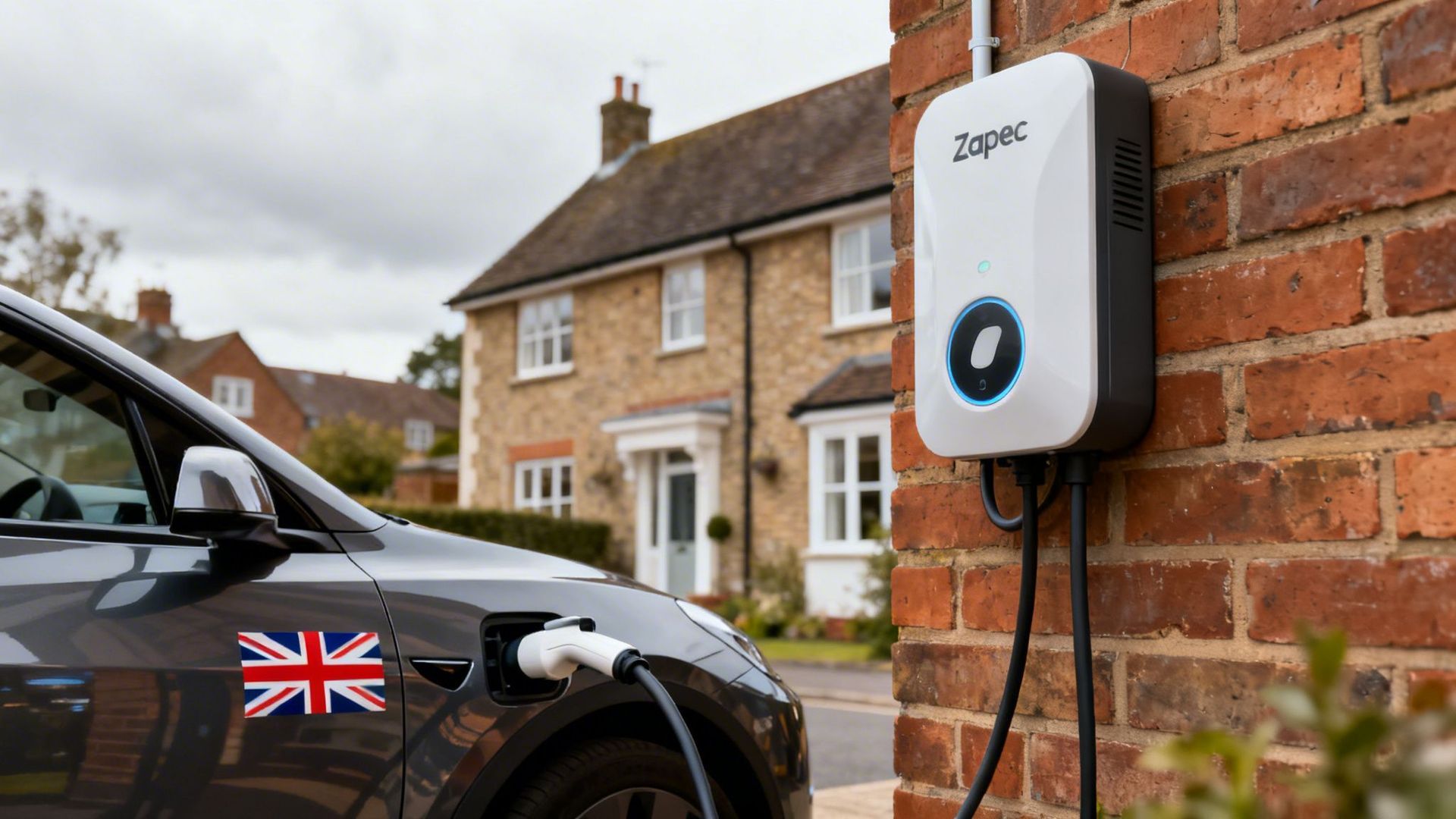
When it’s time to plug in, your experience will vary wildly depending on where you are. At home, using a standard 7kW wallbox , you can expect to fully charge the Puma Gen-E overnight in about 7-8 hours . This is by far the cheapest and most convenient way to do it, especially if you can get onto a smart off-peak electricity tariff.
But what about when you’re out and about? The Puma Electric can handle DC rapid charging at speeds up to 100kW . On paper, this means a 10-80% top-up should take a respectable 30-35 minutes .
In practice, this is where the EV adventure really begins. Finding a 100kW+ charger that isn't broken, already in use, or inexplicably slow is part of the great British lottery. Prepare for a game of chance with both charging speeds and costs, which can range from perfectly reasonable to utterly extortionate.
Counting The Pennies
So, the big question: will the Puma Electric actually save you money compared to its petrol-powered sibling? The classic answer is "it depends," but let's break down the actual running costs.
- Fuel vs Electricity: At home, you could be paying as little as 5p to 7p per mile on an overnight tariff. The petrol Puma, on the other hand, will set you back around 15p to 18p per mile at today's prices. That's a massive saving.
- VED (Road Tax): For now, pure EVs like the Puma Gen-E pay £0 in Vehicle Excise Duty . Be warned, though: from April 2025, new EVs will be brought into the standard VED system, so this perk is on a timer.
- Servicing: With far fewer moving parts, servicing an EV is generally cheaper. There are no oil changes to worry about and no exhaust systems to rust through. You should expect lower annual maintenance bills.
- Insurance: This is the wildcard. Insurance groups for the Puma Electric haven't been confirmed yet, but EVs can sometimes command higher premiums due to specialist repair knowledge and parts. It's one to watch.
The wider market trend is undeniable. The Puma's petrol success has paved the way for a more diverse line-up. In 2023, sales of plug-in hybrids shot up by 39.3% , and full hybrids grew 27.1% . By spring 2025, EVs had secured a 20.4% market share while petrol and diesel sales slumped, showing a market that's clearly hungry for electric options. You can read more about these shifting UK car sales trends on Best-Selling-Cars.com.
Ultimately, if you do most of your charging at home and your mileage isn't astronomical, the Ford Puma Electric is poised to be significantly cheaper to run day-to-day. While the initial purchase price is higher, the long-term savings on fuel and tax (for now, at least) are hard to ignore.
Does the Electric Puma Still Drive Like a Proper Puma?
The original 1990s Puma was a gem. It was a plucky little coupe that fizzed with energy, dancing around corners with a kind of joy you just don't find in most small cars. To its credit, the modern petrol Puma has managed to keep a good dose of that fun-to-drive spirit. But here’s the million-dollar question: what happens when you rip out the peppy engine and drop in a heavy, silent battery pack?
This is where the Ford Puma Electric , or Gen-E, will either sink or swim. Has Ford's engineering team managed to preserve that cheeky, engaging character the Puma name was built on, or has the weight of electrification flattened its personality?
Acceleration: Is It Swift or Just Sufficient?
Let’s be clear, this isn't a car built to win drag races. You won’t get the kind of ludicrous, pin-you-to-your-seat acceleration that makes Teslas famous on YouTube. With a 0-62mph time expected to be around 9.0 seconds , its performance lands squarely in the 'brisk enough' category.
That’s no bad thing. Around town, the instant shove from the electric motor will make it feel wonderfully nippy off the line at traffic lights. It's out on faster A-roads and motorways where you'll find it's more about smooth, steady progress than outright thrills. This Puma is designed for sensible driving, not for scaring hot hatches.
Cornering: On a Knife-Edge or a Wobbly Jelly?
This is the real test. The petrol Puma's party trick is its brilliant handling; it feels light on its feet, agile, and always eager to turn in. The electric version, however, is hauling a lot of extra kilos, all located low down in the chassis. This is a double-edged sword.
- The Downside: All that mass can make a car feel sluggish and reluctant to be hustled through a corner. Ford's engineers are in a real fight with physics here to keep that trademark Puma agility alive.
- The Upside: A low centre of gravity, thanks to that floor-mounted battery, can make a car feel incredibly planted and stable through bends. It naturally fights against body roll, that feeling of the car leaning over as you turn.
It's worth remembering the Puma Gen-E is built on the same underpinnings as a van, the E-Transit Courier. While that's great for keeping costs down, it's not exactly a sports car pedigree. Ford’s reputation for chassis magic is really on the line here. The goal is to make it handle like a nimble crossover, not a milk float.
The true challenge for Ford is to mask that weight. The steering has to feel sharp and give you a real sense of connection to the road, while the suspension must be firm enough to control the car's mass without shattering your spine on Britain's pockmarked roads.
A Peek Inside the Cabin
Once you’re done enjoying the drive, you have to live with the interior. Recent Fords have moved towards a very tech-focused cabin, and the Puma Electric follows suit. The centrepiece is the huge 12-inch central touchscreen and digital driver’s display, lifted directly from the latest facelifted petrol model.
Thankfully, Ford seems to have realised that burying everything in a touchscreen is a recipe for frustration. Key functions, like the heating and air-con, still have physical buttons—a small but significant win for common sense. The overall impression is modern and functional, even if it doesn't feel quite as premium as a Volvo EX30. For a mainstream family crossover, it's a solid, well-put-together space that sidesteps the worst tech-for-tech's-sake pitfalls.
Voltsmonster's Verdict and How to Get a Good Deal
So, after all that, should you be putting the electric Ford Puma on your shortlist? Let's get right to it.
The Puma Gen-E isn't trying to be a headline-grabbing, warp-speed EV with a battery that’ll cross continents. Ford's been far more cunning than that. They’ve taken the exact formula that made the petrol Puma a runaway success—style, practicality, and a genuinely fun drive—and simply swapped the engine for a motor.
It’s the sensible choice in a sharp suit. It’s an electric car for people who just want a great car, without making a big song and dance about it being electric. This is the Puma we all know and love, just a whole lot quieter.
Beating the Dealer at Their Own Game
Now for the fun bit: getting one without being taken for a ride. Walking into a dealership and paying the list price is a rookie mistake, and you're no rookie. Getting a sharp price on a brand-new car like the Puma Gen-E is all about good timing, a bit of homework, and some good old-fashioned nerve.
Remember, the petrol Puma absolutely dominated the UK charts, with a staggering 49,591 of them registered in 2023 alone. As ExpressVehicleContracts.co.uk points out, that kind of success creates a huge, ready-made audience. With lease availability expected in 2025, the electric version is set to tap right into that loyalty, making it a hot ticket item.
Here’s how you get ahead of the curve and land a great deal:
- Let the Hype Cool Down: The keenest early adopters will pay top whack. Wait a few months after the launch rush, and you'll find dealers are much more willing to talk numbers as they start chasing targets.
- Time Your Attack: The end of a sales quarter (March, June, September, and especially December) is your golden opportunity. Sales managers get desperate to hit their bonuses and are far more flexible.
- Create a Bidding War: Don't just stick to your local showroom. Get written quotes from online brokers and leasing companies, then take the best one to a Ford dealer and ask a simple question: "Can you beat this?"
- Focus on the Final Figure: Dealers often make more profit on the finance than on the car. Ignore the shiny monthly payment for a moment and negotiate on the total amount payable over the term.
PCP, Leasing, or Outright Purchase?
Figuring out how to pay is a minefield, but with an EV, it's a critical decision. For a car like the Puma Electric, where battery technology is evolving so quickly, tying yourself into long-term ownership isn't always the smartest move.
A Personal Contract Purchase (PCP) is a popular route. You get lower monthly payments because you're only financing the car's depreciation, not its full value. At the end, you can either pay a final "balloon" payment to own it, hand it back, or trade it in for a new one. Leasing (or Personal Contract Hire) is even simpler – it's pure rental. You pay a monthly fee for a fixed period and then just hand the keys back.
For most people dipping their toes into the EV world, leasing is the savvy choice. It completely insulates you from depreciation and the nagging worry that your car will be outdated in three years by a new model with a better battery.
You get to drive a brand new car, and when the contract is up, you simply swap it for the latest and greatest. To really get your head around the numbers, it's well worth reading our guide to the 7 best UK electric car finance deals that won't leave you skint.
Answering the Big Questions About the Puma Electric
Alright, let's address the questions we're hearing from drivers just like you. We’ve been keeping a close eye on the forums and owner groups to see what people are really asking about the new Ford Puma Electric . Here are the straight-up answers you're looking for.
First things first: when can you actually buy one? Ford's official timeline points to orders opening later in 2024 , with the first cars hitting UK roads in early 2025 . As anyone who's bought a new car recently knows, it's wise to treat these dates as a guide. A minor delay is almost part of the launch package these days.
And what about the Puma's party trick, the MegaBox? Yes, it’s staying. Ford would have faced a proper mutiny if they'd removed the single best feature of the car. That brilliant, 80-litre waterproof tub under the boot floor is back, ready to swallow your muddy wellies or post-swim gear without a fuss.
Can It Actually Tow Anything?
This is a major sticking point for many, but the answer is almost certainly no. Small electric cars and towing simply don’t play well together. The immense drag and extra weight of a trailer are absolute kryptonite for an EV's battery, easily slashing a real-world range of 180 miles down to well under 100.
Ford hasn't released official towing capacity figures yet, but don't get your hopes up for towing a caravan to Cornwall. At the absolute best, you might see a tiny rating for a small trailer for the odd tip run, but we wouldn't even count on that. If you need to tow regularly, the Puma Electric just isn't the car for the job.
Will We See an Electric Puma ST?
Ah, the question every enthusiast is asking. A proper, full-fat electric Puma ST seems highly unlikely, at least in this first generation. The sheer weight of the battery pack is a huge hurdle for Ford's engineers, making it incredibly difficult to deliver the sharp, nimble handling that the ST badge demands.
What you can probably expect is a sporty-looking 'ST-Line' model. This would give you all the aggressive body styling and interior trim of the hot hatch version but paired with the standard electric motor. It’s the classic "all show, same go" approach, a compromise that's becoming very common in the EV market.
At VoltsMonster , we're dedicated to giving you the honest, jargon-free truth about electric cars. For more reviews and guides that tell it like it is, head over to https://www.voltsmonster.com.
VoltsMonster Electric Vehicle Blog